Thailand’s tourist visa: Full guide
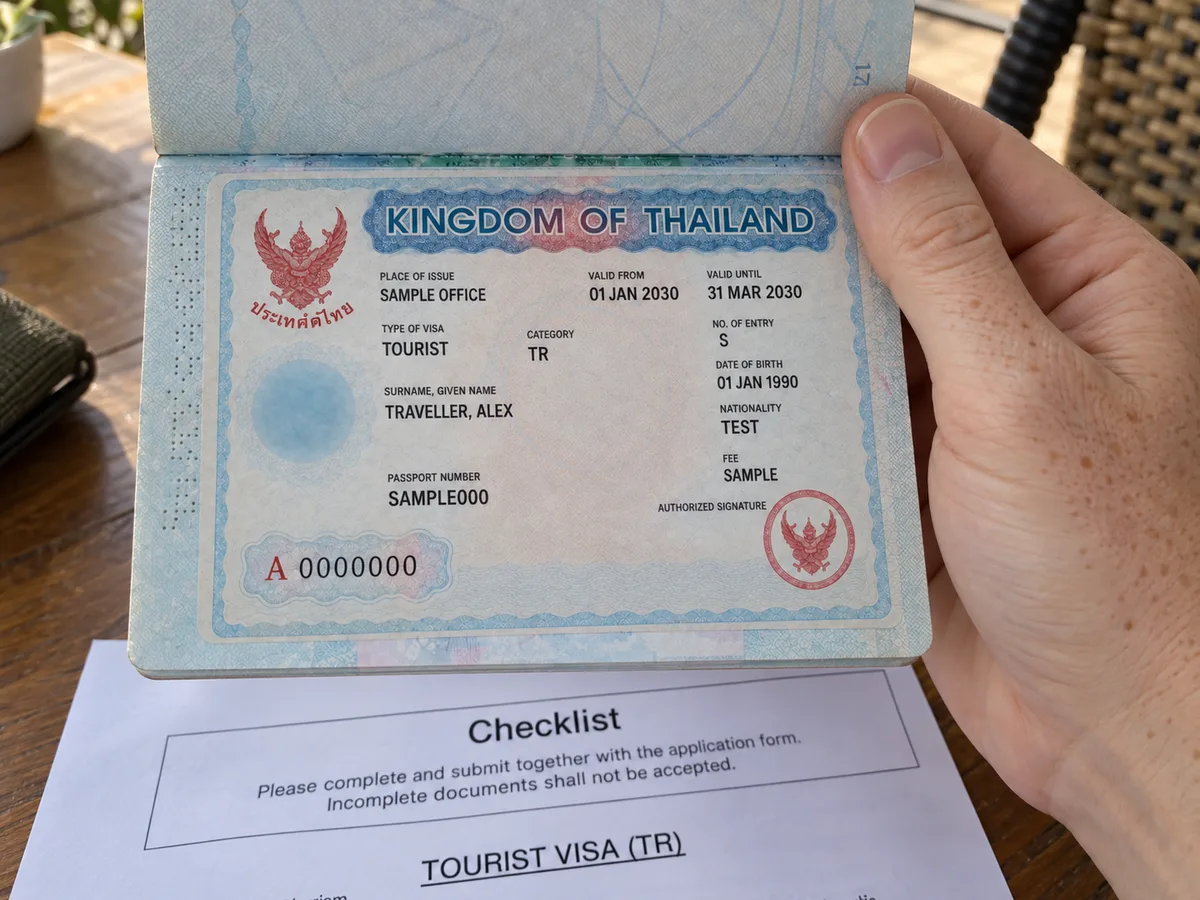
The METV’s six months start the day it’s issued, not the day you fly. Tourist visas, costs, extensions and how to stretch one to 9 months.
Most people visiting Thailand don't need a tourist visa. You get 30 days free on arrival and can extend once for another 30 at immigration. A tourist visa is for when 60 days isn't enough: the single entry gets you up to 90 days, and the multiple entry can stretch to almost 9 months.
Whatever you arrive on, you also need to fill in the Thailand Digital Arrival Card (TDAC) online in the 72 hours before you land.
Do you need a tourist visa?
Probably not, if your trip is under 60 days. Most Western passports get 30 days visa-free (it was 60 until September 2026), and you can extend that once for 30 days at immigration for 1,900 baht. If you're not sure where your passport stands, start with what visa do I need for Thailand.
Get a tourist visa if you're staying longer than 60 days, want to leave and come back a few times over 6 months, or your passport doesn't get visa-free entry.
Single entry tourist visa (SETV)
This is the one most people get. It gives you 60 days from the day you arrive, and you can extend it once at immigration for another 30. You have 3 months from the issue date to use it. It's one entry only, so if you leave Thailand the visa's gone unless you get a re-entry permit first.
Cost: about 40 USD, depending on where you apply.
You'll need:
- a passport with at least 6 months left on it
- a passport photo
- a flight out of Thailand within 60 days
- a bank statement (usually around 700 USD or more)
- a hotel booking or address in Thailand
Multiple entry tourist visa (METV)
The METV is valid for 6 months and gives you 60 days every time you enter. It's for people who want a long stay with trips to neighbouring countries in between. The 6 months start the day it's issued, not the day you fly, so don't apply too early.
Cost: about 200 USD.
You'll need everything for the single entry, plus:
- to apply in your home country or where you legally live
- bank statements showing 5,000-7,000 USD over the last 6 months
- a letter from your employer, or proof you're self-employed
How to apply
Everything is online now through the Thai e-visa site, thaievisa.go.th, which has been open worldwide since January 2025.
- Create an account and pick the Thai embassy that covers where you live.
- Fill in the form and upload your passport page, photo, flights, bank statements and accommodation (plus the employment letter for a METV).
- Pay by card.
- Wait. A single entry usually takes 3-7 working days, a METV can take 15 or more.
- The e-visa comes by email. Print it and keep a copy on your phone.
Making it last longer
Single entry, 90 days: enter (60 days), then extend at immigration before day 60 (another 30).
Single entry, about 6 months: do the 90 days, then do a visa run (see below), apply for a new single entry visa while you're out, come back for another 60 days and extend again.
Multiple entry, up to 9 months: each entry gives you 60 days, so leave the country at least every 60 days to start a new one. A quick trip to Laos or Malaysia does it. Make your last entry just before the visa expires and you get another 60 days, plus a 30-day extension at immigration. That's close to 9 months in total.
Extensions
You can extend a tourist visa once per entry, for 30 days, at your local immigration office. It costs 1,900 baht cash, and you'll need your passport, a photo and the TM.7 form. Go a few days before your stamp runs out, not on the last day. Immigration offices close at weekends and on Thai holidays.
Re-entry permits
Only for single entry visas. If you leave Thailand without one, your visa is cancelled. It's 1,000 baht for one re-entry or 3,800 baht for multiple, from immigration or at the airport before passport control. The METV doesn't need one.
Visa runs
A border run is a quick exit and return to start a new entry on a METV. A visa run is when you leave to apply for a new visa. Where to do a visa run right now:
Ho Chi Minh City, Vietnam - The smoothest. All online, paid by card, back in 4-5 working days.
Vientiane, Laos - The cheapest, as you can go by bus, but you pay in cash at the embassy on a weekday morning, then wait 2-4 days.
Penang, Malaysia - Strict and slow, often more than a week.
Phnom Penh, Cambodia - A flight now the land border is shut, then 10 working days.
Singapore is out unless you live there: it only takes applications from long-term pass holders.
Wherever you go, you apply online once you've arrived and wait for the approval email before flying back. Airlines ask to see it at check-in.
Common mistakes
Most tourist visa problems come down to one of these.
Applying for a METV too early - The 6 months start from the issue date.
Forgetting the TDAC - You need it for every arrival, 72 hours before you land.
Mixing up validity and stay - Validity is when you can enter. Your stay is counted from the day you arrive.
Applying through the wrong embassy - It has to be the one that covers where you live.
Living here on back-to-back tourist visas - Immigration notices. If you actually live here, look at the DTV or a Non-O instead.
Reading old advice about the STV - The COVID-era Special Tourist Visa ended in 2022.
Tourist visa vs other visas
How the two tourist visas compare with the other long-stay options:
| Visa | Best for | Cost | Longest stay |
|---|---|---|---|
| Single entry tourist visa | Trips up to 3 months | about $40 | 90 days |
| Multiple entry tourist visa | 6-9 months with trips out | about $200 | about 9 months |
| DTV | Remote workers | about $300 | 180 days per entry |
| Education visa | Students | about $80 plus school fees | 1 year |
If you're working remotely, studying or moving here for good, a tourist visa is the wrong one. Our visa guides cover the DTV, Non-B and education visas.