Thailand education visa (Non-ED) guide
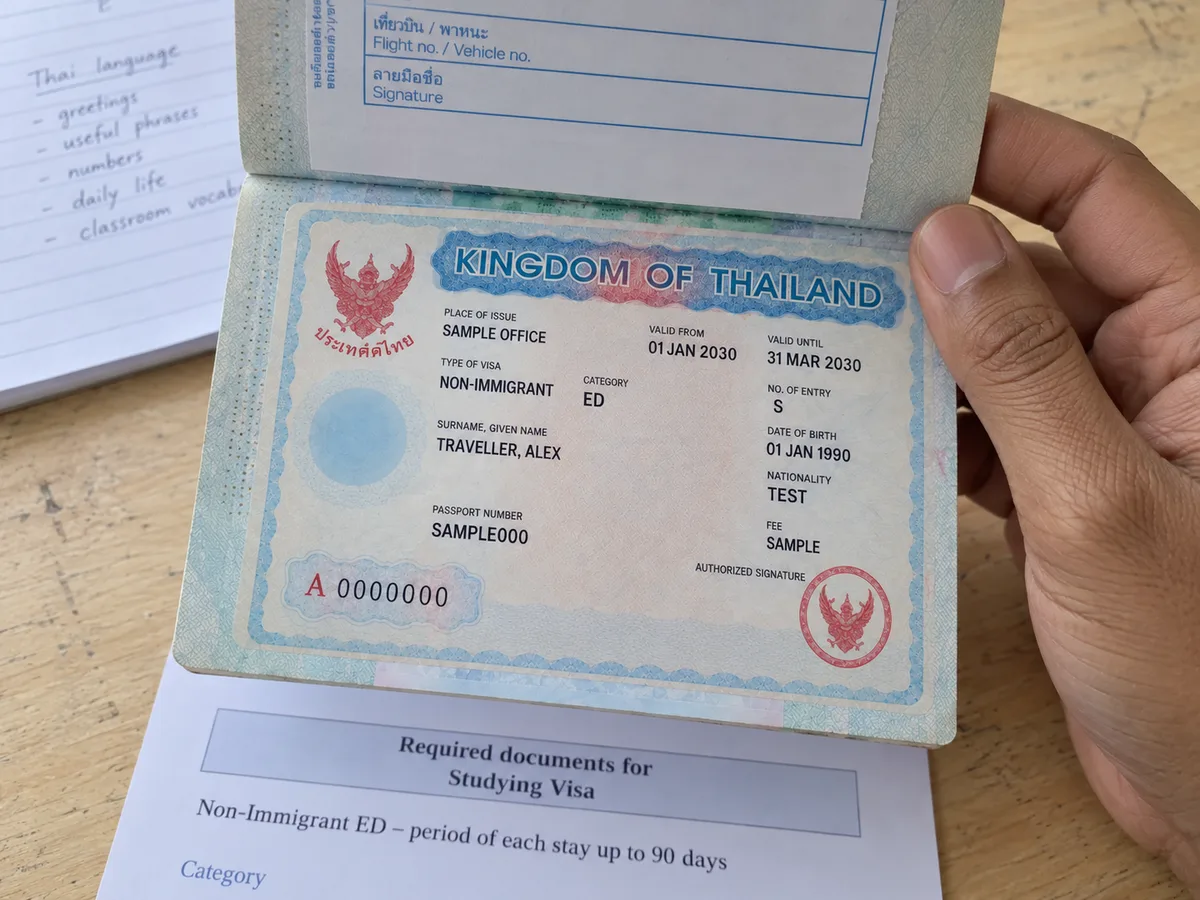
You need a real course and a school that will back you. How the Thai ED visa works, ED Plus for degree students, extensions and the schools to avoid.
The Non-Immigrant ED visa is for people who are genuinely studying or training in Thailand. Your school matters as much as you do: it has to support the right category and supply its half of the paperwork. There are two versions, the ordinary ED and ED Plus, and they cover different kinds of study.
It isn't a long-stay visa with a token class attached. We've used the education visa to study Thai, and it was useful but not hassle-free: the school supplied the essential paperwork, and the course meant actually turning up. If you don't plan to study, the visa finder will point you to a route that fits what you'll really be doing.
Who the ED visa is for
The ordinary ED covers things like:
- school or vocational study below bachelor's level
- approved short courses and school-backed training
- exchange programmes, and internships that are part of a course
- some religious study
- anything else the Thai eVisa system lists as an education purpose
A business conference or company training trip isn't automatically an ED case, and not every private course can sponsor an ED visa.
ED Plus for university degree students
ED Plus is for international students doing a full-time bachelor's degree or higher at a Thai university or other higher education institution. Short courses and exchange programmes don't count just because a university runs them. It has three big differences from the ordinary ED.
No re-entry permit - You don't need one to leave and come back while you're studying.
Extensions done for you - Your university handles any extension applications for you.
A year after you graduate - You can apply to stay up to one more year to look for work, travel or do other things. You have to apply for it. It isn't automatic.
If you get a job, you can apply to change visa type without leaving Thailand. The post-graduation year isn't permission to work, so sort out the right visa and work permit with your employer before you start.
ED visa or DTV?
Some courses sold to foreigners could fit either. The Destination Thailand Visa covers a set list of Thai "soft power" activities, while the ED covers approved education and training. The two have different applications, stay conditions and paperwork, so ask the provider which one it's authorised to support, and check that against the eVisa system.
How to apply
Which eVisa option you pick and the documents you need depend on the school, the course, where you're applying from and which Thai embassy handles it, but the steps are the same:
- Pick a real course at a school that supports the ED category you need.
- Get your acceptance letter and supporting documents from the school.
- Apply through Thailand eVisa if you're overseas, or through Immigration if you're already in Thailand and can change status.
- Use the checklist you're given for where you're applying.
- When you arrive, check the permitted-to-stay date in your passport. A one-year course doesn't automatically get you a year in one go.
Documents and school support
You'll need your own personal documents plus proof that you're really studying. The school provides its side, which can include acceptance, registration, course and official approval documents.
Before you hand over a big non-refundable fee, get the school to answer these in writing:
- Which visa category does it support, and what government approval does it have?
- Who issues the supporting letter, and how long does it take?
- What are the attendance and progress rules?
- Does it help with extensions, and what does that include?
- What happens to your visa if you drop out or the course ends early?
Even if the school does most of the paperwork, the visa is still your responsibility.
Warning signs at a school
Be wary of a school that promises a visa without any real study, won't name the visa category or the authority that approves it, guarantees your visa or a particular extension, or tells you attendance doesn't matter. If it wants you to use fake documents or say you're doing something you're not, that's the end of the conversation.
A perfectly legitimate school can still be disorganised. That's not unusual in Thailand. What matters is that the course is real, the paperwork is honest and you know the conditions before you pay.
Can you work on an ED visa?
No, an ED visa isn't permission to work. If you'll be working for a Thai employer or doing business in Thailand, read our Non-B visa guide and work permit guide.
If you work remotely for an overseas company, being a student doesn't settle the labour and tax questions. The DTV might suit you, but only if what you actually do fits it. If study is only part of your plans, compare the main visa routes or head to the visa hub for the detailed guides.
Extensions, reporting and travel
Expect to need extensions, backed by the school, and apply before your current stay runs out. What you need and how long you get depend on your route and on Immigration, and our extension guide covers the process.
Stay long enough and you'll also have 90-day reports. If you're leaving Thailand on an ordinary ED extension, check whether you need a re-entry permit first. ED Plus students don't need one while they're studying, but check again before you travel on the post-graduation year.