Thailand visa extension guide
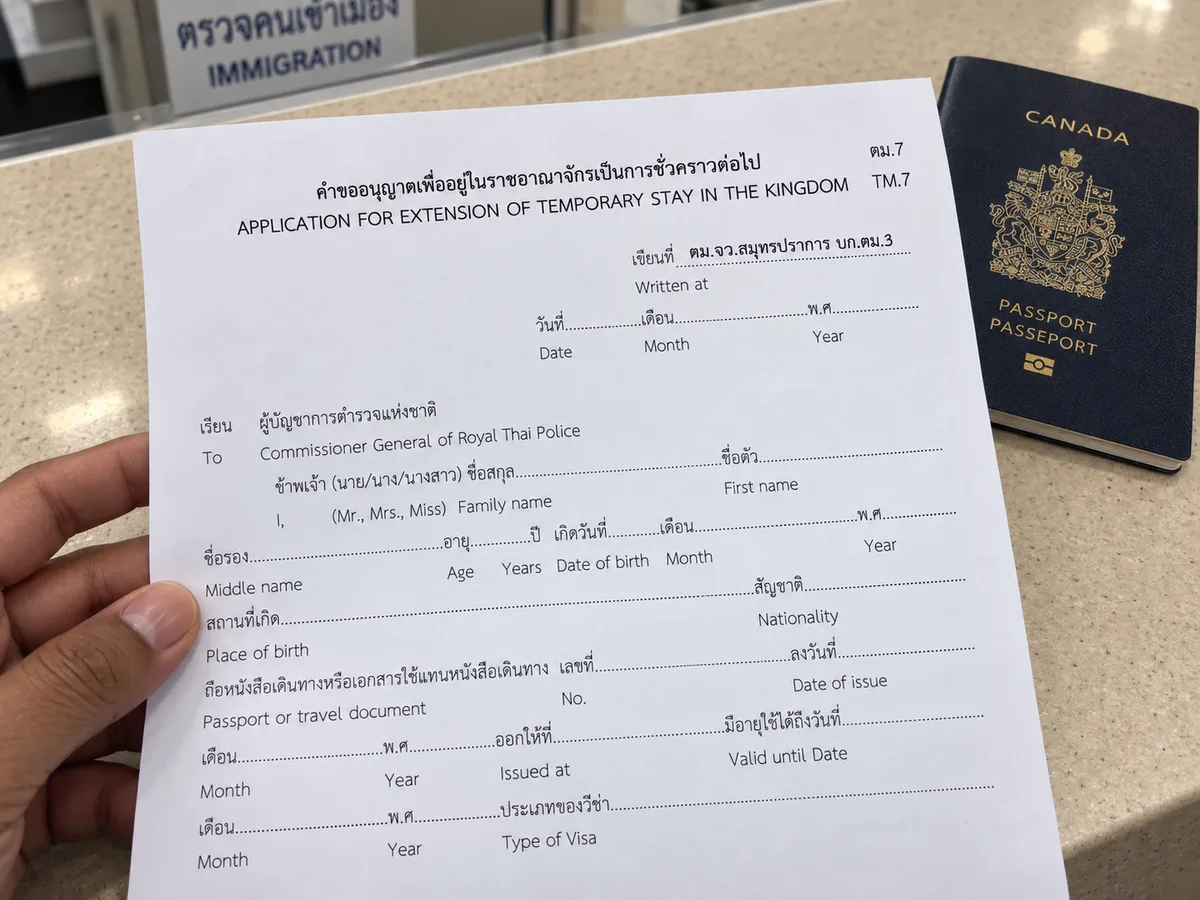
A tourist extension costs 1,900 baht on form TM.7, and the 30-day visa exemption can be extended by up to 30 days. What to bring and when to apply.
A Thai "visa extension" extends your permission to stay (the date stamped in your passport), not the visa itself. You apply on form TM.7 at the immigration office for the area where you live. It isn't automatic, and what else you need depends on why you're staying.
Start with the date in your passport
Apply before the date Immigration stamped in your passport, not the expiry printed on the visa. Don't leave it to the last few days. If you're missing a bank letter, a copy or a photo you'll want time to sort it out, and public holidays and queues don't stop the clock.
What you need
Tourism, work, family, retirement, education, medical treatment and other reasons each have their own requirements, and each office has its own ideas about which passport pages to copy, proof of address and extra forms. Most applications involve:
- TM.7 and a recent photo
- your passport and copies of the pages they ask for
- proof of your address
- evidence for the reason you're extending
- the application fee
Tourist extensions
If you came in on the general 30-day exemption introduced on 15 September 2026, you can extend by up to 30 days, at the immigration officer's discretion. Other passport agreements and entry types don't all get the same extra time, so see our tourist visa guide or exemption and VOA guide for yours.
A tourist extension costs 1,900 baht, and the official checklist asks for:
- your original passport and a copy
- a completed TM.7 with a photo attached
- the acknowledgement of penalties for overstaying
Ticking off the checklist doesn't mean your entry qualifies for an extension.
Long-term extensions
Work, family, retirement and education extensions mean proving your case again each time: employer and work documents for work, proof of the relationship and your finances for family, financial evidence and whatever else your route needs for retirement, and school and study records for education. Getting one last year doesn't guarantee the next.
Online e-Extension
Some categories can start the application, documents and appointment online through the e-Extension service. It doesn't cover every type of extension or every office, and an officer still makes the decision. Only use the one linked from an official Immigration website, and look at what it charges before you start.
After approval
Check these before you leave the counter:
- The new date stamped in your passport.
- Any under-consideration or return date.
- Whether you need to do 90-day reporting.
- If you're travelling, whether you need a re-entry permit first. The extension doesn't come with one.
- That you have the receipt and a copy of your application.
If it's refused or delayed
Do what Immigration's written instructions say, by the dates they give. Handing in an application doesn't extend your stay on its own. If it's urgent or you disagree with the decision, talk to Immigration directly or to a qualified Thai immigration lawyer.
If you're on the wrong visa altogether, compare Thailand visa routes or browse all our visa guides.