Thailand overstay rules and what to do
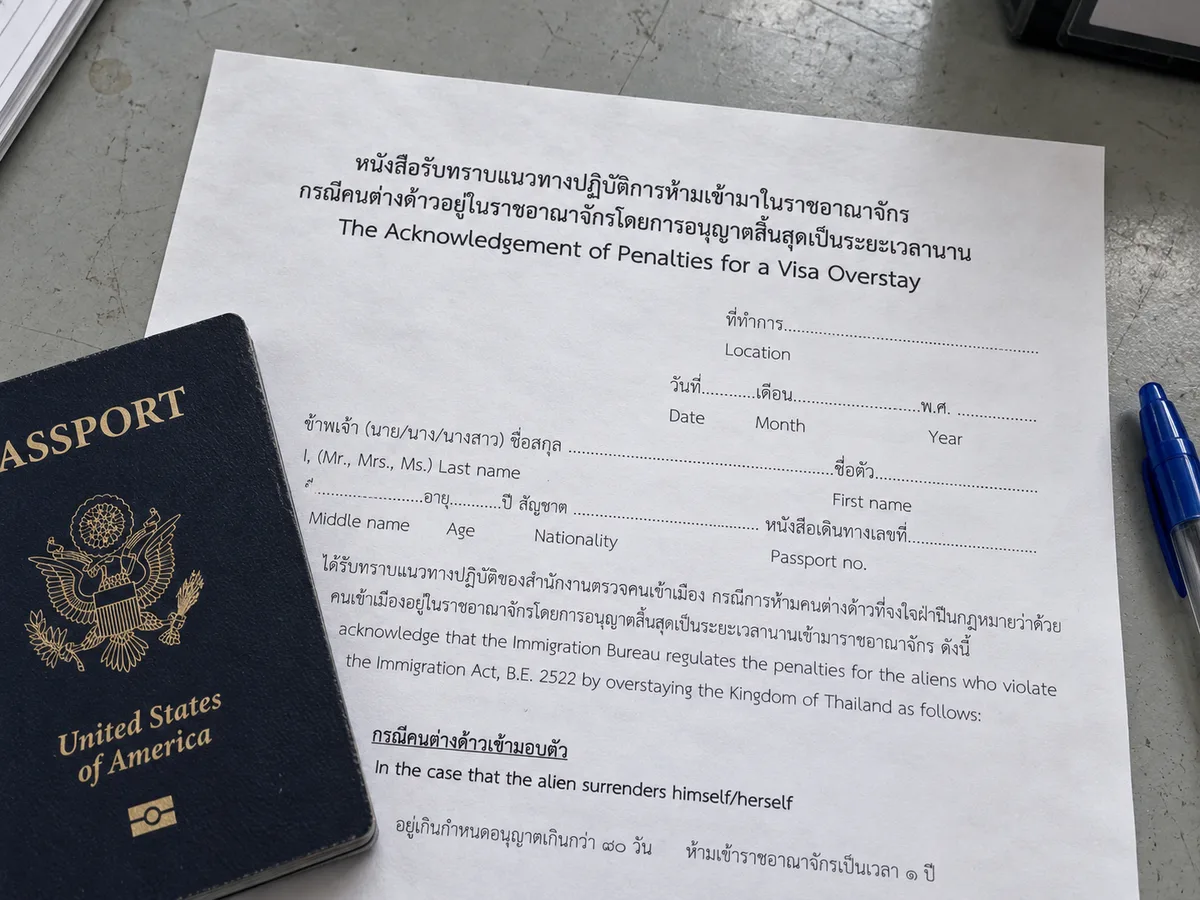
Overstaying in Thailand costs 500 baht a day, up to 20,000 baht, and longer overstays bring bans of 1 to 10 years. What to do if you've already overstayed.
Overstay in Thailand and you'll be fined 500 baht a day, up to 20,000 baht. Longer overstays also mean a ban on coming back, and how long depends on whether you hand yourself in or get caught.
You're overstaying once you're still here after the date stamped in your passport, which isn't always the same as your visa's expiry date. Whatever the reason, deal with it quickly.
Overstay bans
For adults, the ban depends on how long you overstayed and how the case ends:
| How the case is resolved | Overstay | Ban |
|---|---|---|
| Surrender | More than 90 days | 1 year |
| Surrender | More than 1 year | 3 years |
| Surrender | More than 3 years | 5 years |
| Surrender | More than 5 years | 10 years |
| Arrested and prosecuted | Less than 1 year | 5 years |
| Arrested and prosecuted | More than 1 year | 10 years |
Criminal charges, detention, deportation, your age, an existing warrant or another immigration problem can all change that.
If you've already overstayed
If you're caught before you hand yourself in, it's much more serious, so don't sit on it.
- Check the actual date on your entry stamp or immigration record.
- Get in touch with Immigration quickly.
- If it's more than an obvious short mix-up, talk to a qualified Thai immigration lawyer.
- Have your documents and the money for the fine ready.
Until it's sorted, don't work, travel around the country or try a clever border trick you read about on social media. And don't pay anyone who promises to make the record disappear.
What counts as permission to stay
A booked flight, an extension you're preparing or an agent who's sorting it doesn't extend your stay. Go by an under-consideration stamp or official receipt in writing, not an application you assume is pending somewhere.
How not to overstay
Check every entry stamp before you leave the checkpoint, and put the date in your passport in two calendars. Keep track of your 90-day reports separately from your stay date, as they're not the same thing.
Apply for an extension early. If your job or course is ending, find out what happens to your stay before it does, and if you need a re-entry permit, get it before you travel.
If you're working out what to stay on next, compare the main visa routes or browse the visa and immigration guides.