Thailand visa guide & entry requirements in 2026
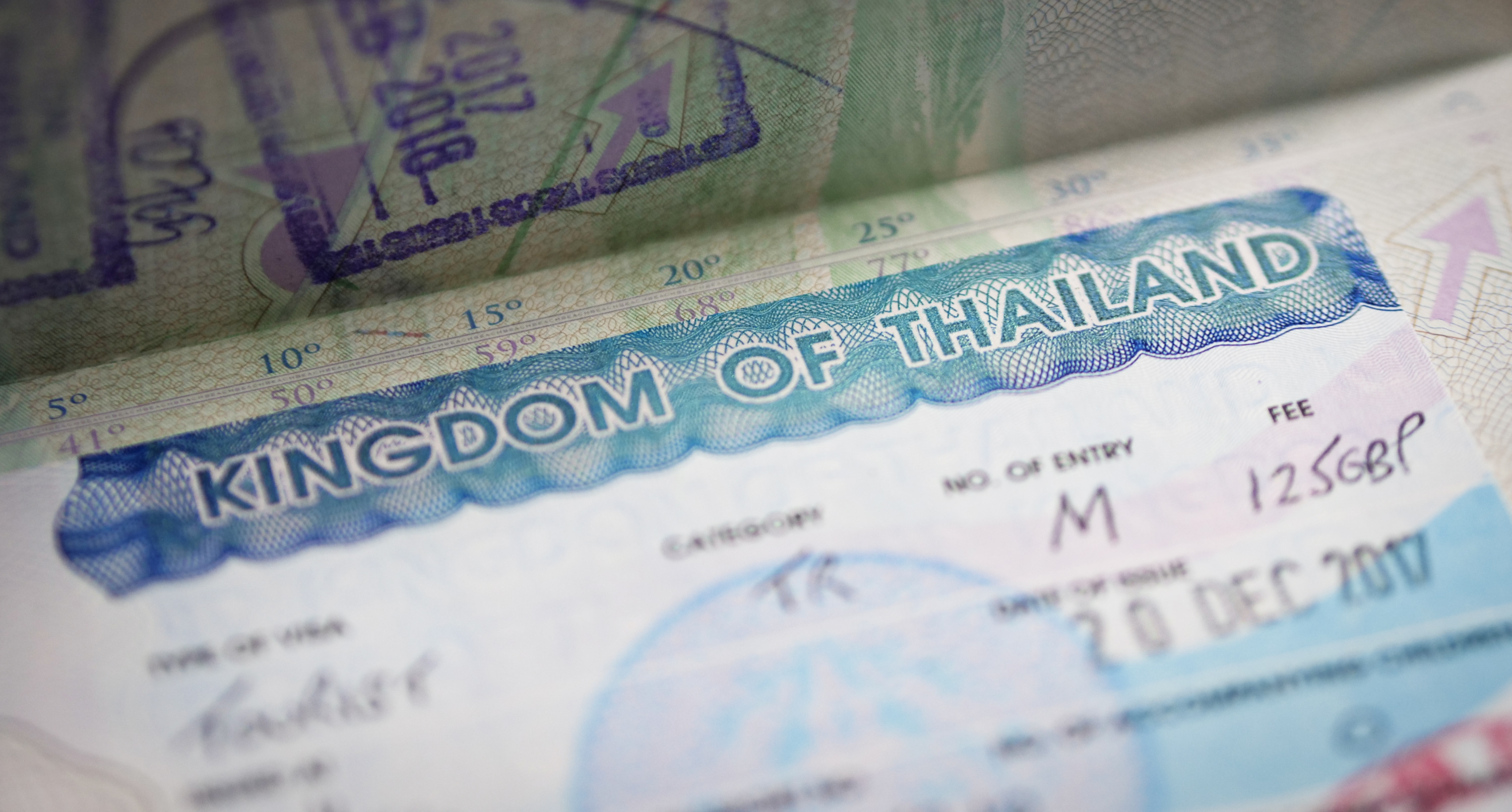
We have more than a decade of experience with the Thai visa system to share with you.
Thailand visa finder
Not sure which route fits?
Answer three questions to get routes worth investigating, then check the detailed guide and official sources. It will not tell you that you definitely qualify.
We have more than a decade of experience with the Thai visa system to share with you.
Navigating choppy seas of visas, extensions, border runs and 90 day reports isn’t always straight forward. Whether you’re coming for a short holiday or you’re finding the most convenient way to stay in Thailand long term, this guide should set you on the right path and clear up a lot of old myths from back when the system was a little more relaxed.
Thailand’s visa landscape changed dramatically in 2024 with the introduction of the DTV (Destination Thailand Visa), giving digital nomads and remote workers their first legitimate long-term option. Combined with recent updates to the Thailand Privilege program (formerly Thailand Elite) and new LTR visa categories, you’ve got more choices than ever.
The latest big change came on 15 September 2026, when Thailand revised its visa exemption and visa on arrival scheme. Most eligible nationalities now get 30 days visa-free rather than 60, and far fewer passports qualify for a visa on arrival. If you arrived before then, the stay stamped in your passport still stands.
We’re doing our best to keep updating this guide, but please use this as a start to your research and not a definitive guide. Rules and regulations are vast and not every scenario can be covered in one post.
The short answer
Of course, the type of visa that you need depends on your circumstances as well as your purpose for traveling to Thailand. Here are the most common situations:
- Visiting for less than 30 days? – Start with the visa exemption, but remember that not all nationalities qualify.
- Visiting for more than 30 days but not longer than 6-8 months? – Assuming you don’t plan to work, you will need a tourist visa. There are several options depending on your circumstances.
- Digital nomad or remote worker? – The DTV visa is designed for you. It’s a 5-year visa allowing 180-day stays, and it also covers long Thai courses like Muay Thai and cooking.
- Teaching English or finding other work in Thailand? – The Non-Immigrant “B” visa is what you’ll need to begin the process of obtaining a work permit.
- Planning to marry a Thai national and live in Thailand? – The Non-Immigrant “O” visa is the starting point for permission to stay based on marriage or being a parent of a Thai child.
- Planning to retire in Thailand? – If you’re over 50 years old and can meet the financial requirements, you have a few options (Non-O, O-A, O-X and the LTR). Our retirement visa guide compares them.
- Studying Thai, Muay Thai or attending university? – The education visa (ED) works if you’re a genuine student.
- Want the VIP treatment without hassles? – The Thailand Privilege visa (formerly Thailand Elite) offers 5-20 year options with premium benefits.
- High earner or investor? – The LTR visa provides 10-year residence with work rights for those meeting higher financial thresholds. The SMART visa is the other BOI option, for specialists, investors and startup founders in targeted industries.
- Something more specific? – There are dozens of visas for diplomats, journalists, film crews, researchers, religious work, medical treatment and more. Our special-purpose visa guide covers them.
Visa options at a glance
| Your main purpose | Routes to investigate | Where to start |
|---|---|---|
| Short tourism or visit | Visa exemption, Visa on Arrival or tourist visa | Official nationality table and Thai eVisa |
| Longer tourism | Single-entry or multiple-entry tourist visa | Thai eVisa and the mission handling your application |
| Remote work or eligible activities | DTV | Our DTV guide, then the exact mission checklist |
| Thai employment or business | Non-Immigrant B and work authorisation | Your employer or business adviser, Thai eVisa and Department of Employment |
| Thai family | Relevant Non-Immigrant O route | Thai eVisa or Immigration, depending on the route |
| Retirement | Non-O, O-A, O-X or LTR | Compare the conditions before choosing |
| Study or training | ED or another purpose-specific route | Your school or institution and Thai eVisa |
| Long stay with paid benefits | Thailand Privilege | Our Privilege guide and the official programme |
| High-income, investment or specialist work | LTR or SMART | BOI eligibility pages |
Visiting Thailand for tourism
Visa exemption
Commonly mistaken for a visa on arrival or tourist visa. The visa exemption stamp is not a visa, but a stamp on entry granting you a 30 day stay for most eligible nationalities (a few countries get 14 or 90 days under their own agreements with Thailand). If you’re taking a short trip to Thailand and you don’t have a long history of entries in to the country, this really is an easy way to visit Thailand with little requirements.
The list of countries changed on 15 September 2026: the current official table has the new one, and our visa exemption and visa on arrival guide explains it.
If you plan to stay longer than 30 days, it can work out cheaper and more convenient to get a tourist visa ahead of time.
In the past, people used the visa exemption stamps to stay in Thailand for long periods of time. There is now an official rule of 2 land entries (crossing the land borders) every calendar year. This may or may not be enforced depending on your circumstances. There is no official rule for number of entries by air but people do get turned away for abusing this as a way to stay in Thailand without an appropriate visa.
You can extend your visa exemption once by an additional 30 days. See our extension guide.
Visa on Arrival
If you’re planning a short trip and don’t qualify for a visa exemption, the next thing to check is eligibility for a visa on arrival. It is available at some land borders or at the airport once you arrive. It currently costs 2,000 THB and is valid for 15 days. Since 15 September 2026 only three nationalities qualify.
You’ll need a passport photo, a confirmed hotel booking and at least 10,000 THB per person or 20,000 THB per family (or equivalent in other currency). You can extend the visa on arrival at an immigration office before the 15 days expires.
If you use a land border which does not supply visa on arrival, you will be turned away.
Tourist visa
Before discussing the different types of tourist visas, it’s worth noting that with either visa the longest you can stay in the country at any one time is 60 days. At which point you can either make a ‘border run’ by leaving and returning to the country, or extend your entry at an immigration office to further your stay by 30 days.
Most applicants now apply through Thailand’s official eVisa site, which only accepts applications while you’re outside Thailand.
The single entry tourist visa (SETV) is the easiest option to make an extended trip to Thailand. It’s valid for 3 months (you must use your single entry before this date) and will allow you to stay in the country for 60 days at a time. You can stay a further 30 days with an extension at an immigration centre for 1900 THB. You cannot leave and re-enter Thailand on a SETV unless you apply for a re-entry permit.
With the multiple entry tourist visa (METV) you’ll be able to stay in Thailand for 6-8 months at a time, with ‘border runs’ every 60-90 days. It has stricter requirements: the financial requirements are quite high for a tourist visa and you must prove employment or occupation in your home country.
Our full tourist visa guide covers both, including how to time your last entry.
Staying longer or doing more than tourism
Destination Thailand Visa (DTV)
In 2024 Thailand introduced the DTV – a visa that finally fills the gap for remote online workers and digital nomads. It’s a five-year, multiple-entry visa that lets you stay in Thailand up to 180 days per entry, extendable by 180 additional days (for a total of 360 days without leaving the country).
It’s often called the “digital nomad” visa because online workers have been dreaming for such a visa for many years, but it’s not just for digital nomads. It also covers people attending long Thai courses (Muay Thai, cooking and the like) and their families. You need 500,000 THB in the bank, and since 31 August 2026 you also need proof of permanent residence in the country you apply from and a criminal record certificate.
With all that said, it’s still new, there are some issues, and we’re personally unsure how long it’ll be around in its current state. Our full DTV guide explains it in detail.
Working for a Thai employer or running a business
If you plan to start a business or find employment in Thailand, the first step is to apply for a Non-Immigrant “B” visa. There is a 90 day single entry and a 1 year multiple entry visa. Which one you qualify for depends on your business and the consulate you use to apply for your visa.
This visa can be quite complicated if you don’t have an employer or you’re setting up your own business. Help is usually sought from local accountants and lawyers to handle paperwork and accounts.
You cannot work in Thailand with a Non-Immigrant “B” visa alone. In order to work you will need to apply for a work permit within the country during your initial 90 days and then extend your visa. The Department of Employment now has an online e-WorkPermit system, and our work permit guide explains the process.
Thai spouse, child or family
To apply for a Non-Immigrant visa based on marriage you must be legally married to a Thai national or have Thai children. The same Non-O umbrella also covers some other family situations, such as dependants of other visa holders.
Initially valid for 90 days. You can extend for 1 year at your local immigration if you meet the requirements.
Financial requirements are lower than retirement visa:
- 400,000 THB in bank OR 40,000 THB monthly income
- Marriage certificate (translated and certified)
- Can apply for work permit
Retirement
The retirement visa may be the easiest way to stay in Thailand long term (assuming you can meet the financial requirements and you are 50 years old or above). There are actually a few routes: a Non-O followed by a one-year retirement extension, the O-A, the O-X (for some nationalities) and the LTR for wealthy pensioners. Our retirement visa guide compares them side by side.
The retirement visa is quite straight forward but:
- You must be 50 years or older
- Able to show 800,000 THB ($25,000) in a Thai bank account (transferred from your home country) OR a monthly recurring income of 65,000 THB or more
- For the O-A and O-X, you must carry health insurance from an approved provider
- Report your address every 90 days
Education and training
This visa has been, and still is being used to stay long term in Thailand. We suggest only applying for this visa if you genuinely plan to study. The most popular education is learning Thai, but other options exist such as learning Muay Thai. We’ve personally used the education visa system to learn Thai and it’s certainly not hassle free.
If you’re joining a legitimate school, you will be expected to attend most, or every class and if you’re learning Thai, there will be tests. You are able to stay for 3-12 months with extensions and usually your school will handle most of the paperwork. School fees range from 25,000 THB to 50,000+ depending on the length of the course and the school.
As with other Non-Immigrant visas, it is initially valid for 90 days. The education visa must be extended every 90 days at your local immigration office, which in our opinion was the biggest inconvenience. Our Non-ED education visa guide covers the application.
Thailand Privilege
The Thailand Privilege visa (formerly Thailand Elite) is an option for visitors who either don’t qualify for the other visa categories or would prefer to pay for convenience with some extra benefits.
The Privilege visa is technically a ‘special’ kind of tourist visa. You’ll be granted an extendable one year entry on each visit for a maximum of 20 years. If you’re not old enough for a retirement visa, you don’t want to work in Thailand, and you’re not married to a Thai national, this is a good option – assuming you have some spare cash to spend.
The Thailand Privilege visa ranges from 650,000 THB for 5 years, to 5 million THB for 20 years with all privileges. The official Thailand Privilege site has the packages currently on sale.
LTR and SMART visas
Thailand’s LTR visa targets high earners, investors, and skilled professionals. It provides a 10-year visa with work rights, a digital work permit and no 90-day reporting. There are four categories: wealthy global citizens, wealthy pensioners, work-from-Thailand professionals and highly-skilled professionals, most of them with an income threshold of around $80k a year.
The SMART visa is the other BOI programme, for specialists, investors, executives and startup founders in targeted industries. It’s not a general visa for freelancers or business owners.
Other purpose-specific visas
This is not a definitive list. There are dozens of visas for diplomats, journalists, film crews, researchers, religious work, medical treatment, etc. Our special-purpose visa guide shows where to start, and the full list of categories is on the official eVisa site.
Entry requirements and documents
Entry requirements vary depending on your visa but it’s also worth noting that airlines sometimes enforce requirements such as having a return/exit flight from your destination. This is usually if you’re flying to Thailand without a visa.
Regardless of your visa, it’s good practice to fly with documentation supporting your circumstances and reasons for traveling to Thailand. Your passport must have at least 6 months validity and between 1 and 3 empty pages depending on your visa.
In our experience, proof of funds are rarely asked for. But officially the amounts are (in any currency):
- Visa exempt: Minimum of 20,000 THB per person or 40,000 THB per family
- Transit visa: Minimum of 10,000 THB per person or 20,000 THB per family
- Tourist visa: Minimum of 20,000 THB per person or 40,000 THB per family
- Visa on arrival: Minimum of 10,000 THB per person or 20,000 THB per family
- Non-immigrant visa: Minimum of 20,000 THB per person or 40,000 THB per family
As a rule you generally want to be entering Thailand with:
- Proof of funds (in cash)
- Proof of an onward international flight (unless you have a non-immigrant visa)
- Proof of accommodation (rental agreement, hotel booking confirmation, etc)
- Bonus: Itinerary, bank statement, etc
Onward travel
If you’re flying to Thailand without a visa, technically you should have an outbound flight booked before your visa exemption runs out (30 days after your arrival for most passports). Buses, trains and other land transportation does not qualify, the same goes for domestic flights to the border. It must be an international flight leaving Thailand.
This is an immigration requirement but in our experience this is mostly enforced by airlines from the country you are flying from. The reason being that if you are denied entry in to Thailand, it is their responsibility to fly you back home.
Some websites offer ‘rental tickets’ – but we wouldn’t personally recommend it. Plan your trip in advance and genuinely meet requirements. Flights to bordering countries can be bought for as little as $25 with Air Asia, Nok Air, or Thai Lion Air so you can either take a cheap trip to another country or throw away the ticket.
It’s often the case that a consulate will require proof of an onward flight to issue you a visa, such as the multiple entry tourist visa.
Health requirements
If you are flying from or have traveled through a country where yellow fever is a risk, you need an International Health Certificate for Yellow Fever Vaccination. Visit mfa.go.th for the current list of countries. The TDAC also asks for health information when the Ministry of Public Health requires it.
The Thailand Digital Arrival Card
The Thailand Digital Arrival Card (TDAC) isn’t a visa, but every non-Thai traveler has to fill it in online before arriving by air, land or sea, up to three days before you arrive. Use the official TDAC site – it’s free, so avoid the unofficial sites charging for it – and see our TDAC guide if you want a walkthrough.
Visa validity, permission to stay and extensions
These dates are fairly easy to manage once you know which one is which:
- Visa validity is the window in which you can use the visa to enter Thailand. It’s only important for your entry.
- Permission to stay is the date stamped in to your passport when you arrive. After that, it’s the date you need to be concerned with.
- An extension lets you stay past that date, but you have to apply at an immigration office before it. See our extension guide.
- Multiple entry visas let you leave and re-enter Thailand as many times as you want while the visa is valid. Each entry gets its own stamp.
- A re-entry permit stops a single entry visa from being cancelled when you leave. More on that below, or read our re-entry permit guide.
- 90-day reporting – if you stay in Thailand for 90 consecutive days without leaving, you must report your address to immigration. It’s not a visa renewal; our 90-day reporting guide covers how to do it.
Pro tip: Always check your stamp immediately. A fairly common mistake is being stamped in for a 30 day visa exemption instead of 60 days for your tourist visa. It’s a quick fix if you’re still there, but a major hassle to sort out later.
Extensions and immigration offices
Extending your stay by 30 days is fairly convenient if you’re close to an immigration office. Chang Watthana in Bangkok will be your closest if you are in Bangkok.
You must do the extension before the date stamped in to your passport. Do not leave it until the last day, only to find out the office is closed for the weekend or a national holiday. Then you will be forced to leave the country on that day or go in to overstay.
Extension costs:
- Tourist visas and visa exemption: 30-day extension for 1,900 THB
- DTV: 180-day extension for 1,900 THB
- Most other visas: 1-year extension prices vary
Our Thailand visa extension guide has the details. If you want to switch from a tourist or exempt entry to a non-immigrant visa, read the separate change-of-status guide.
Leaving and returning
In short, if you have a single entry visa and plan to leave and return to the country within its validity, you will need a re-entry permit so that your visa isn’t cancelled when you leave. You cannot use this service for visa exemption or visa on arrival.
The price for the re-entry permit is 1,000 THB for a single re-entry or 3,800 baht for a multiple re-entry stamp. They do not accept credit or debit cards. You can apply at the airport on the day of departure (the booth is after security but before immigration) or in advance at an immigration office. If you forget to apply for a re-entry permit on a single entry visa, the visa will be cancelled when you leave and you will have to re-apply for another visa. Our re-entry permit guide has the full checklist.
Remember: only 2 land border entries per calendar year on visa exemption. Immigration notices patterns, so have a real visa for long stays rather than relying on border runs.
Work permission and tax are separate questions
A visa and permission to work are two different things. Even the DTV, which lets you work remotely for foreign clients, doesn’t give you the right to work for a Thai employer. For that you need a Non-B visa and a work permit.
Tax is separate again. If you’re in Thailand over 180 days in a calendar year, you’re considered a tax resident. Whether you owe anything depends on your income type, source, and Thailand’s tax treaties with your home country.
Our visa finder asks what you’ll actually be doing as well as how long you’re staying.
Overstay
Overstaying your entry in Thailand results in a maximum fine of 20,000 baht, the possibility of deportation, and being blacklisted. The penalties for overstaying are not as lenient as they once were. Overstaying should never be considered.
In the past overstaying your visa wasn’t a huge problem. You had the option to pay a fine and life was great again. Those days are gone however and a long overstay will usually result in a fine plus deportation and a place on the blacklist.
Overstaying by 1 or 2 days is quite common. Travelers often make mistakes aligning their flights with their visa and they’re let off.
The worst outcome is a longer overstay and being caught by the police. If you are caught, you will be blacklisted. Our Thailand overstay guide has the fines (500 baht a day) and how long the bans last.
Permanent residence and citizenship
A long-stay visa isn’t permanent residence, and permanent residence isn’t citizenship. If Thailand is genuinely your long-term home, our permanent residence guide covers the quota-based immigration process, and the Thai citizenship guide covers the separate route to a Thai passport.
Our honest take
After years of dealing with Thai visas, here’s our honest take:
For most digital nomads: DTV wins hands down. It’s affordable, flexible, and designed for you.
For retirees: If you’re 50+, the retirement visa is straightforward. Under 50? Consider DTV or Thailand Privilege.
For those with money: Thailand Privilege remains unbeatable for convenience. No visa runs, no hassles, VIP treatment.
For families: DTV now allows dependents at a fraction of other visa costs.
For workers: You need the business visa – no way around it if working for a Thai company.
For genuine students: Education visa works but requires real attendance and tests.
Common visa mistakes to avoid:
- Overstaying – Even one day gets you fined. Long overstays = deportation and blacklist
- Wrong visa assumptions – That 30-day stamp isn’t a tourist visa, it’s an exemption
- Working illegally – Teaching English on a tourist visa? That’s jail time potential
- Border run abuse – Immigration notices patterns. Have a real visa for long stays
- Last-minute extensions – Immigration closes on weekends and holidays
- Not checking your stamp – Always verify dates immediately at immigration
Don’t read horror stories on Facebook groups or the Thai Visa forum and scare yourself. Many of us have been guilty of this but their stories are not verified and everyone is in a unique situation. If you’re visiting with a genuine purpose and not abusing your visa category you will be fine.
You can also browse every visa and immigration guide by topic.
Official sources
The official sites worth bookmarking: