Thailand visa exemption and Visa on Arrival explained
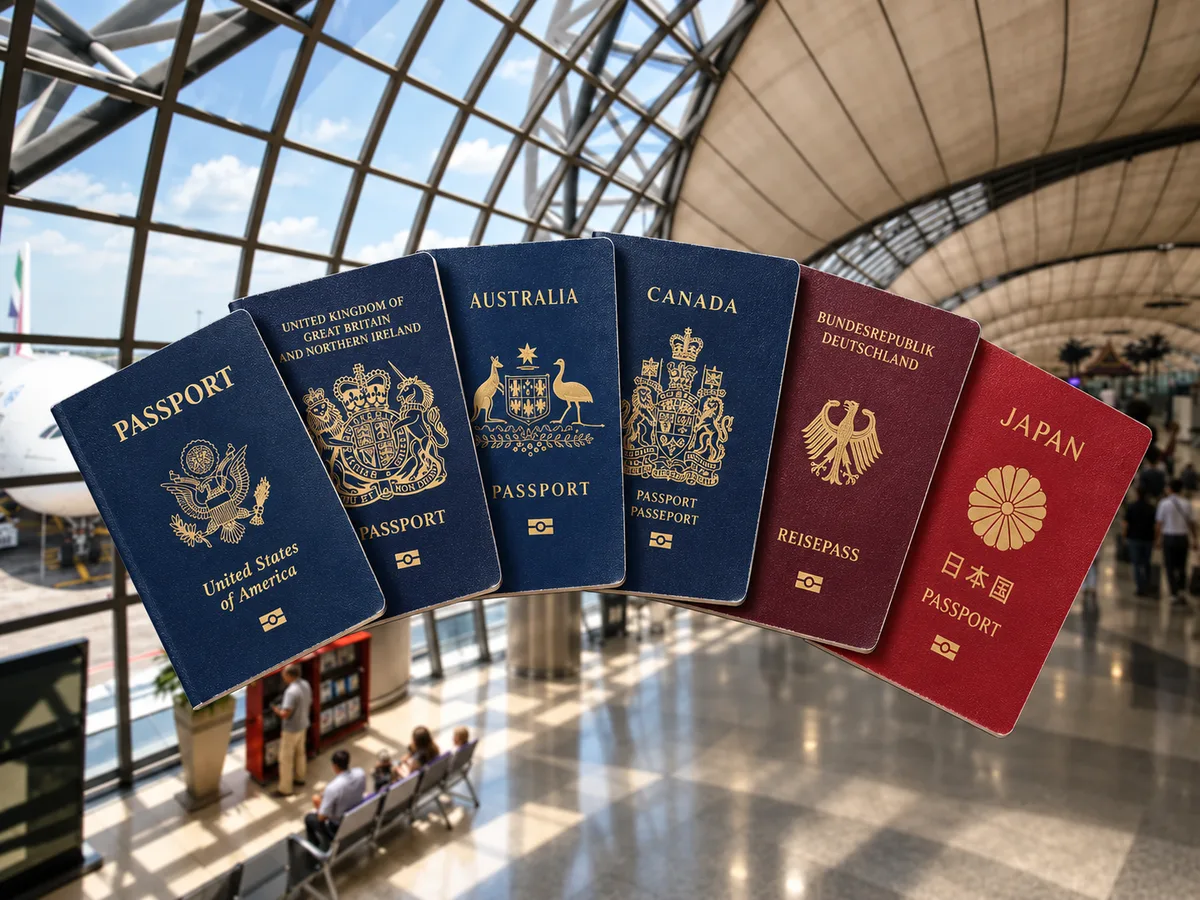
Since 15 September 2026 most passports get 30 days visa-free, not 60, and only three nationalities can get a Visa on Arrival. How to tell which you get.
Visa exemption and Visa on Arrival are two different things. With visa exemption you turn up without a visa and ask to be let in, as long as your passport is on the list. Visa on Arrival is an actual 15-day visa you apply for at certain Thai checkpoints, and only if your passport is on the much shorter VOA list.
The rules for ordinary passports changed on 15 September 2026, so your arrival date matters. A 45-day holiday fitted inside the old 60-day exemption but not the new 30-day one. If you arrived before the change, you keep the stay already stamped in your passport.
What changed on 15 September 2026
This is how the two schemes compare either side of the change.
| Arrival date | General visa exemption | Visa on Arrival |
|---|---|---|
| Before 15 September 2026 | Up to 60 days for 93 listed countries and territories | Up to 15 days for 31 listed countries and territories |
| From 15 September 2026 | Up to 30 days for 60 listed countries and territories | Up to 15 days for three listed nationalities; the fee is 2,000 baht |
Some countries have their own agreements with Thailand that give 14, 30 or 90 days instead, and the new scheme gives Seychelles and Mauritius 15 days. With that many variations we haven't copied the lists here. Find your ordinary passport in the current official tables (updated on 15 September) for your arrival date and read the notes on its row. The scheme announcement explains what changed.
The new 30-day exemption is a tourism scheme, so if you're coming on business, ask the Thai embassy or consulate handling your trip which agreement or visa covers you.
Visa exemption vs Visa on Arrival
In practice the difference looks like this.
| Visa exemption | Visa on Arrival | |
|---|---|---|
| Apply before travel? | No, there's nothing to apply for | No, you apply on arrival at certain checkpoints |
| Who qualifies? | Ordinary passports on the exemption list or covered by a bilateral agreement | Passports on the VOA list |
| Is it a visa? | No | Yes |
| Where to check? | The official table for your arrival date | The official list and the checkpoint's own requirements |
Passport type matters too. An agreement for diplomatic passports doesn't automatically cover ordinary ones, and a bilateral agreement can come with different conditions from the general tourism scheme.
When visa exemption makes sense
For a short trip, exemption is the easy option. If your passport is on the list for your arrival date and the whole trip fits inside the allowance, there's no visa to apply or pay for.
It doesn't give you a right to enter, though. The immigration officer still decides at the checkpoint and can ask for evidence that you're a genuine visitor, and airlines can check your entry and onward-travel documents before you board.
Back-to-back exempt entries aren't a way to live here. If you want to live, work, study or retire in Thailand, start with our Thailand visa guide or try the visa finder.
When Visa on Arrival applies
Visa on Arrival is only for passports on the official VOA list. It isn't something any visitor can pick at the airport because they didn't apply in advance, and if exemption already covers your trip, VOA isn't the better choice just because it sounds more official.
Before you set off, make sure the checkpoint you're using actually handles VOA, and bring the documents it asks for. Finding out at an overland border that the rule you remembered applied to a different passport, date or crossing is a rotten start to a holiday.
Applying for VOA online doesn't change who qualifies. If you use an online service, make sure it's linked from an official Thai government site such as Thailand eVisa and look at every charge before you pay.
What to prepare
The exact list depends on your passport and which scheme you're using, but expect to need:
- a passport with enough validity left
- confirmed accommodation and travel details
- an onward or return ticket
- enough money, in whatever form the scheme asks for
- a completed Thailand Digital Arrival Card, which is free on the official site, so don't pay an unofficial website for it
Extensions and longer stays
An extension is a separate application at an immigration office. It doesn't change how you entered, and other travellers getting one doesn't mean you will, so read our Thailand visa extension guide before you count on extra time.
If you already know your trip is longer than exemption or VOA allows, a tourist visa or another visa for what you're doing is usually simpler. The rest are in our visa guides.