Thailand SMART Visa guide
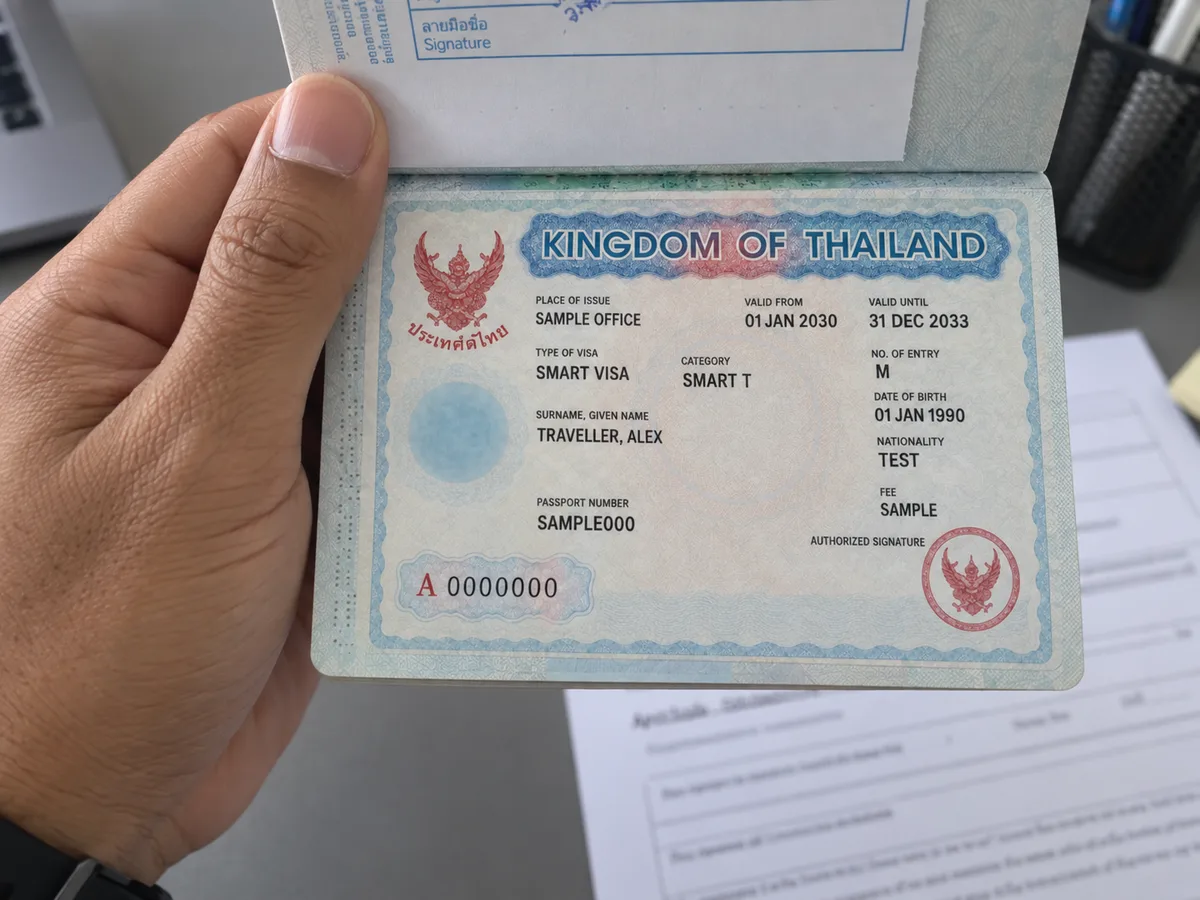
Since February 2025 the SMART Visa is only for founders of certified Thai startups and their families. The 600,000 baht rule, benefits and how to apply.
The SMART Visa is a Board of Investment (BOI) visa for founders of certified startups that are already set up in Thailand. It isn't a general self-employment visa, and a plan to start a business won't get you one.
The rules for new applications changed on 18 February 2025, so older write-ups of SMART T, I and E won't help with a new application.
SMART Visa categories
New applications are now limited to SMART S, for founders of certified startups in Thailand's targeted industries, and SMART O, for their lawful spouse and legitimate children if they meet the dependant requirements.
SMART T (talent), I (investors) and E (executives) belonged to the old programme. The BOI website still has information for people who hold them, which makes it confusing. If you're one of them, ask the SMART Visa Unit what the change means for your stay. (BOI's announcements in English are unofficial translations, and the Thai text is the legal version.)
Who qualifies for SMART S
Your startup has to be set up in Thailand already and certified as a startup in a targeted industry by a government agency, such as the National Innovation Agency or the Digital Economy Promotion Agency. Not every tech job qualifies, so work out what your business does and who will certify it before you spend money on an application.
Under the SMART S checklist you also need:
- at least 25% of the certified company's registered capital, or to be a director
- at least 600,000 baht (or the equivalent) in a bank account in Thailand or the country of your nationality or residence, held for at least three months
- another 180,000 baht (or the equivalent) for each spouse or child coming with you, also held for at least three months
- health insurance for your whole stay, for you and any family coming with you
You and your family also have to meet Immigration's conditions, and ticking these boxes doesn't guarantee endorsement.
What you get
SMART S gets you a renewable stay of up to two years, no separate work permit for the certified business, a once-a-year report to Immigration and no need for a re-entry permit.
The no-work-permit perk only covers the certified work, so it isn't permission to do any work in Thailand. Anything new or extra needs certifying again, and jobs banned for foreigners stay banned. Since 2025, a spouse can't have wider work rights than the main holder.
How to apply
You apply to BOI for endorsement first, then get the visa issued.
- Read the SMART S criteria and work out how your startup gets certified.
- Gather the company, personal and family documents.
- Apply for qualification endorsement through the online SMART system.
- Answer any questions from BOI or the other agencies reviewing it.
- Once you're endorsed, get the visa issued at the Immigration office or Thai embassy you're told to use.
Endorsement is the hard part. That's why this can be a very good route for the right founder and a complete waste of time for someone trying to force an ordinary job into the SMART label.
Fees, validity and renewal
The visa fee depends on how many years you're granted, and the issuance instructions cover the local fee once you're endorsed.
You have 60 days from the date of the endorsement letter to apply for the visa. To renew, apply for endorsement at least 60 days before your current permission runs out.
Reporting after approval
There are two yearly reports, and doing one doesn't count for the other: an address report to Immigration, and a status report to the SMART Visa Unit to show you still qualify. The reporting instructions explain both.
If you change your endorsed role or company, tell the SMART Visa Unit.
If you're not a startup founder
For an ordinary job in Thailand, read the Non-B guide. If you work for an overseas employer, compare the DTV and LTR. None of them is a straight swap for an old SMART category.
The Thailand visa overview compares the main options, and the visa guides cover each one.