Thailand Long-Term Resident (LTR) visa guide
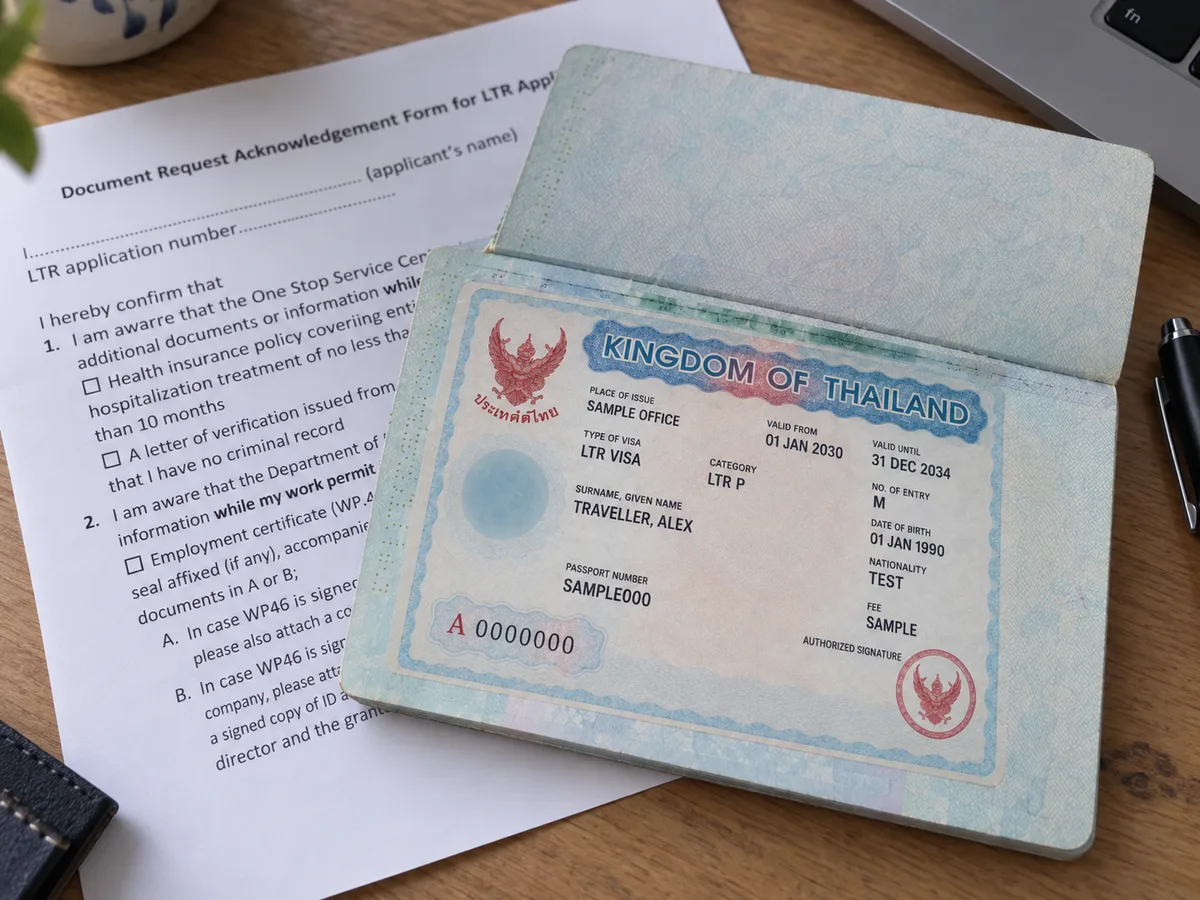
Ten years in Thailand if you fit one of four groups. Who the LTR visa is for, what it gets you, the 50,000 baht fee and the 2025 changes for families.
The Long-Term Resident (LTR) visa gives you ten years in Thailand if you fit one of four groups: Wealthy Global Citizens, Wealthy Pensioners, Work-from-Thailand Professionals and Highly Skilled Professionals. It's an excellent visa if you fit, but it isn't a ten-year visa for anyone with a decent salary.
The ten years come in two halves: five years to start with, then another five if you still qualify. It's run by the Board of Investment (BOI).
The four LTR categories
Your employer, assets and qualifications can matter as much as your income, depending on the category.
Wealthy Global Citizens - You need assets plus qualifying investment in Thailand, and medical cover. Since February 2025 there's no personal-income requirement.
Wealthy Pensioners - For people aged 50 or over who meet the pension or passive-income conditions. It's separate from the standard Non-O, O-A and O-X retirement routes.
Work-from-Thailand Professionals - For employees of established overseas companies, and BOI assesses your employer as well as you. It isn't a freelancer or digital-nomad category. For many ordinary remote workers, the DTV is more realistic.
Highly Skilled Professionals - For experts doing qualifying work in targeted industries or organisations. Your employer, industry, qualifications and, where it applies, your income all count. The work-experience requirement was dropped in 2025.
Pick the category your evidence supports, not the one that sounds most impressive.
What the LTR gets you
The main benefits are a long permission to stay, multiple entry, reporting once a year instead of every 90 days, a route to a work permit for qualifying jobs, and the right for your family to apply as dependants. You only keep them while you still meet the conditions.
Dependants - Since February 2025 these can be a lawful spouse, parents, children under 20 and legal dependants, and there's no longer a limit on how many. Parts of the BOI website still say spouse and children only, maximum four, but that's the old rule.
Work permits - Wealthy Global Citizens, Wealthy Pensioners, Highly Skilled Professionals and dependants can apply for a work permit. Work-from-Thailand Professionals can't use that route, because their qualifying job is remote work for an overseas employer. The LTR isn't automatic permission to take a Thai job.
Income, assets and insurance
Each group has a different financial test, mixing personal income, assets, investment, the size of your employer and qualifications. For health cover you can choose insurance, Thai social security or a deposit.
Go by the current LTR criteria rather than figures copied into an old blog post, and read the definitions as well as the amounts. Salary, pension, passive income, company revenue, personal assets and qualifying Thai investment aren't interchangeable just because they're all money, and not every investment counts.
How to apply
You apply to BOI for qualification endorsement first, and only get the visa once you're endorsed.
- Pick the right LTR category.
- Upload the evidence BOI's online system asks for (the application forms are on the LTR site).
- BOI and the other agencies involved assess you. BOI can ask for more information, and its decision is the one that counts.
- If you're endorsed, complete pre-approval and get the visa issued at a Thai embassy or consulate that handles LTR, or at the Thailand Investment and Expat Services Center in Bangkok.
- Sort out a work permit, if your category and job need one.
Fees and processing time
The visa costs 50,000 baht per person if it's issued in Thailand. Abroad, you pay in local currency and follow the embassy's process.
How long it takes depends on how complete your documents are and on the agency checks. Don't give up your current visa or make a move you can't undo until BOI tells you how the visa will be issued.
LTR compared with other visas
Here's how it compares with the other long-stay options.
DTV - A wider fit for many remote workers, with different work and stay conditions.
SMART Visa - New applications are now only for founders of certified startups already set up in Thailand, plus their families.
Retirement visas - Usually easier for ordinary retirees aged 50+, with different money and reporting rules.
Thailand Privilege - You pay for convenience instead of qualifying on your career or finances.
Non-B - The usual visa for an ordinary job in Thailand outside the BOI programmes.
If you're still deciding, our visa finder helps, the Thailand visa overview compares the main options and the visa guides cover each one.