25 things to do in Pai
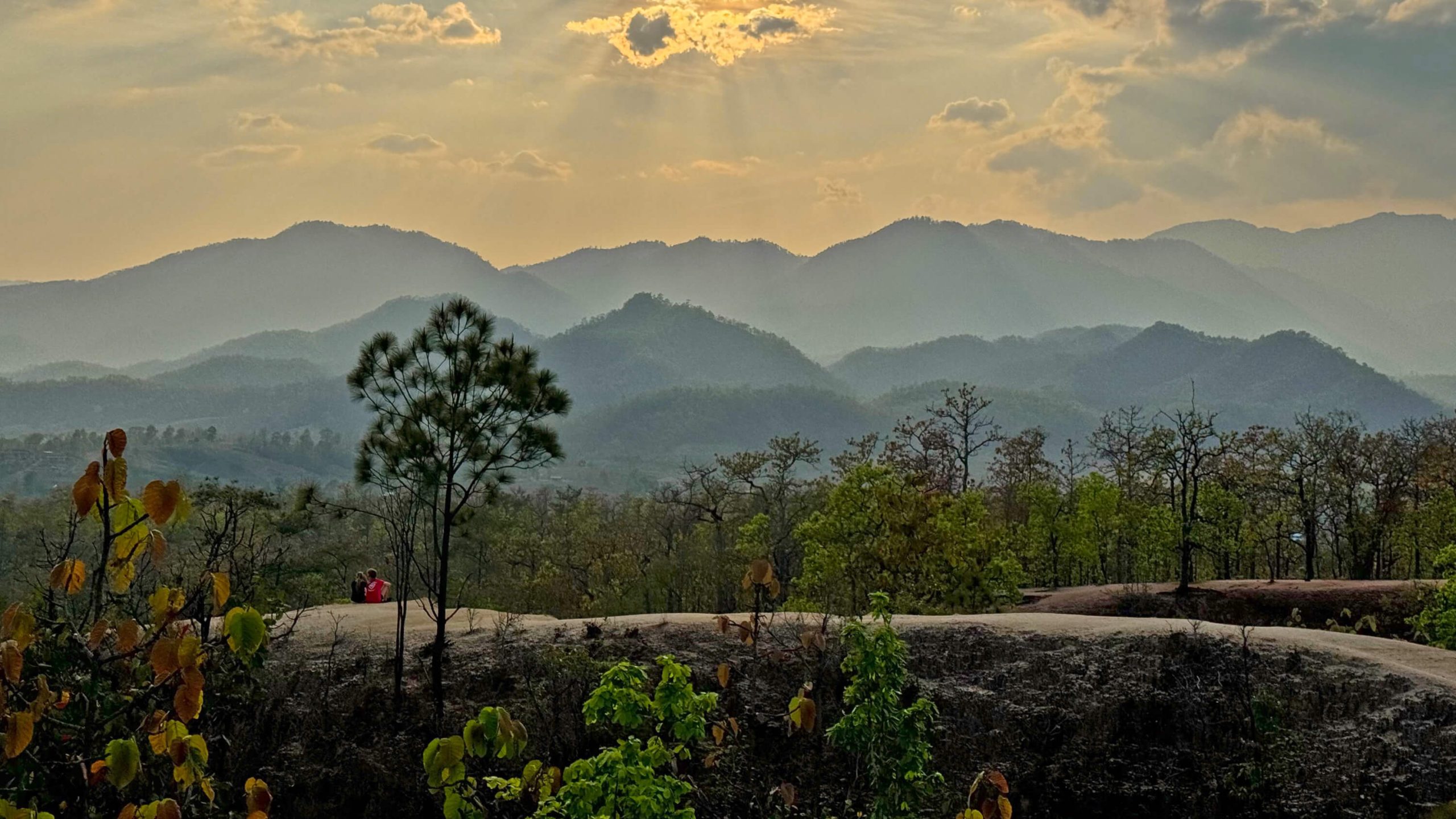
Pai is a small town in the mountains of northern Thailand that people either stay in for two days or two months. It’s not for everyone - if you need structure or nightlife that goes beyond chill bars, you’ll get bored. But if you can let a place set its own pace, Pai is one of the best small towns in Thailand.
1. Rent a motorbike and explore
You need a bike in Pai. The town itself takes about 15 minutes to walk end to end, but everything on this list that isn’t on the main strip requires a ride. Hot springs, waterfalls, the canyon, viewpoints and the restaurants worth the trip are all scattered through the surrounding valleys and hills, connected by some of the most enjoyable riding in Thailand.
Pai is on the Mae Hong Son Loop, a roughly 600km circuit through the mountains that connects Chiang Mai, Pai, Mae Hong Son, and back. The full loop takes 4-6 days and is one of the great motorbike routes in Southeast Asia. You don’t have to commit to the whole thing - the day rides out of Pai in either direction (southeast toward Huai Nam Dang, west toward Soppong and Tham Lod) are some of the best sections, and you can do them as out-and-backs without packing a bag.
We need to be honest about the roads though. Route 1095, the main road connecting Pai to Chiang Mai, has 762 curves in 130km. Add steep gradients, blind corners, gravel patches and the occasional cow, and you need to be competent on a motorbike. If you’ve never ridden anything bigger than a scooter on flat ground, Pai is not the place to learn. People get hurt here regularly.
Rentals run 150-300 baht per day. Manual bikes are available if you ask around.
2. Walking Street night market
Every evening, the main road through town turns into a walking market with food stalls, people and live music. The stalls line both sides of Chaisongkhram Road and spill into the side streets, and the whole strip fills up with smoke from the grills and the smell of frying roti and satay.
Most people come for the food: khao soi from a stall that’s been doing it the same way for years, fresh spring rolls, mango sticky rice, grilled corn, rotis with banana and Nutella, and northern sausages you won’t find on the coast. Walk the full length once to scope it out, then double back and eat too much. Prices are low even by Thai standards - you can stuff yourself for 150-200 baht.
It’s busiest 7-9pm. After 9 the crowd thins and people move on to the bars.
3. Live music and the bar scene
Pai’s music scene is a lot better than you’d expect. On any given night you can walk the main strip and hear live sets coming out of four or five different bars - Thai musicians playing acoustic covers, blues, reggae, and the occasional jazz set.
Jazz Up does what the name suggests, and it was the main stage for the 2026 Pai Jazz & Blues Festival. A handful of other places along the strip rotate musicians and styles. Things pick up around 9pm and wind down by 1 or 2am - Pai doesn’t have the kind of nightlife where anyone’s going till dawn, and that’s part of the appeal. Beers are 80-150 baht, cocktails a bit more.
4. Pai Canyon (Kong Lan)
Narrow sandstone ridges with the valley floor dropping away on both sides, about 8km south of town on Route 1095. The ridges are walkable - barely, in some sections - and the whole thing turns orange at sunset, which is why everyone comes here around 5pm.
Some of the ridge sections are very narrow, with real drops on either side and no railings. Don’t wear flip flops, don’t go if heights are a problem, and don’t do it after the bars. Free entry. Our Pai Canyon guide has more on the trails beyond the main viewpoint.
5. Tha Pai Hot Springs
Natural geothermal springs in a forested park about 8km southeast of town. The water is properly hot - uncomfortable-to-get-into hot in places, with cooler pools downstream where the spring water mixes with the creek. On a cool morning the steam rises up through the trees.
Entry is 300 baht for foreigners (it’s a national park). Go first thing in the morning, when the crowd is thin and the cool air makes the hot water feel even better. Keep your ticket, because the same entry gets you into Huai Nam Dang National Park that day. Do the springs in the morning, ride up to Huai Nam Dang after, and you’ve turned one ticket into a full day.
6. Enduro riding with Tip Off Road
Most people who come to Pai see the same circuit - canyon, hot springs, waterfalls, Walking Street, repeat. The enduro tours with Tip Off Road take you somewhere else entirely.
They run guided off-road rides into the mountains on proper enduro bikes - single track, dirt roads and river crossings that don’t appear on any tourist map. Tip will take out riders of any skill level: he watches how you ride, asks what you’re comfortable with and what you want to see, and picks the route to match. The riding is good, but the real draw is what you see: hill tribe villages where your group might be the only outsiders that week, ridge lines looking out over ranges that stretch into Myanmar, and waterfalls and forest that the motorbike rental crowd never reaches.
7. Huai Nam Dang National Park
A mountain national park about 35-40km southeast of Pai on Route 1095, straddling the provincial border between Mae Hong Son and Chiang Mai. The ride alone is worth it - this section of the loop is all switchbacks and climbing through thick forest, and it gets noticeably cooler as you go up.
The viewpoint up top looks out over a sea of clouds filling the valleys below, particularly during the cool season (November-February) when the mist sits thick in the mountains and the temperature at elevation drops close to freezing. The park has camping facilities and tent rentals, and staying the night rather than driving up and back gets you the sunset, the stars (no light pollution up here), and the sunrise over the clouds the next morning. Bring warm clothes whenever you visit - it gets properly cold at altitude after dark.
8. Tham Lod Cave
One of the more impressive cave systems in northern Thailand, about 50km northwest of Pai near the village of Soppong. A river runs through the cave, and you explore it partly on foot and partly by bamboo raft, through huge chambers full of stalactites.
The best part is the swifts. At dusk, hundreds of thousands of them stream back into the cave entrance to roost for the night, while bats pour out going the other way. Time your visit for late afternoon and you’ll catch it.
Guides are mandatory and available at the entrance - 150 baht for a guide (lamp included) for up to three people, plus about 400 baht for the raft. The drive from Pai follows the Mae Hong Son Loop west through the mountains and is one of the better rides in the area. Plan for a full day.
9. Tubing on the Pai River
Rent an inner tube near the bridge in town, get dropped at a starting point upstream, and float back down the Pai River at whatever speed the current feels like moving. The river is gentle and the scenery is farmland and green hills. Leave the beers on dry land, though: drinking on the river has been banned since 2024.
Expect to pay 200-450 baht for the tube and the ride upstream. Tubing is suspended in the rainy season, when the river gets dangerous, so it runs roughly November to May. It’s best early in that window while the river still has flow - later in the dry season it can get shallow enough that you’re dragging bottom in places, which is less fun than it sounds.
10. Rafting and kayaking on the Pai River
If you want moving water with some energy to it, rafting and kayaking trips run on sections of the river with proper rapids - nothing extreme, but enough to keep you paying attention. Most operators run full-day or two-day trips that include transport, equipment, and a guide for around 2,500-2,700 baht per person. Wet season (June-October) has the best water levels.
11. Mo Paeng Waterfall
About 8km northwest of town on a sealed road. Entry is 100 baht for foreigners. The water slides down a wide, smooth rockface into a pool at the base - the rock is sloped and smooth enough that people slide down it into the water, which is exactly as fun as it sounds and exactly as painful if you misjudge it. The pool is good for swimming. It gets busy on weekends and holidays with Thai visitors, and is quieter on weekdays.
12. Pam Bok Waterfall
Smaller and quieter than Mo Paeng, about 8km southwest of town. Less of a scene, more of a place to sit in the shade by moving water and not do much. Entry is 200 baht. The pool is swimmable.
13. Mae Yen Waterfall (the big hike)
It’s about 6-7km each way through rice fields and forest, with 30-40 river crossings, to a waterfall that, after the rains, is wide and powerful enough to justify the walk. Allow 4-6 hours there and back, and don’t attempt it in the wet season itself, when the crossings get dangerous. You’ll need proper shoes, water and an early start - the trail isn’t maintained to any real standard and it gets muddy. Guides are available in town if you don’t want to navigate alone.
14. The Bamboo Bridge and rice fields
A long handmade bamboo footbridge that crosses the rice paddies southwest of town - it’s become a Pai icon, partly because it’s genuinely pleasant and partly because it photographs well. It was built in 2016 for the monks at a nearby temple, and the local community keeps patching it up (the rainy season doesn’t play nice with bamboo). Small entry fee, 30 baht. The fields are greenest during growing season, July through October. Even outside of that window, the walk is worth the 20-minute ride from town.
15. Santichon Chinese Village
A hillside village about 4km northwest of town, settled by remnants of the Kuomintang - Chinese Nationalist soldiers who retreated into the mountains of northern Thailand after Mao’s Communists won the Chinese Civil War in 1949 and had nowhere else to go.
The village today has tea shops, Yunnan-style food, traditional dress you can rent for photos, and views down over the valley. It’s a tourist attraction at this point, but the food is good and the history of how a community of Chinese soldiers ended up farming in the Thai mountains is worth understanding. Budget an hour.
16. Ban Rak Thai
Same history as Santichon - KMT remnants who settled in the Thai highlands - but Ban Rak Thai sits right on the Myanmar border, built around a reservoir less than a kilometre from the frontier. Yunnan-style buildings, tea terraces climbing the hillsides, longtail boats on the lake with the mountains of Shan State behind them. It’s one of the more unusual-looking places in Thailand.
It’s a solid 2.5-3 hours each way from Pai through mountain roads. Beautiful drive, but a commitment. It’s better as an overnight, or as a stop if you’re continuing the Mae Hong Son Loop west rather than doubling back to Pai.
17. Wat Phra That Mae Yen
The temple on the hill above town with the large white Buddha visible from pretty much everywhere in the valley. You reach it by climbing 353 steps from the base or riding a motorbike up the back road if you’d rather skip the workout. The temple itself is fine. The view over Pai and the surrounding valley from up top is the real draw - go at sunrise or late afternoon when the light’s good and the temperature isn’t punishing.
18. Other temples worth stopping at
Wat Nam Hu has a small, revered Buddha image that supposedly sweated holy water from its head - take that how you will, but the temple is peaceful and the locals take it seriously. Wat Luang is tucked into the centre of town, understated and worth a few minutes if you’re walking past. Neither is a destination in itself.
19. The WWII Memorial Bridge
A steel bridge over the Pai River, on the site of the wooden one Japanese forces built in 1942 with local villagers’ labour as part of the supply route into occupied Burma. The original was burned in 1944, and the steel bridge there now went up in the 1970s. There’s not a lot of signage or interpretation on-site, which is a shame, because the story of the Japanese military’s presence in northern Thailand during the war is one most visitors know nothing about. It’s worth a stop, and worth reading up on before you go.
20. Zipline
A couple of operators run canopy zipline courses through the trees above the valley. They’re not the longest or highest you’ll find in Thailand (Chiang Mai has that covered), but the valley scenery from up in the canopy is hard to beat. Bookable through guesthouses around town. Half-day activity.
21. Jungle trekking
Multi-day treks into the hills around Pai pass through Lahu, Karen, Lisu, and Shan villages, sleeping and eating with local families. This is the kind of trekking that was Chiang Mai’s calling card 20 years ago before the tourism infrastructure got too polished - it still feels real up here. Guides organise everything from the trekking shops in town. Budget 1,000-1,800 baht per day depending on the itinerary and group size. Single-day walks are available too if you want the forest without the overnight commitment.
22. Visit a cafe
Pai is very popular with Thai tourists (not just the international backpacker crowd), and Thai tourists love a good cafe. The result is an absurd number of Instagram-ready coffee shops for a town this size - rice field views, treehouse seating, vintage shophouse interiors, hand-drip single origin. The ones south of town on the road toward Huai Nam Dang tend to have the best settings, built into the hillside with the valley spread out below.
23. Yoga and wellness
Pai has had a yoga and retreat scene for decades at this point, built around the long-stay crowd who come for a week and end up staying through the season. Several studios run daily drop-in classes. Longer retreat programmes with accommodation, daily practice, and structured eating are available too, and they cost a fraction of what you’d pay for the same thing on Koh Samui or in Bali.
24. Thai massage
200-300 baht for an hour in most of the massage shops in town - some of the cheapest you’ll find anywhere in Thailand. After a day on the motorbike riding mountain curves, an hour getting worked over is money well spent.
25. Eat your way through town
Northern Thai food is its own thing, distinct from what you get in Bangkok or on the coast. Khao soi - egg noodles in a rich coconut curry broth, topped with crispy fried noodles and pickled mustard greens - is the dish everyone knows, and you should eat it at least twice (the versions vary from stall to stall and it’s worth comparing).
There’s more here than khao soi, though. The larb in the north tends to be drier, herbier, and more intensely spiced than the central Thai version. Nam prik ong - a slow-cooked tomato and pork chili dip eaten with raw vegetables and sticky rice - is a northern staple that most tourists never order because they don’t know what it is. And Shan-influenced dishes from across the border in Myanmar show up on menus here that you won’t find further south.
Walking Street is the obvious place to start, and the food there is good - the stalls are feeding locals too, not just tourists. Beyond that, the restaurants and shophouse kitchens scattered through town and along the roads out of it are worth exploring on the bike.