Chiang Rai
Chiang Rai (เชียงราย) is Thailand's northernmost province and a hotspot for trekking, mountains, waterfalls and stunning viewpoints. It borders Myanmar and Laos, and all three countries come together at the once-infamous Golden Triangle along the Mekong River.
Chiang Rai is Thailand’s northernmost province, and it’s a different animal from its famous neighbor Chiang Mai. Smaller, quieter, cheaper, and with some of the most bizarre contemporary art you’ll find anywhere in Southeast Asia. This Chiang Rai Thailand guide covers the essentials for getting here, what to actually see, and why it’s worth more than a rushed day trip.
The temples here aren’t ancient ruins — they’re modern architectural fever dreams built by living artists. A blinding white temple covered in fragments of mirrors. An all-blue temple that photographs like something from another dimension. A sprawling black compound filled with animal bones and crocodile skins. All within 20 minutes of each other.
Beyond the temple circuit, Chiang Rai is where you go to reach the Golden Triangle — the point where Thailand, Laos, and Myanmar meet at the Mekong River. It’s surrounded by misty mountains, tea plantations, and hill tribe villages that still feel genuinely remote.
Getting there
From Bangkok
By air is the obvious choice. Flights land at Mae Fah Luang-Chiang Rai International Airport in about 1 hour 25 minutes. Thai AirAsia and Nok Air run multiple daily flights from Don Mueang. Thai Lion Air and Thai Vietjet also compete on this route. Expect to pay 1,000-2,000 baht one way if you book ahead — prices spike during high season and holidays.
You can also fly from Suvarnabhumi (BKK), but most budget carriers use Don Mueang, so check both airports when comparing.
By bus takes 10-12 hours but runs overnight so you save on a hotel. Buses leave from Mo Chit (Chatuchak) Bus Terminal. VIP buses with reclining seats, toilets, and blankets cost 700-900 baht. Look for Sombat Tour, Nakhonchai Air, or Budsarakham. Book at the station or online via their websites.
No direct train runs to Chiang Rai. You can take the train to Chiang Mai (10-14 hours, sleeper berths available) then catch a bus for the final 3.5 hours to Chiang Rai. This adds complexity but the sleeper train from Bangkok to Chiang Mai is a classic Thai experience if you have time.
From Chiang Mai
This is how most people arrive. Green Bus runs from Chiang Mai Bus Terminal 3 to Chiang Rai Bus Terminal 1 almost every hour from 08:00. The journey takes 3-3.5 hours through mountain scenery. Standard buses cost about 320 baht, VIP with bigger seats runs around 305 baht for the 24-seat coach — confusingly, the VIP is sometimes cheaper than standard (as of February 2026).
You can also book private minivans and tours that include the White Temple and other stops along the way. These run around 800-1,500 baht per person depending on what’s included.
The Green Bus app lets you book ahead and pay at 7-Eleven, which is handy. But buying at the station works fine — they’re rarely sold out except during holidays.
Getting around
Chiang Rai town is small enough to walk if you’re staying near the Clock Tower. The night bazaar, Clock Tower, and most restaurants are within a 15-minute walk of each other.
Grab works here but drivers are fewer than in Chiang Mai or Bangkok. You might wait 5-10 minutes for a ride, and some destinations outside town may have no drivers available. A ride to the White Temple costs around 150-200 baht one way.
Songthaews (the shared red trucks) run fixed routes around town for 20-30 baht. They’re less organized than in Chiang Mai — mostly you flag them down and ask if they’re heading your direction.
Rent a motorbike if you want to explore the temples and surrounding areas independently. Shops near the bus station and Clock Tower rent scooters for 200-300 baht per day. You’ll need a driving licence — technically an international driving permit is required, though enforcement varies. We can’t stress enough: make sure your travel insurance covers motorbike accidents.
Rent a car if you’re planning trips to the Golden Triangle, Doi Mae Salong, or other mountain destinations. This gives you the most freedom. Compare car rental prices before you go.
The temples are spread out — 10-15 km from town center — so you’ll need transport to reach them. Tour vans are the easy option (half-day temple tours run 500-800 baht), but renting your own wheels gives you more flexibility to linger or leave when the tour buses arrive.
What to do
The White Temple (Wat Rong Khun)
This is what brought you here. The White Temple is not an ancient temple — it was started in 1997 by Thai artist Chalermchai Kositpipat and won’t be finished until 2070. Every surface is covered in white plaster and mirror fragments that blind you in the sun.
The approach crosses a bridge over a sea of reaching hands (souls trapped in hell) toward a blinding white ubosot. Inside, traditional Buddhist murals share wall space with images of Michael Jackson, Predator, and the Matrix. The back wall shows September 11 and nuclear explosions. It’s weird as hell, and that’s the point.
Entrance: 200 baht for foreigners as of January 2026 (doubled from the previous 100 baht). Free for Thai nationals.
Dress code: Cover shoulders and knees. Free sarongs available if needed.
When to go: Open 08:00-18:00 daily, last admission at 17:30. Arrive before 09:00 or after 15:00 to avoid the worst tour bus crowds. The light is best in the morning.
Located 15 km south of Chiang Rai town on Highway 1 towards Chiang Mai, about 20 minutes by taxi or scooter.
The Blue Temple (Wat Rong Suea Ten)
Built by a student of Chalermchai (the White Temple artist), the Blue Temple opened in 2016 and takes the opposite approach — deep blue walls instead of blinding white, gold detailing, and a giant white Buddha statue as the centerpiece.
It’s smaller and calmer than the White Temple. The colors photograph incredibly well, especially the interior. The temple stays open until 20:00, and the evening lighting creates a completely different atmosphere — worth a second visit after dark. Allow 30-45 minutes.
Entrance: Free. Donations welcome.
Dress code: Same rules as all temples — cover shoulders and knees. Free sarongs available at the entrance.
Located 6 km north of town, an easy 10-minute ride from the Clock Tower. Only 22 minutes from the White Temple, making it easy to visit both in a half-day.
The Black House (Baan Dam Museum)
Despite what tour operators call it, this is not a temple. No monks, no Buddha statues, no religious ceremonies. Baan Dam is a private art museum created by Thawan Duchanee, who passed away in 2014.
The complex covers 40+ buildings in traditional northern Thai style, but filled with buffalo horns, crocodile skins, python skins, animal skulls, and carved wood. Everything here points toward death and the subconscious. It’s the White Temple’s shadow self.
The main building looks like a traditional Lanna house but scaled up to massive proportions, all in black. Inside, elaborate carvings share space with tables made from animal bones. It gets under your skin.
Entrance: 80 baht.
Hours: 09:00-17:00 daily.
Located 13 km north of town in Nang Lae. About 20 minutes from the Clock Tower, 17 minutes from the Blue Temple.
The Golden Triangle
An hour north of Chiang Rai, the Mekong and Ruak rivers meet at the point where Thailand, Laos, and Myanmar share a border. This was once the center of the world’s opium trade. Now it’s a tourist viewpoint with a giant golden Buddha, souvenir stalls, and boat tours.
The viewpoint itself takes about 20 minutes to walk around. The giant Buddha statue (Phra Chiang Saen Si Phaendin) looks across to Laos.
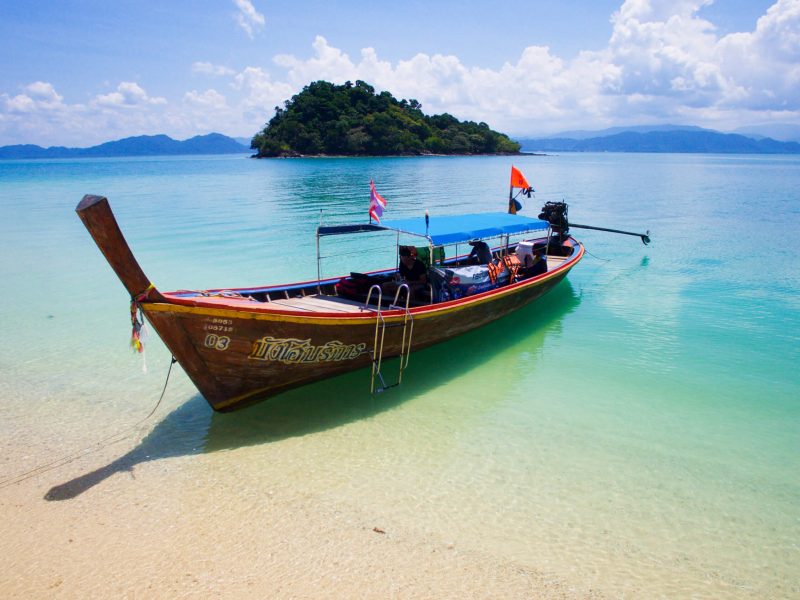
Boat tours to the Laos side run 400-1,000 baht depending on negotiation for a longtail that seats 6-8 people. You can technically step onto Lao soil on a sandbar (bring your passport), buy cheap cigarettes and Lao whisky if you want, then head back. The boat ride takes about 30-60 minutes round trip.
The Hall of Opium museum, 800 metres from the viewpoint, tells the history of the opium trade in the region. Entrance is 200 baht. It’s actually well done — dark, immersive, and sobering. Allow 1-2 hours.
Getting there: The Golden Triangle is about 70 km from Chiang Rai town, roughly 1-1.5 hours by car. You’ll need your own transport or a tour. Hiring a taxi for the day runs about 1,500-2,000 baht for 4 people.
Tea plantations
The hills around Chiang Rai are covered in tea. Choui Fong Tea Plantation is the most visited — 40 km from the city, with a cafe terrace overlooking terraced fields. Entrance is free, and you can sample teas or buy some to take home. The views are genuinely worth the drive.
101 Tea Plantation is another option, about an hour’s drive from the city. Both offer leaf-picking experiences if you’re into that.
The Clock Tower
In the center of Chiang Rai, the golden Clock Tower is another Chalermchai creation. It’s smaller than his other work but glitters beautifully at night. Come at 19:00, 20:00, or 21:00 for the light and music show when the tower shifts colors while traditional Thai music plays.
The show lasts about 10 minutes. It’s free and makes a good starting point for an evening exploring the night bazaar.
Doi Mae Salong
A Chinese-style mountain village about 70 km west of Chiang Rai, near the Myanmar border. The area was settled by former Kuomintang soldiers who fled China after the Communist revolution. Their descendants still grow tea on the surrounding hillsides.
The village has Chinese temples, tea shops, and cool mountain air. You can hike to viewpoints overlooking the tea plantations. The morning market is worth seeing if you stay overnight.
Getting there requires your own transport or a tour. The winding mountain roads are scenic but slow.
Phu Chi Fa
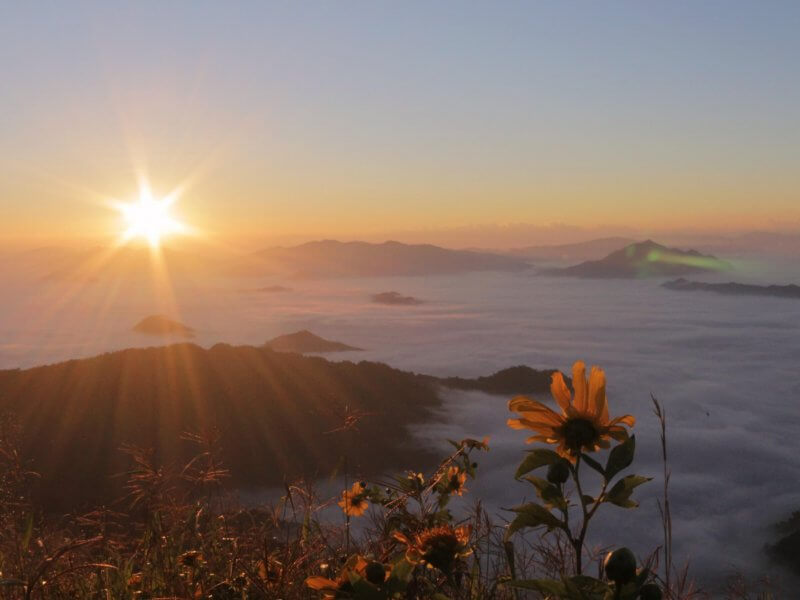
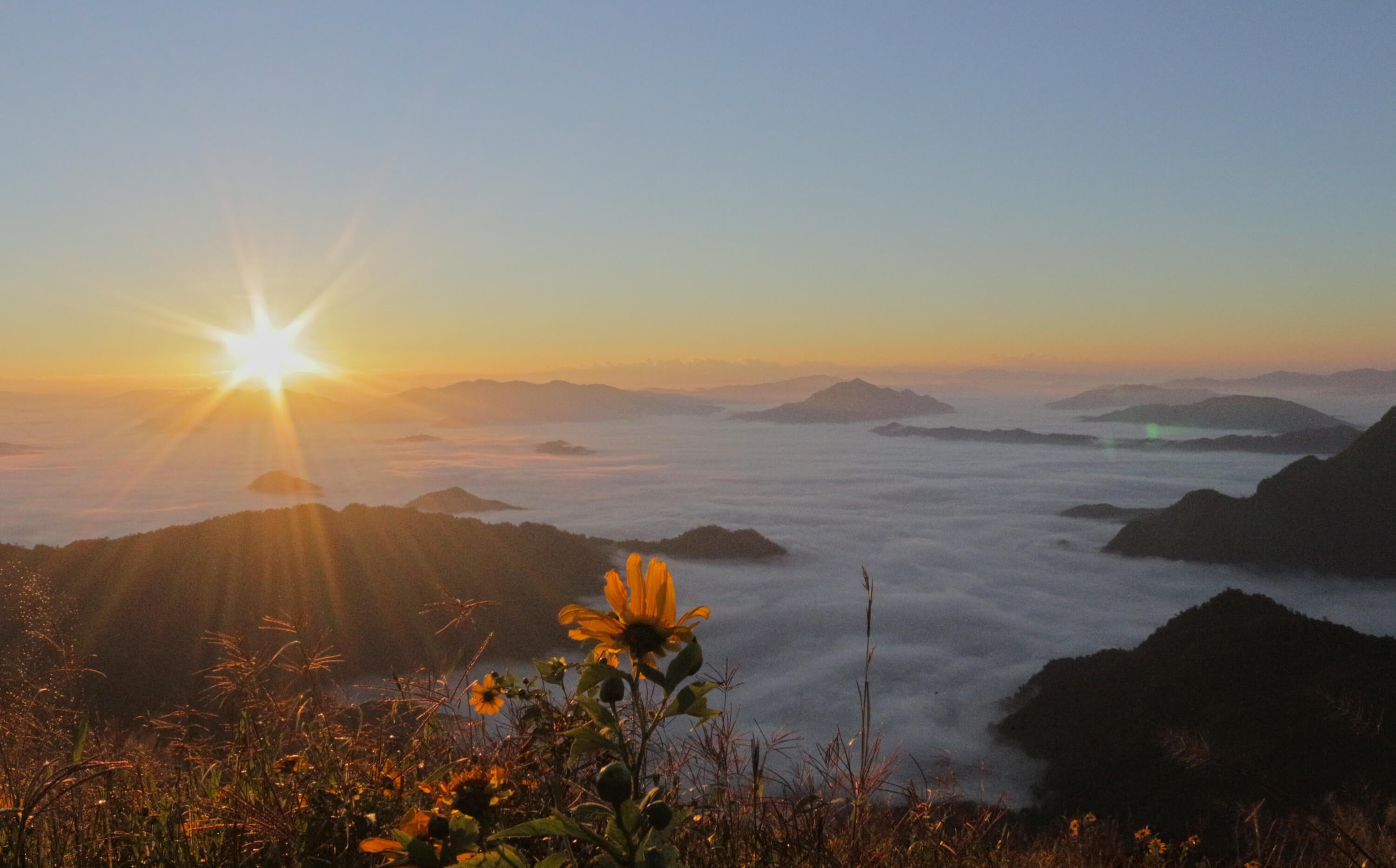
A mountain viewpoint famous for its sunrise over a sea of clouds. At 1,628 metres elevation, it’s cold in the morning — bring layers. The viewpoint is near the Laos border, about 100 km northeast of Chiang Rai.
This is worth it only if you stay overnight in the area (guesthouses in nearby Thoeng) and wake up before dawn for the sunrise. Day tripping from Chiang Rai means leaving at 3am.
Nightlife
Chiang Rai’s nightlife is relaxed. No clubs, no go-go bars, no Full Moon Parties. If that’s what you want, you’re in the wrong city.
What you get instead is a pleasant evening scene centered on the Clock Tower and night bazaar area. Jet Yod Road runs past the Clock Tower and has a concentration of bars, most with live music.
Cat Bar on Jet Yod Road is a small Thai-owned spot with live music nightly and a free pool table. Good for a few drinks in a local atmosphere. Open until about 01:00.
Rad Bar sits right next to the Clock Tower — a buzzing venue where locals and tourists mix. Casual atmosphere, affordable drinks, central location.
Peace House Bar is the backpacker hangout — reggae vibes, spontaneous jam sessions, back garden with a chill atmosphere. Live reggae on Fridays. If you’re looking for other travelers, this is where they end up.
The Night Bazaar opens around 17:00-18:00 and runs until about midnight. It’s smaller and more local than Chiang Mai’s version. Live traditional music and dance performances happen on the central stage most evenings. Good for browsing hill tribe handicrafts and eating street food — khao soi, sai ua (northern sausage), pad thai, fried fish.
The Saturday Walking Street on Thanalai Road (1.5 km long) and Sunday Walking Street on Sang Khon Noi Street are larger markets if you’re here on a weekend.
Don’t expect late nights. Most places wind down by midnight.
Where to stay
Chiang Rai is cheap compared to Chiang Mai and much cheaper than Bangkok. You can get a clean guesthouse room for 400-600 baht, a decent hotel with pool for 800-1,500 baht, and boutique or riverside options for 2,000-5,000 baht.
Clock Tower / City Center is the best area for first-timers. Everything you need — restaurants, bars, night bazaar, tour agencies, 7-Elevens — is within walking distance. Most budget and mid-range options are here.
Jet Yod Road has good guesthouses and is close to the nightlife, such as it is.
Riverside (Mae Kok River) is where the nicer hotels are. You get peaceful views and resort-style pools, but you’re a 10-15 minute ride from the action. Good if you want quiet.
The Golden Triangle has luxury resorts including the Four Seasons Tented Camp and Anantara Golden Triangle — but these are destination resorts, not practical bases for exploring.
Use Booking.com or Agoda to compare prices — both have good coverage of Chiang Rai.
When to visit
November to February is the best time. The weather is cool and dry — temperatures drop to 10-15°C at night in the hills, which is cold by Thai standards. Bring a jacket. This is also peak season, so expect higher prices and more tourists at the major temples.
March to May is hot season. It can get brutally hot (35-40°C) and smoky — northern Thailand’s burning season creates haze that obscures the mountain views and makes breathing uncomfortable.
June to October is rainy season. You’ll get afternoon downpours most days, but mornings are often clear. Prices drop, crowds thin out, and the landscape is lush green. If you don’t mind getting wet, this is a good time to visit.
If you’re planning around festivals, Songkran (Thai New Year, mid-April) is chaotic fun — water fights everywhere.
Where to go next
From Chiang Rai, you can continue deeper into the north, loop back to Chiang Mai, or head to Laos.
- Chiang Mai — 3.5 hours by bus. The obvious connection. Most people visit both.
- Pai — You’d go via Chiang Mai (add 3-4 hours from Chiang Mai to Pai). Worth it if you have time.
- Chiang Khong — Border town 1.5 hours from Chiang Rai. This is where you cross to Laos for the slow boat down the Mekong to Luang Prabang.
- Mae Sai — Thailand’s northernmost point, on the Myanmar border. You can walk across for a few hours (bring your passport). Mostly shopping.
- Doi Mae Salong — See above. Good for a day trip or overnight.
For more on getting around Thailand, we’ve covered the options. If this is your first trip, check our beginner tips.
FAQ
How do I get to Chiang Rai from Bangkok?
Flights from Bangkok take about 1.5 hours and cost 1,000-2,500 baht one way. Multiple airlines fly from both Don Mueang and Suvarnabhumi. Overnight buses from Mo Chit take 10-12 hours and cost 700-900 baht. There’s no direct train, but you can take a sleeper train to Chiang Mai then bus the final 3.5 hours.
How much does it cost to enter the White Temple?
Foreign visitors pay 200 baht as of January 2026 (the price doubled from 100 baht at the start of the year). Thai nationals enter free. The temple is open 08:00-18:00, last admission at 17:30.
Is Chiang Rai worth visiting or just a day trip from Chiang Mai?
Chiang Rai deserves at least 2-3 nights. A day trip from Chiang Mai means you spend 7+ hours on buses and have maybe 4 hours to rush through temples. Stay longer to see the Golden Triangle, explore at your own pace, and enjoy the night markets without exhaustion.
What’s the difference between the White Temple, Blue Temple, and Black House?
The White Temple (Wat Rong Khun) is a contemporary Buddhist temple built in blinding white, with heaven and hell imagery and modern pop culture references. The Blue Temple (Wat Rong Suea Ten) is a newer Buddhist temple with striking blue interiors and a giant white Buddha. The Black House (Baan Dam) is not a temple at all — it’s a private art museum exploring themes of death and the subconscious, filled with animal bones and dark carvings.
When is the best time to visit Chiang Rai?
November to February brings cool weather (15-28°C) and clear skies. March to May is very hot, with April temperatures reaching 40°C. June to October is monsoon season — afternoon storms, lush landscapes, and fewer tourists.
How do I get from Chiang Mai to Chiang Rai?
Green Bus runs almost hourly from Chiang Mai Bus Terminal 3. The journey takes 3-3.5 hours and costs around 305-320 baht. You can book through the Green Bus app or buy tickets at the station.
Do I need a car to see the temples?
The temples are 6-15 km from town, so you need transport. Options: rent a motorbike (200-300 baht/day), hire a Grab or taxi, join a half-day tour (500-800 baht), or rent a car for full flexibility.
Can I visit Laos from Chiang Rai?
Yes. From the Golden Triangle, you can take a boat to a sandbar in Laos and back (30-60 minutes, 400-1,000 baht, bring passport). For a proper Laos visit, go to Chiang Khong (1.5 hours from Chiang Rai), cross the border to Huay Xai, and take the slow boat down the Mekong to Luang Prabang.
When to go
Most of Thailand falls in to the generic high and low season categories, including Chiang Rai.
High season - begins in November and runs through to February, bringing cooler temperatures, lush greenery from the previous months of rain, good air quality, and less rain. The downside is larger crowds and sometimes higher prices for tours, flights and accomodation.
Low season - begins in July and runs through to October. During low season the temperatures are higher, the chance of rain and storms are higher. That doesn't mean it's a bad time to visit though, if you can be flexible, there are deals to be found on flights and accomodation.
Destinations like Chiang Rai in both northern and north eastern regions can be significantly cooler during the high/cool season than central and southern provinces like Bangkok or Phuket. It's a welcome and noticable change in season which may require a wardrobe change, especially at night.
As Chiang Rai is in the northern/north eastern region, it's important you consider the smokey/burning season which affects the north, north east and sometimes central/eastern provinces. You can find more information for current and historical air quality on aqicn.org.
Need more? Read our post discussing the best time to visit Thailand.
Where to stay
Instead of recommending hotels, we think it will be more useful to share our process so you can pick based on your own critera for location, budget and style.
We always start our search on either Booking.com or Agoda. They have an easy to user interface and have some extra benefits for "Genius" and "VIP" users. You can also sometimes pay with credit card in advance if you're playing the cashback or air miles game.


Process:
- Search for specific province, city or town.
- Apply rating filters for a minimum rating or either 7, 8 or 9.
- Apply other filters: budget, fitness, breakfast, etc.
- If you have a specific location in mind, use map view to browse and make a final selection.
If there are too many properties available to choose from, increase the rating filter for less, higher rated selections.
Final notes: Prices are dynamic. Check the same hotel on both Booking.com and Agoda to see which has the best deal at any given time (go through to checkout to make sure all VAT and service charges are factored in). You can go one step further by calling the hotel and checking the price for booking directly. In our experience this saves money 50% of the time but you have less guarantees.
Emergency contacts
Knowing an emergency number could save your own, or somebody elses life. Take a photo or save these numbers on your phone:
Police & emergencies - 191
The most important number to remember. If the operator is unable to speak English, call 1155 (below).
Tourist Police - 1155 or (+66) 2308-0333
This hotline is available 24 hours a day and they will all speak English. This is an important phone number to remember - They will help you out with any concerns or questions you have and can redirect you to the correct number you may need.
Public Ambulance - 1669
Dialing this number will connect you to a public ambulance service, which will dispatch a vehicle to your location. The average response time for urban areas is around 10 minutes, but may take up to 30 minutes in rural areas. English-speaking staff should be available to assist you.
Fire Department - 199
In case of an emergency such as a house fire, or forest fire, call 199 for the Fire Department to be dispatched to your location.
Highway Police - 1193
If you plan on driving in Thailand, then you may end up needing to use this number if you break down in an unsafe place etc.
Posts
Our archive of posts from Chiang Rai
Videos
Our archive of videos from Chiang Rai
Activities
Our archive of activities and things to do in Chiang Rai