Thailand Arrival Guide 2026: Visas, Money, Airport Transport & More

Thailand is actually a very easy country to travel in, but we know it can feel overwhelming. This guide covers everything you need to prepare for your trip and arrive safely and with the peace of mind that comes from knowing you have everything in order.
While you’re thinking about it, we also recommend saving this e-book to your phone so you can access it anytime offline during your travels. It’s even got emergency services contact numbers – which of course you don’t need, until the time you do.
Quick summary
This guide tries to cover all the basics regardless of your travel style, budget and home country. That means we have to pack in a lot of info. We recommend at least skimming the whole thing, but if you just downloaded the morning of your trip, here is the most basic information you need:
- Most nationalities get between 30 and 90 days of visa-exempt entry when arriving in Thailand. Double-check if you need one using the tool at the official Thailand e-visa website. e-visas usually take 3-10 business days to process so this can’t be done the day of. Visa-on-arrival is available for some nationalities who don’t have visa-exempt entry.
- You must complete a Thailand Digital Arrival Card (TDAC) at this website within three days of your trip. Not doing so will lead to headaches when you arrive. It can be done at kiosks in the airport, but you’ll clear immigration faster if you do it in advance.
- You might need to show a flight ticket out of Thailand to be allowed to board your flight. See the Onward Ticket section below.
- Bring $700 cash, ideally in US 100-dollar bills, but any major currency is OK. Bills should be new, crisp, and unmarked. Also, bring an ATM card from a bank that doesn’t charge foreign transaction fees. Take out 20,000 Thai Baht (~$600 USD) from an ATM at the airport and change the cash in Bangkok. Only change (a small amount of) money at the airport if there is an issue with your ATM card.
- Travel insurance is not required to travel in Thailand, but it’s a very good thing to have. We recommend buying from Safety Wing because it’s easy to see if you will be covered for common activities like motorbikes, scuba diving, jet skis etc. Or check our page to learn more about travel insurance vs travel health insurance.
- Buy an e-SIM card before arriving so you have connectivity as soon as you land.
- If you haven’t booked a hotel yet, you probably should. You need to put an address on the digital entry card mentioned above. Here are some Bangkok hotels on Agoda to get you started.
- Download Grab (Uber for Southeast Asia) and use that rather than an airport taxi to get to your hotel.
- Download the Google Translate App and download a Thai language keyboard to your phone (so Thai people can write a message to you if needed).
- Download a currency converter app if you’re not quick with conversions in your head. We like Xe but any are fine.
- Read our recommended Thailand packing list so you don’t over- or underpack for your trip.
Before you go
Visa & entry requirements
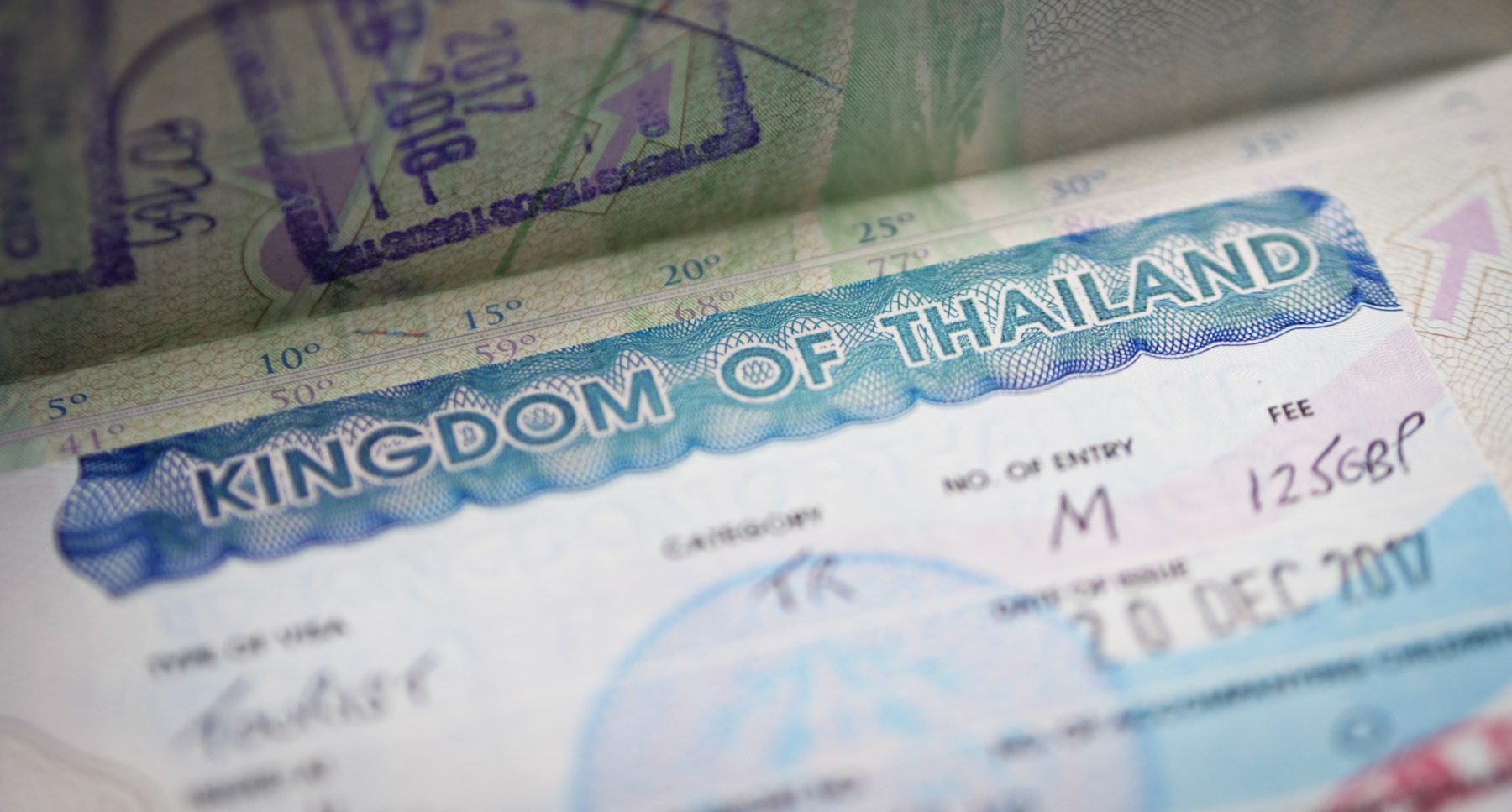
People of most nationalities do not need a visa before flying to Thailand. You are either granted a grace period of between 14-90 days visa-free, or you can receive a visa on arrival at the airport. Most European and East Asian nationalities (except Chinese) receive 30 days or more on a visa-exempt entry. This information changes sometimes but we find the tool on the Thailand E-Visa website to be a good resource for current information.
If you know you’ll only be granted 30 days and are sure you will stay longer than that, you can apply for a tourist visa online before your trip. A single-entry visa will allow you to stay for 60 days, but will be canceled once you leave Thailand. If you need to make multiple trips into Thailand of over 30 days each, you can apply for a multiple-entry visa.
E-visas usually take 3-10 business days to process.
If you aren’t totally sure you’ll need it, don’t bother. You can apply for a 30-day extension from the end of your original 30-day entry at the immigration office in any province for 1900 Baht (~$60 USD). This can be a quick process in many provinces, but in Bangkok, Chiang Mai and some other places, it can be a half-day or longer ordeal.
If you’re a remote worker or digital nomad planning a longer stay, check out the Destination Thailand Visa (DTV) – it’s a five-year, multiple-entry visa that lets you stay up to 180 days at a time. For a full breakdown of all your options, see our complete Thailand visa guide.
For e-visas you need to apply from the country where you hold residency. For proof of this you can submit something like scan of your driver’s license with your home address on it. If you are already traveleing you are supposed to apply for a visa at a Thai consulate or embassy in that country. You could probably still apply online using a VPN, but an immigration officer could potentially see from your passport that you lied on your application and that would make for way more trouble that it was worth.
Thailand Digital Arrival Card (TDAC)
Thailand has replaced the entry forms you used to fill out on the plane with a digital registry. You need to fill out your TDAC at the official website between 24 and 72 hours before your arrival. The site will ask you for your passport information, flight details, and the address of your accommodation in Thailand (just use the hotel where you’re staying your first night).
Onward ticket
Technically, you need to have your travel out of Thailand booked before arriving. This is virtually never enforced by immigration officers, but since it’s on the books, sometimes airlines will enforce it. If you are denied entry, it’s the airline’s responsibility to fly you back out so they take these regulations seriously.
If you are applying for an e-visa, you will also need to submit your proof of onward travel. If they do ask for it, they will probably want to see a flight itinerary — a bus or train ticket won’t do.
If you plan on leaving Thailand overland for another country or just want to keep your travel plans open, this requirement can cause some stress. There are sites like Rent a Ticket that allow you to “rent” an itinerary for a certain period of time to show as proof. Some travel booking sites allow refunds on bookings within 24 hours so you could book something right before flying and cancel it within a day. You can also keep a city in mind that you might like to visit next and if you have any problem at the airport, quickly book a ticket there.
Tip: A good option for this backup plan is to book a ticket to Penang in Malaysia. It’s a short flight that is usually inexpensive, most people don’t need a visa for Malaysia unlike other neighboring countries which charge $35-$50 USD, and it’s a nice place to go for a few days with good hotels and great food. A one-way ticket will be enough, and when that time comes, you can either take a nice little trip or just skip it and lose what you paid for the ticket.
Money
The currency of Thailand is the Thai Baht. It is pretty stable and for the last ten years has mostly stayed between 30 and 36 Baht to one US Dollar. You should pretty much never try to change currency in your home country before your trip. Foreign currency exchange rates in Thailand are very competitive and ATMs are very convenient, fairly inexpensive to use, and located pretty much everywhere.
Tip: For quick conversions you can think of 100 Baht as being $3, €2.80 or £2.50, and 1000 Baht as $30, €28, or £25.
Your best bet is to bring some cash with you in a major currency to exchange, or to use ATMs. Our recommendation is to do both. You should have some cash in case you have any issues with your ATM card, and you should bring an ATM card as a backup even if you are bringing cash. Technically there is an immigration requirement that you must be able to show 20,000 Baht in cash to enter Thailand. In reality, this is almost only enforced on people with a lot of in-and-out entry stamps who look like they may be working illegally in Thailand. Still, it’s not a bad idea to bring along some cash, and the minimum for the 20,000 Baht requirement works out to $650, €550, or £500 which is a pretty good amount for most travelers.
In the arriving section below there’s some more information on getting cash at the airport.
Vaccinations
According to the US Centers for Disease Control, travelers to Thailand should be up to date on all their standard vaccinations like the measles-mumps-rubella (MMR) vaccine, diphtheria-tetanus-pertussis vaccine, varicella (chickenpox) vaccine, polio vaccine, and your yearly flu shot.
After that, they recommend most travelers get a Hepatitis A and a Typhoid vaccination. Note that the Hep A requires two shots over six months. The Typhoid vaccine is only 50-80% effective.
For travelers to very rural areas, the CDC recommends Hepatitis B and Japanese Encephalitis vaccinations. Hep B consists of three doses over six months and can be combined with Hepatitis A vaccinations. Japanese Encephalitis takes two doses over a month, and you should leave two weeks after the last one for the vaccine to become effective.
If possible, this means that you should begin your vaccinations six months before your trip begins, but at least some immunity is given from the first round so even if you don’t have enough time it’s still worth starting these before you travel.
If you can find and afford a doctor who specializes in travel medicine in your home country, great. You can also wait until you arrive in Bangkok and find better advice and cheaper vaccines than what you’d pay out of pocket in most other countries. Remember that some vaccines like Hepatitis A and B require an initial shot and a booster six months later, but you can time it to get the first course at home, and the second when you arrive in Thailand.
Malaria & rabies – We are not doctors so we are not really qualified to give you medical advice. With that said, there’s a good chance your GP or regular doctor will give you bad advice here. Unless he or she specializes in tropical travel medicine, your doctor will simply look up Thailand in a database and recommend vaccines based on what’s theoretically there, regardless of the likelihood you could actually contract it.
You’d be amazed by how many people buy and even take malaria medication when they visit Thailand, even though for nearly everyone who visits here the risk of malaria is miniscule. In addition to being expensive, malaria medicine is also quite bad for you and there are limits to how long you can take it for without damaging your liver. If your doctor tells you to take it, you should probably find a more qualified doctor to provide you with travel advice.
You also don’t need a rabies vaccine unless you’re going to be spending a lot of time in caves or working with stray dogs. You still need more shots if you are bitten by an animal regardless of any initial vaccination. Yellow fever vaccination is also unnecessary in Thailand.
There is no longer any mandate for travelers to Thailand to be vaccinated against Covid-19.
Packing List
What you’ll need to bring depends on so many factors, we recommend checking out our packing guide for the full list.
Mobile phone & tech
Cell phone service is cheap and reliable in Thailand, and having a phone can make travel logistics much easier. Most cities have 5G and there’s 3 or 4G nearly everywhere. You’ll need an unlocked GSM SIM card phone for use in Thailand. Many local shops can unlock phones but this will probably void any warranties you have on your phone. If your phone is locked, it is because you got it as part of a plan that your carrier expects you to pay off over time.
Some carriers are willing to unlock your phone for international use for free or for a fee, so it’s worth calling them and asking. If you’re coming on a short trip, you can see what your home carrier will charge you for international use which lets you keep your own number and continue receiving your normal calls and texts.
This can be somewhat convenient but usually ends up costing much more than a month of service with a Thai sim card after just a few days. You can also buy a cheap, unlocked smartphone for use on your travels either in your home country or at any phone shop in Thailand.
In the section below on arriving, you’ll find information on getting an eSIM before your trip, or a SIM card once you arrive.
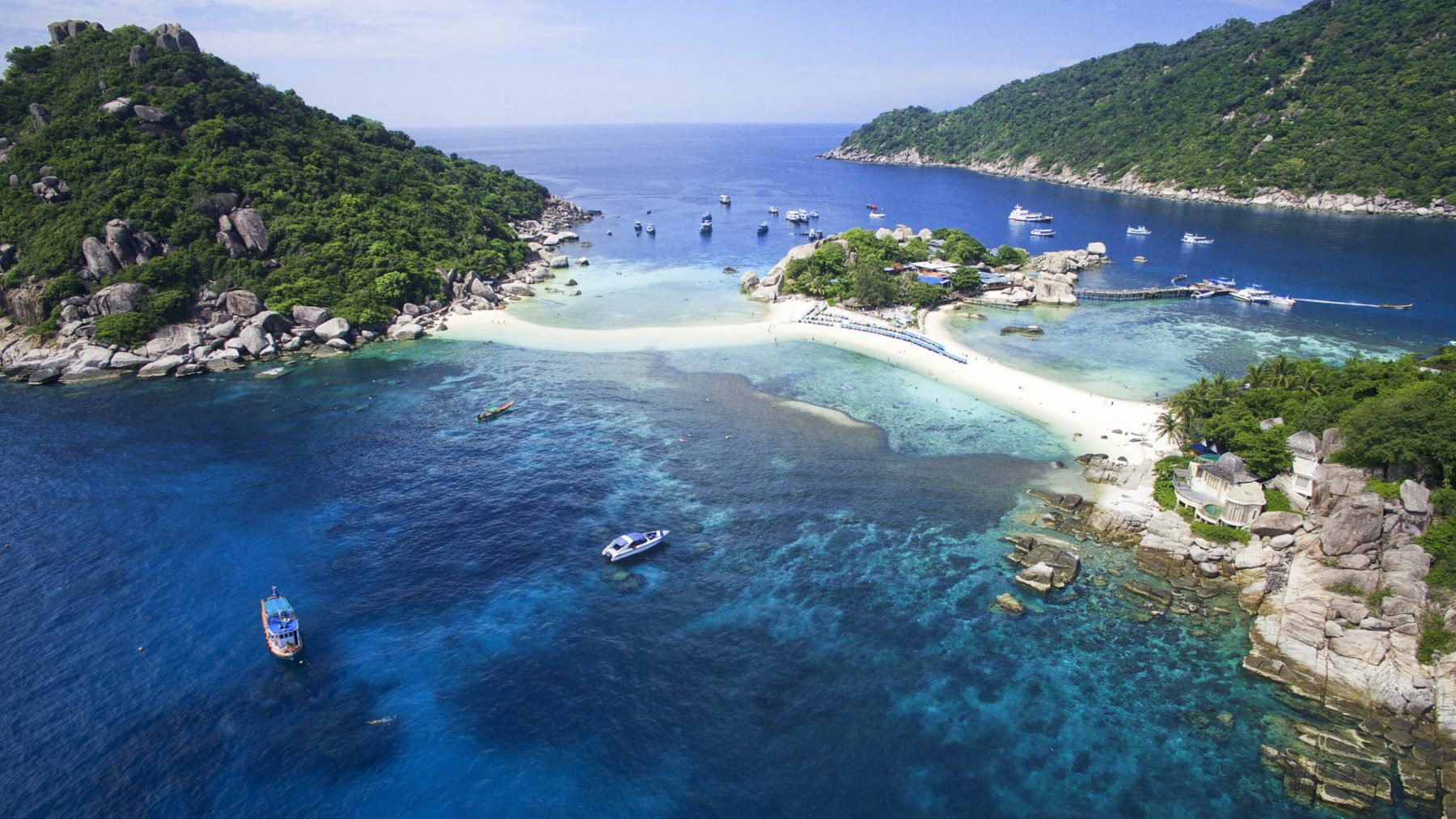
Drones – If you want to bring along a drone to get shots like the one above, be sure to check out our guide to staying legal while flying a drone in Thailand. You should start the process before you leave on your trip. Be warned, it’s not easy.
Travel insurance
We really recommend you get health insurance or travel insurance for your trip to Thailand. You probably won’t need it, but it can end up saving you a lot of money, and possibly saving your life. There are constant stories here of people having to start up GoFundMe campaigns to get their friend or family member medical care or medical evacuation to their home country. These could be easily avoided by just coughing up for insurance, which is fairly inexpensive.
The first thing to decide is if you want travel insurance or international health insurance. Travel insurance will get you medical care in case of emergencies, but can also offer some protection on trip delays, cancellations, lost bags, stolen belongings, rental cars, and more. Health insurance only covers illness and injury, not travel plans or your possessions. If you’re traveling for six months or less, we strongly advise you to get travel insurance. It costs more than health insurance since it covers so much more, but it’s still not typically that expensive, especially if you’re young.
We recommend SafetyWing for travel insurance for Thailand. They cover a lot of activities that other plans do not, like scuba diving and riding motorbikes, and they are upfront about what is and isn’t covered. You should always check the fine print of any policy before you sign on, but we do find them to be the best. Use the link above and in just a few clicks you can get a quote. We will earn a small commission if you buy insurance through that link. It won’t cost you anything and helps us continue creating quality content.
If you plan on staying long-term in Thailand, you should buy health insurance. If you use a local company like Aetna (formerly known as BUPA), or Luma. There is a nice benefit in that hospitals will bill the insurer directly, whereas with travel insurance and most health insurance providers, you need to pay upfront and file for reimbursement from the insurer. We use Luma and are quite happy with their service. If you plan on going this route you should still buy a month of travel insurance to cover you until you purchase your coverage once here.
There is no requirement to hold insurance when you travel here, but it’s really pretty dumb to not get it. You really don’t want to be that person burdening the country, or your friends and family with huge medical bills after an emergency, especially when insurance is as affordable as it is.
Advance bookings
At most times of the year, you can turn up most places in Thailand without a booking and be fine. During some busy holidays, however, you really should book ahead. We also very strongly recommend booking at least your first night ahead of time even if you normally like winging it. The last thing you want to do after a long flight is to worry about finding a place to stay while dragging your bags around with you. You also tend to get better hotels if you book early.
Booking.com
Booking.com is our go-to site for booking accommodation in Thailand. The interface is great and really easy to use, and the mobile app is as well – it’s worth installing during your travels. The filtering options are really useful allowing you to specify things like separate beds, and ensuring the rooms you see have the amenities you want such as air conditioning, private bathroom, a refrigerator, gym, pool, parking etc.
You can also filter reviews to see ones that specifically mention things like ‘bedding’. This is useful if you prefer amenities that probably aren’t in the description and you can’t see in the photos, like a softer bed or good pillows. But the best part of Booking.com is the map view which allows you to choose a place in the exact location you want and see how far each property is from landmarks, the airport, train stations and more.
The link above is an affiliate link. If you book through it we will earn a small commission, at no cost to you. This really helps us out and lets us keep creating more guides and content.
Airbnb in Thailand
You can find some great values and unique places to stay when using Airbnb in Thailand. Under Thailand’s Hotel Act, any stay under 30 days requires the property to hold a hotel license. In practice, a lot of the properties on Airbnb are listed by hotels, guesthouses, and resorts that already have the right permits — often these are quirky or unique rooms that aren’t on mainstream booking sites.
When a listing is someone’s personal condo or home, there’s more risk involved. The legal liability mainly falls on the host, and we’ve never heard of guests being prosecuted, but many condo buildings now actively enforce no-Airbnb policies — some have fines for owners caught renting short-term, and security may turn guests away at the door.
In Bangkok high-rise condos, you’ll commonly see signs in the elevator warning that short-term rentals are prohibited. You’d be in an awkward situation if you turned up at your booked accommodation after a long flight only to see that sign. You will probably still be fine, but if you’re uncomfortable you should contact Airbnb about what to do.
Driving license/permits
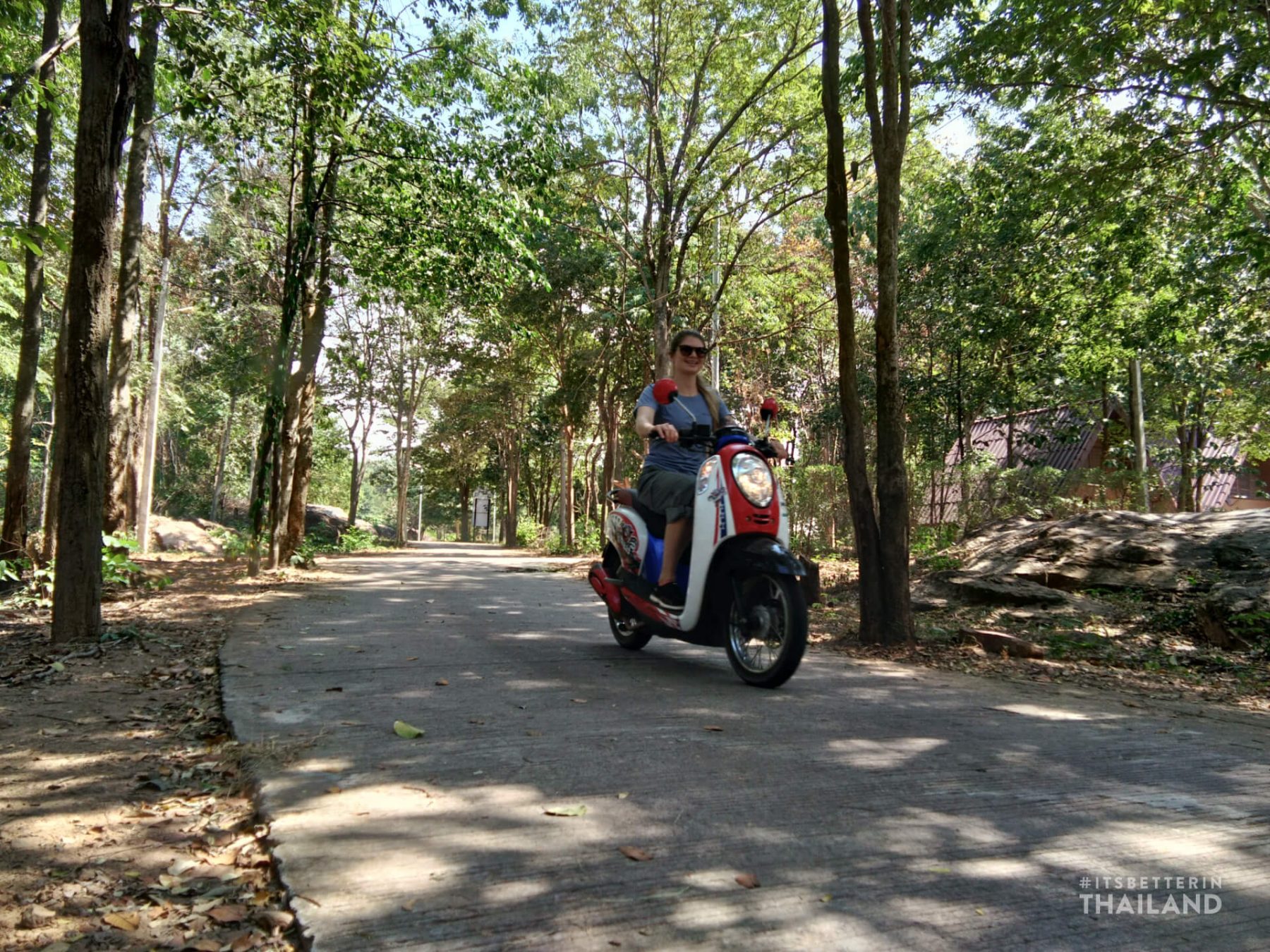
It’s easy to rent a car in Thailand, and ridiculously easy to rent scooters and motorcycles. For scooters, you almost never need to show a driver’s license to rent. For cars, they usually accept a license from your home country, but legally this isn’t enough to drive in Thailand. You need to get an international driving permit (IDP) to legally drive in Thailand. For most people, not having this might just mean paying a small fine to the police, but in case of an accident, it could invalidate your insurance on the car and on yourself. You should get a proper license if you plan on driving in Thailand. You should also check your insurance policy carefully to see what’s covered for operating vehicles, especially where scooters and motorcycles are concerned.
Getting an international driver’s permit is easy in most countries. It’s quite a dumb concept really: It’s not actually a driver’s license, instead, it’s a sort of translation of your own driver’s license and you need to carry both to drive legally. It is issued by an authorized private organization, and why that should be more trustworthy than the government agency that issued it is a mystery. But that’s the way it works, and it’s easy enough to get one that you should just do it if you plan on driving.
United States
In the US, the American Automobile Association (AAA) and the American Automobile Touring Alliance (AATA) are the only organizations that can issue an IDP, and it costs $20 for an IDP valid for one year.
United Kingdom
In the UK an IDP costs £5.50 and can be applied for in person at the Post Office. Not all branches offer the IDP service but you can find out which ones do and which documents you will need to apply on the Post Office website.
Wherever you are, find a legitimate issuer and watch out for IDP scams.
Whatever vehicles your own driver’s license allows you to drive is what your IDP will authorize you for. This means that if you don’t have a scooter license, your IDP will not allow you to drive a scooter in Thailand. In some countries, you can legally drive motorbikes with engines under 50CCs on your regular car license, but all bikes in Thailand are bigger than this. You need an IDP with a motorbike endorsement to drive a motorbike in Thailand.
If you are staying longer-term in Thailand and have anything over a tourist visa, you will need to get a Thai driver’s license.
Download before you go
The final steps before you leave for Thailand are to make sure you have everything you need saved to your phone, tablet or computer so you can pull it up regardless of internet connection.
Maps
Download the map for the area of Thailand you’re arriving in. Your phone’s GPS will work with or without internet so if you have the map data downloaded, you can use your maps. You can do this in Google Maps by going to offline maps and selecting the area to download — Google Maps offline is excellent in Thailand and is our top recommendation. Maps.me is another solid option if you want a backup.
Translation
Google Translate has gotten really good in the last few years and the app is indispensable for traveling here. For basic communication, you can type what you want to say to someone and show them the translation. If they have trouble reading the small text, the app can speak it to them. They can reply to you either by typing, or using talk to text. Make sure to download a Thai keyboard to your phone before your trip and enable voice.
The camera in the Google Translate app can translate menus and signs which is honestly really damn cool and feels like the future.
Currency conversion
If you’re not good with quick calculations and conversions in your head, you should download a currency conversion app that works offline. For something super easy to use for iOS or Android, check out the Xe app.
Line App
Line is a messaging app similar to WhatsApp that is used widely in Thailand. This is especially useful to have if you don’t get a local phone number (see SIM card section below) and need to communicate with hotels, drivers, motorbike rental places etc.
WhatsApp is also now pretty widely adopted in Thailand.
Addresses
It’s really nice to have your hotel address written out in big, easy-to-read letters to show a taxi driver, and it really should be written in Thai. The Booking.com app has a feature to show you this exact information for your booking, unfortunately, most hotels haven’t put in the information. It’s there in English, but you’ll want it in Thai. Check if it’s there, and if it isn’t and if you plan on taking a taxi, message the hotel asking them for it. You’ll see below that we recommend taking a Grab taxi which uses GPS (like Uber) or another local competitor, so that does solve this problem.
This eBook
This eBook has a lot of information you might need to access at times when you don’t have internet so we recommend keeping it saved on your phone. The emergency contact numbers especially, might really come in handy.
Printouts
You should keep a physical printout of your e-visa approval letter (if you have one), your first hotel booking, and your onward travel flight itinerary. It’s also a good idea to keep a photocopy of the photo page of your passport. Technically, you have to always keep your passport on you in Thailand, but you should really leave it in a hotel room safe. In the very very unlikely event you are stopped and asked for it, a photocopy is much better than nothing.
Arriving
Immigration
At immigration, you’ll only need your passport, a printout of your Thailand Digital Arrival Card (TDAC) (mentioned above in the before you go section), your e-visa approval letter if you have one, and your ticket for the flight you just arrived on (don’t leave it on the plane!).
You might also be asked for proof of your hotel booking and onward travel so it’s good to have that. They could also ask you to show the equivalent of 20,000 Baht (around $600 USD) but they only do this if you’ve been coming and going from Thailand very frequently, or possibly if you look very suspicious.
ALWAYS check your stamp before leaving the immigration area to make sure you received the right amount of time in Thailand. It’s a quick fix if you’re still there, but a major hassle to try to sort it out later even though it’s entirely not your fault. This is true whether or not they gave you too little time, or too much.
While you have it out, take a picture of the entry stamp, your photo and details page, and your visa or e-visa approval letter just so they’re all together in your phone.
Changing money
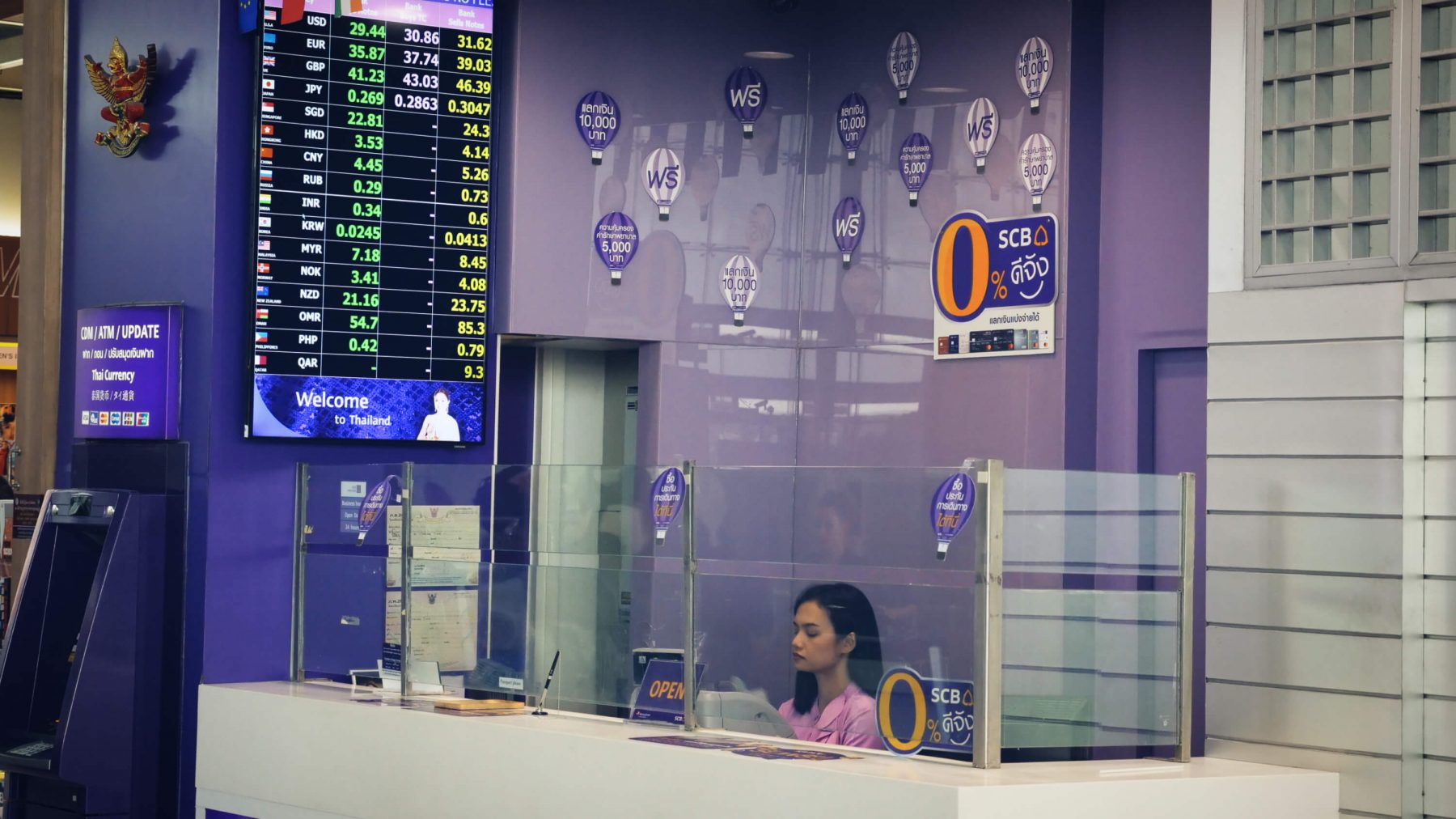
As we mentioned above, we really recommend both bringing some cash in a major currency and using an ATM card to withdraw Thai Baht. Exchange rates in airports are not great so you should take cash out of an ATM in the airport when you first arrive. A good amount is 20,000 Baht (~$600 USD), which is the maximum at most ATMs. It helps offset the fee and isn’t too much to be carrying around as Thailand is a pretty safe country.
It’s possible your bank will flag the ATM transaction as suspicious and block the card, which is one reason you should have at least some cash. If you do need to change money at the airport, change as little as possible, and find a place with a better exchange rate later. You can notify your bank of your travel plans, but that’s usually still not a guarantee you won’t have any problems.
All ATMs in Thailand charge foreign cards a 220 Baht ($6+) fee per withdrawal and allow you to take out up to 20k-30k ($625-$950) per transaction. This fee is a bit steep, but manageable as long as your own bank doesn’t gouge you too hard on their fee. If your bank charges any percentage for foreign withdrawals, find another bank — this gets expensive very quickly. ATMs are everywhere in Thailand. It’s hard to be too far from one almost anywhere, though there are exceptions in very rural areas and some small islands.
Krungsri Bank (yellow ATMS) usually let you take out 30,000 Baht per transaction, Bangkok Bank (blue and orange ATMs) allow 25,000. All others limit you to 20,000. The more you take out at once, the less you lose to the transaction fee.
Beware ATM conversion scam: Thai banks have started running what is pretty much a scam at many ATMs. When using a foreign card they ask you if you want them to convert the foreign currency for you but they offer you a terrible rate, often taking a cut of around 5%. You should always decline this. They also made the wording confusing, but what you want to select is No/Do not convert/Proceed without conversion.
For exchanging cash, SuperRich in Bangkok usually has the best currency conversion rates. All of their branches have good rates, but if you’re exchanging a lot of money you should go to their main branch across Ratchadamri Road from Central World mall for the best rates. You can find their current exchange rates for all branches at the Superrich website. Many of their locations are conveniently located in BTS (Skytrain) stations.
If you’re an American, consider getting a Charles Schwab Investor Checking Account. It pays you back for all ATM fees anywhere in the world, including the 220 Baht fees in Thailand.
Airport WiFi and getting a SIM card
All airports in Thailand have WiFi. You need to register with an email address and your passport number, although in most airports you can just enter fake details. It is fairly reliable, but you shouldn’t count on it entirely. Anything you can download ahead of time you should do so.
You can get SIM cards targeted toward tourists at the airport. These are a pretty good deal and very worth it to get connected straight away. For around 500 Baht (~$15) you can get enough calls, texts, and unlimited data with the first few gigabytes at 5G for a month.
To be connected as soon as you land, we recommend an e-SIM. You can buy one from Saily, a reputable company with good pricing.
If you’d rather wait, you can get a SIM card nearly anywhere, including at 7-11 convenience stores (which are EVERYWHERE in Thailand). You’ll need your passport to buy a SIM card in Thailand. If you want to find the best deal or are planning on staying long-term, you should visit one of the provider’s locations, which are easiest to find in shopping malls. There were previously three providers: AIS, True, and DTAC, but the latter two merged in 2023.
Arriving in Bangkok
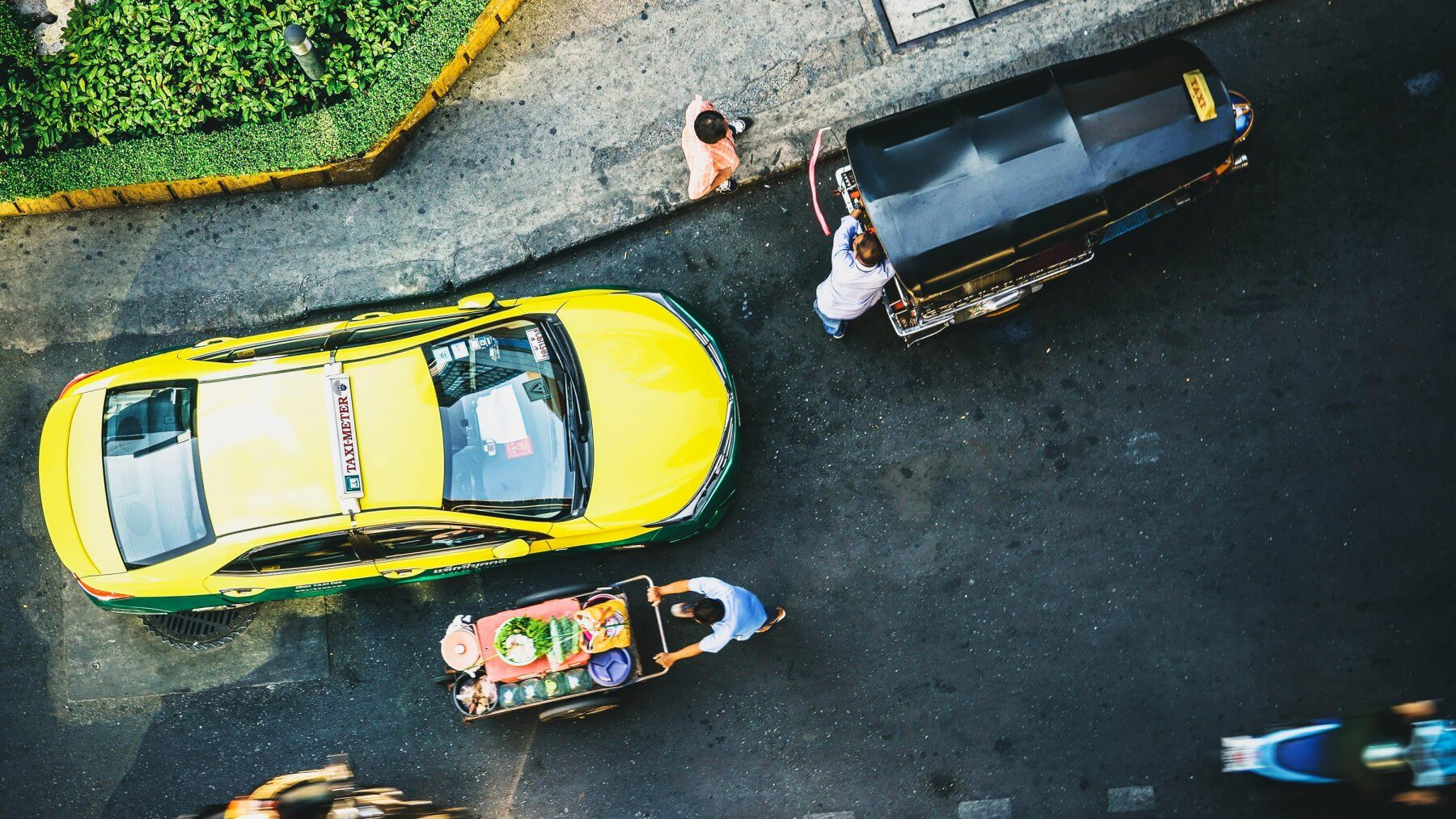
Bangkok has two international airports. The older airport is Don Mueang (DMK) and it’s a bit north of the city. The newer one is Suvarnabhumi (BKK) – pronounced Soo-wan-na-poom – and it’s 20km east of the city. If you are arriving in Chiang Mai or Phuket, see the info at the bottom of this section.
Grab Taxi
If you’re not a regular visitor to Thailand and can’t speak at least some Thai, we would recommend in almost all cases that you call a Grab Taxi to pick you up from the airport. Grab is the Uber of Southeast Asia. Grab typically ends up being 20-50% more than a standard taxi, assuming the standard taxi uses the meter, but there are pretty much no scams when you use Grab. With Grab, there’s also some accountability for the driver, and a better chance of getting back an item accidentally left in the car.
Before your trip, you should check the location of your hotel on Google Maps or the Grab App so that when you arrive you will be able to manually select the area from the map if it is not listed as a destination. If your hotel is not listed in Grab, find something nearby that is, and direct book the car to there.
Bolt is a newer competitor to Grab and is often cheaper. It’s worth having and checking both apps.
Metered taxi
There are queues for metered taxis on the ground level at both airports and an assistant to help you convey your destination to your driver. This is still no guarantee that the driver actually knows where to go, or that you won’t get gouged. Drivers are notorious for driving a minute or two away, then refusing to use the meter and insisting on a flat rate that will be at least double what it should be. Even if they use the meter, there is a lot of open highway around the airports and they can quickly run up the fare through a detour. There is also a 50 Baht airport surcharge you’ll have to pay over the meter rate, plus a 20 Baht per bag charge.
A taxi from either airport to almost anywhere in Bangkok will only cost between $8 and $25 USD. A Grab will probably cost around $12-$30. At least for your first trip, this is a small price to pay for the added reliability. You should be able to call for a Grab using the airport WiFi even if you haven’t picked up a local SIM card. Grab taxis pick you up on the arrivals level (you’ll be on that level already) and the app will tell you which door number to wait at.
There are two car lanes outside of the BKK airport. The further out one is accessible to normal traffic, including Grab Taxis.
Bangkok metered airport taxis on the departures level
Frequent Thailand travelers know at either airport that you can go up two floors to the departures level and get a taxi that has just dropped someone off. The taxi drivers here are happy to not have to wait in queue for a passenger and will usually take you anywhere you need to go without a fuss. They’ll also almost always use the meter.
At DMK this is quite reliable, but in the evening and early night hours there can be a lot more people waiting than taxis dropping people off, especially at the domestic terminal. You can easily walk between terminals on any floor.
At BKK it’s a little harder. Taxis don’t drop people right in front of the terminal. You have to cross that first road and get them on the second road. The airport tries to prevent this with a large turnstile that only turns to allow traffic from the taxis toward the airport. You can hop the barrier fairly easily, but you can also slide around the turnstile if you turn it to the right angle.
Only try this if you can easily communicate your destination to the driver.
Airport Rail Link
BKK airport has a train that runs from 6 am to midnight. This Airport Link Train is a fast and inexpensive way to get into the city regardless of traffic. It connects to the MRT (subway) at Makkasan Station, and to the BTS (Skytrain) at Phaya Thai Station.
DMK airport has a train but it gets you into the city more slowly than the buses listed below. If you’re going to Bang Sue Central Train Station then this is a good option, but even the area around Chatuchak Park and Mo Chit which is near there is quicker to get to via the A1 or A2 bus.
If you fly into BKK airport and your hotel is all the way across town or near to a station on the Airport Rail Link train, you might save some time and a bit of money by taking the train part of the way, especially if it’s during rush hour.
Buses at Bangkok’s airports
DMK airport has 4 buses that run to different parts of the city. BKK airport has one bus to Khao San Road. There is also a bus terminal at BKK with many bus lines but these are pretty confusing and you should probably avoid them.
Just outside the terminal on the arrival level at Don Mueang (DMK), there are four official buses that can take you to various places in the city for between 30 and 50 Baht ($1-$1.50). The buses take toll roads as far as they can so they can be pretty quick. The bus lines are:
A1 – This bus goes to Mo Chit where you can get the BTS Skytrain (Mo Chit Station), the MRT Subway (Chatuchak Station), and taxis. The A1 runs very frequently, every five minutes or so. When taxis are hard to find at the airport it can be a good idea to take this bus first and then get a taxi at Mo Chit. This bus also stops at the Mochit Northern Bus Terminal.
A2 – Stops at Mo Chit (but not Morchit bus station), as well as the BTS Stations of Saphan Kwai, Ari, Sanam Pao, and Victory Monument.
A3 – Goes to Ratchadamri BTS Station and Lumpini Park. From Ratchadamri it’s a one-stop BTS train ride to either Siam or Silom Stations.
A4 – Goes to Khao San Road.
From Suvarnabhumi (BKK) airport there is one bus that goes to Khao San Road:
S1 – Goes from the ground floor of BKK to Khao San Road for 60 Baht.
Free airport shuttle
If you need to transfer between the two airports for a flight there is a free shuttle bus, but you need to show your itinerary to prove you have a plane to catch. Look for the free AOT Airport Transfer bus stop outside the passenger terminal at either airport and show the attendant your itinerary.
Arriving in Chiang Mai

If you fly into Chiang Mai, taxis go to most places in town for a flat rate of 150 Baht (~$5), or 200 Baht for an SUV if you have extra people or luggage. Grab Taxi is also available and it can be nice to use since the driver will simply follow GPS directions to whatever destination you select.
Arriving in Phuket
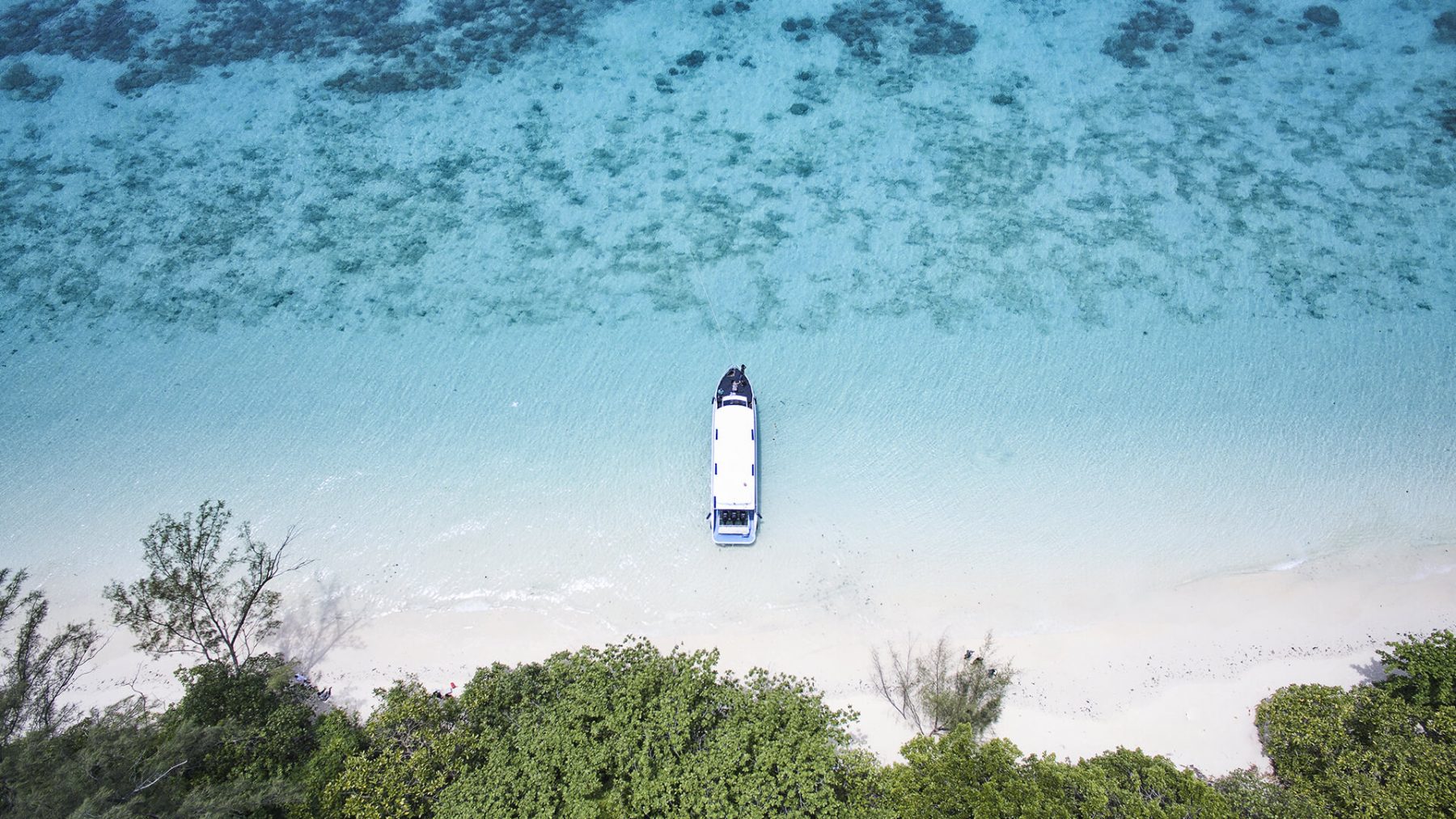
For arrivals at Phuket Airport, you don’t have many inexpensive options. If you’re going into Phuket Town there’s a public bus that costs 100 Baht (~$3) and takes around an hour and a half.
The Phuket Smart Bus costs 100 Baht goes past all of the main west coast beach towns and ends at Rawai Beach. It leaves the airport on the hour most hours. Check the website for the full schedule and the times for the first and last buses.
For a bit more money there are mini buses that work like shared taxis. They cram in as many people as they can who are going to similar destinations, and won’t leave until they are full. These typically cost 100-180 Baht. They might stop at a tour agent and try to make you get out and buy tours. Just politely decline and wait to get back on the road. You can also take a taxi which should be 500-1000 Baht depending on where you’re going. You can use the Grab app in Phuket and it can sometimes work out a bit cheaper than taxis, especially if the app gives you a discount code.
Once you’re here
Etiquette & culture
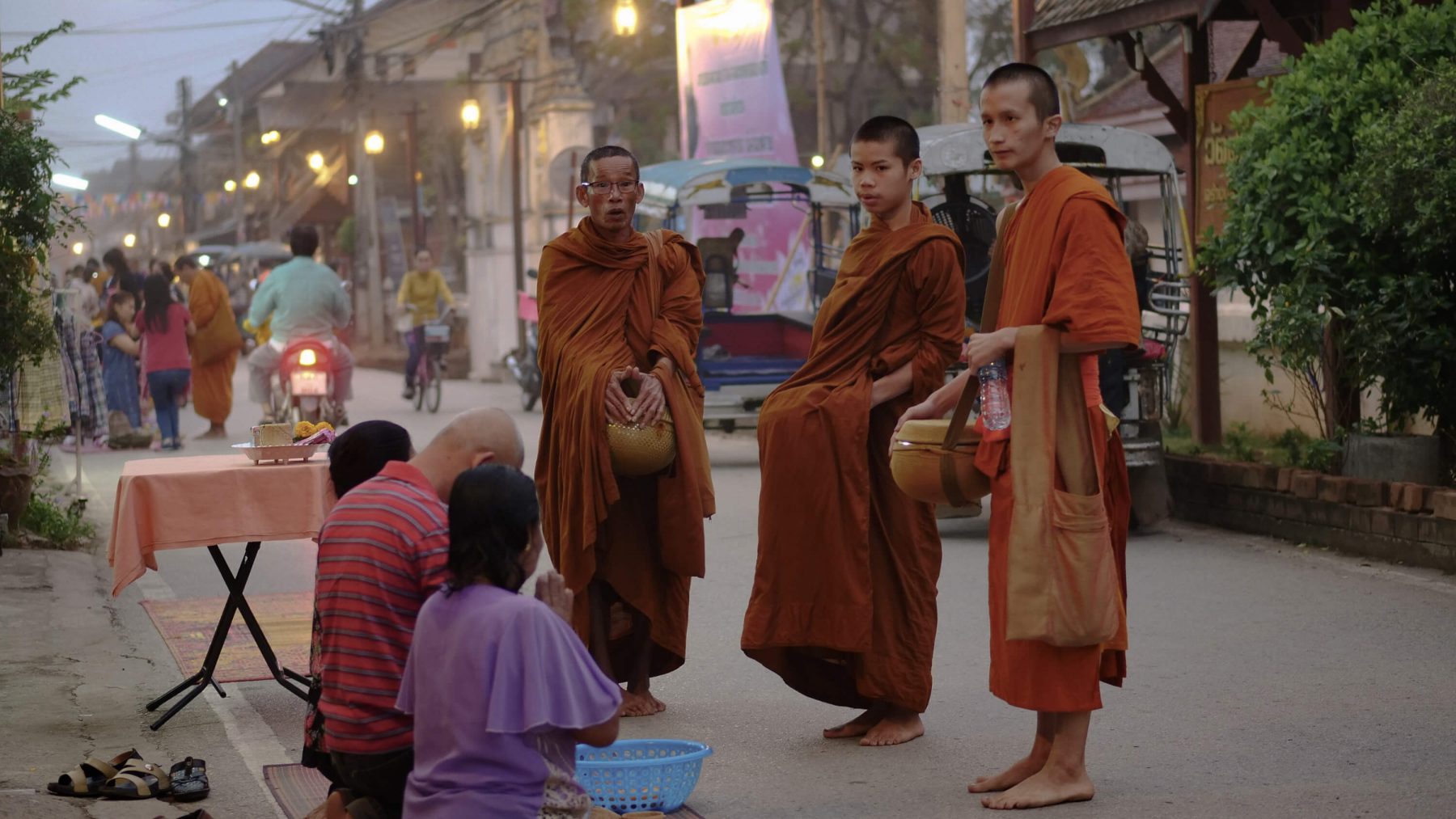
Thailand is a majority Buddhist country with customs, norms, and social etiquette that can seem totally foreign to non-Thais, especially those from Western cultures. Thais are pretty friendly and they usually understand when foreigners commit some cultural misstep, but it’s still best to avoid them when they can. We wrote a complete Thailand etiquette guide and we really recommend you check that out to get a full picture, but here are the main points:
The Royal Family of Thailand are deeply revered and respected. Speaking badly of them or defacing anything with their image on it can land you in serious trouble so definitely don’t do that. Smaller things to avoid include not using your foot to stop a rolling coin or a money note that’s blowing away since feet are considered dirty, and the King is on all money. Also, don’t weigh down a tip at an outdoor restaurant with an ashtray or alcohol bottle.
Don’t use your feet to point at anything. If a market vendor is sitting on the ground and you want to ask a price, squat down and point with your hand, never your foot. It’s impolite to put your feet up, and it’s extremely rude to do so if they’re above or near somebody’s head.
Take your shoes off when entering any home or temple. Shoes are okay in most shops and restaurants, but not all. Generally, if you need to take off your shoes there will be a sign or you’ll see other shoes there.
Dress somewhat modestly when visiting temples. Men should not wear tank tops or shorts that are very short. Women should at a minimum cover their chest, shoulders, and upper arms as well as thighs above the knees. Bringing along a sarong you can easily take on and off can keep you cool when you’re out and about, and appropriately dressed when visiting temples. These can often be borrowed or rented at popular temples.
The head is considered the highest part of the body and it’s rude to touch someone’s head unless you are close friends. It’s more normal to touch a child’s head, but if you’re new here you should probably avoid that too.
The most important thing you can do is just be polite. This section from our Thai culture and etiquette guide is probably the most important advice we can give:
Thais are generally friendly and understanding about cultural differences, so innocent missteps by foreigners are easily forgiven. Rudeness, however, is not. Probably the single most important piece of advice for Thailand is to keep your cool and not show anger or shout at anyone. Thais call this trait being jai yen – literally cool heart, while hot-headed people are jai rawn – hot heart.
There’s always a chance you’ll run into some minor confrontation while here, whether from a misunderstanding or an outright scam. Even if you are justifiably angry, if you show it outwardly, you will get nowhere. When you yell at someone, you cause not only them to lose face, but yourself and everyone else around you. If you are being obviously cheated, there’s a chance an onlooker (or, though unlikely, a cop) will come to your aid. If you start shouting first though, then forget about it. Keeping your cool is one of the most important aspects of Thailand etiquette.
Keeping your passport safe
The safest place for your passport is in a safe, either in your hotel room or at the hotel reception. Legally you are actually supposed to carry around your passport with you, but even the police have said a photocopy is fine. You should be able to show the photo page, your visa (if you have one), the stamp you received when you entered, and your departure card. Personally, we don’t even bother with the photocopies and you will most likely be fine if you can show photos on your phone of these. It’s pretty rare that you’ll ever need to show this, but it does occasionally happen as police sometimes do random checks on foreigners’ immigration status.
Staying safe
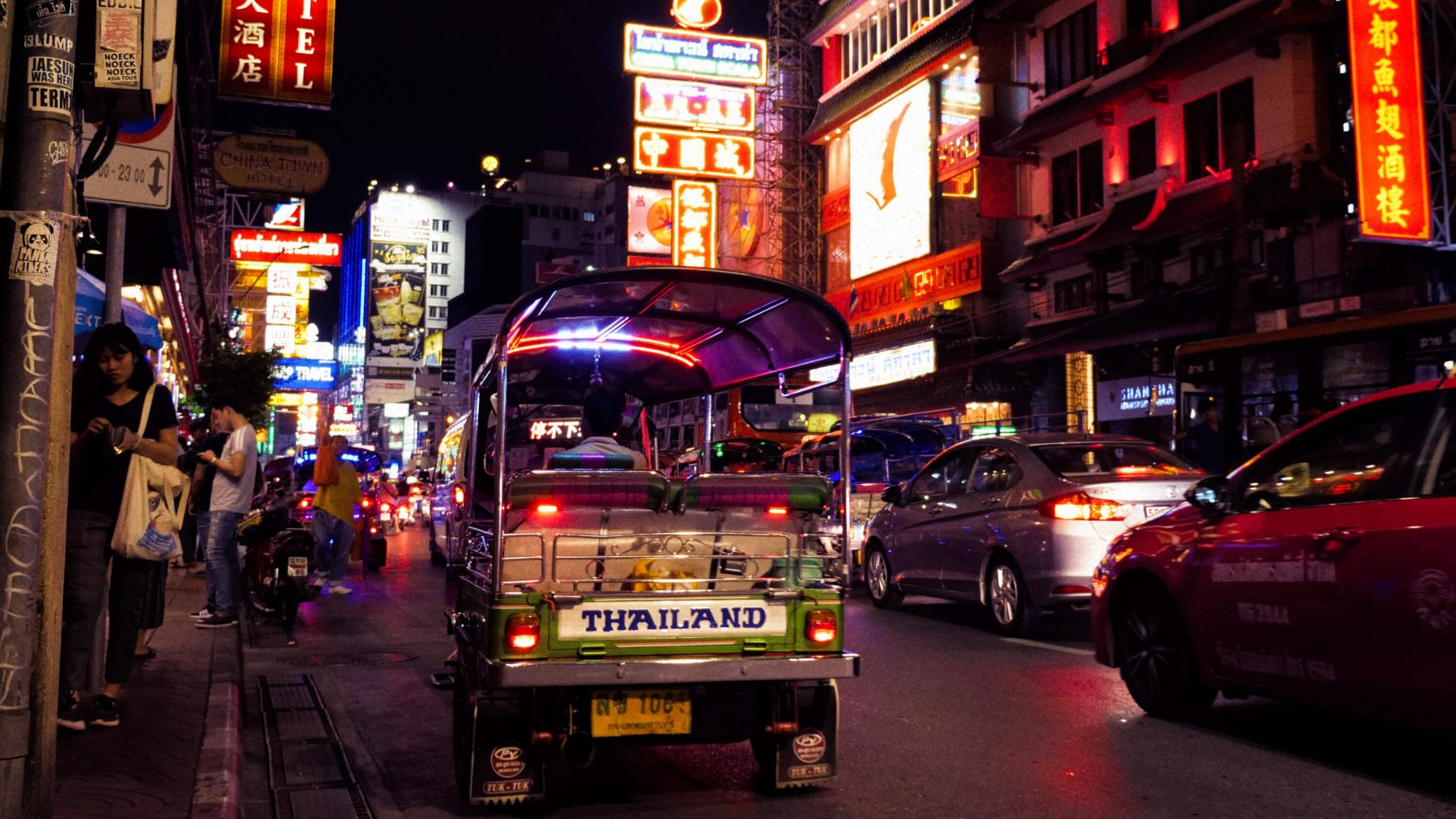
Thailand is, in general, a very safe place. Most of the mishaps involving foreigners here either involve accidents on dangerous roads, alcohol, or both. If you keep your wits about you, only drive a motorbike if you’re helmeted, licensed, and know what you’re doing, and you keep a good attitude, you’ll almost definitely be fine. All that said, here are a few things you should watch out for:
As we mentioned before, it’s important to not lose your temper here. If you have an altercation with a taxi driver or some guys out for a night of drinking, and you start escalating the situation, you are putting yourself in danger. As peaceful and friendly as Thais can seem, many will not hesitate to fight, and fights here are not gentlemanly fisticuffs or one-on-one affairs. Don’t get in fights, and do whatever you can to de-escalate a situation if it involves Thai guys, especially if they are out drinking.
One big danger in Thailand is very small – mosquitos.
We mentioned that malaria is exceptionally rare, but Japanese Encephalitis is around, and Dengue Fever is common. There’s a newish vaccination for Dengue but it’s typically only available to people who live in hotspot areas and who have had Dengue before. The best thing you can do is avoid getting bitten as much as possible, but know that you’ll still get bitten a fair amount. Cover up when you can, use mosquito spray when you’re in an area with a particularly high number, and if you’re staying in backpacker accommodations with cracks in the walls, use the mosquito net at night. At some point though, you need to accept that the likelihood of getting dengue isn’t that high, and even if you get it you’ll most likely be fine. Then just do what we all do when we live here and try not to think about it too much.
Avoiding scams
Thailand is not without its share of scams, most of them minor but a few are fairly major. For a longer list with more details, check out our guide to avoiding the most common scams in Thailand. Here are a few you may encounter and how you can avoid them.
Tuk Tuk scams – Bangkok’s ubiquitous three-wheeled Tuk Tuks are iconic, but the drivers are notorious. Mostly they’ll just overcharge you for your journey, but they’re fun to ride in, so use them but don’t pay too much. If you want to avoid getting ripped off, use the Grab app to see what a car would cost to your destination and don’t pay the Tuk Tuk more than 50% higher than that number, or up to double that price at the maximum. They’re great for point A to point B journeys.
What you want to avoid are Tuk Tuk tours. Typically the driver will tell you the place you want to go is closed for a holiday or renovations. It’s almost definitely not. If you hear this, go find another driver. What they want to do is take you around to tailors, gem shops, restaurants, etc., each of which will pay them a commission based on the overpriced goods and services you buy. They might offer you free rides and free tours, but remember, nothing is free.
Jet ski scam – A notorious scam mainly in Pattaya but not unheard of in other parts is where you rent a jet ski and when you return it they point out some damage that you didn’t cause and ask for an outrageous sum of money – often over $1000 USD! They normally have a police officer in on it who will come and threaten you with arrest if you don’t pay up. You can easily avoid this by only renting from businesses with a well-established presence and good reviews on a site like Tripadvisor.
Ping pong show scam – in red light district areas, especially in Bangkok, a common scam is for promoters on the street to invite you in for a free preview of a ping pong show ( just in case you don’t know, this involves women doing different tricks with their vaginas – seriously). Once inside you’ll be told you need to pay up. You’ve put yourself in this situation and paying is probably the only way out. You’re already inside the dark of the bar and the bouncers would be only too glad to beat you up. Give them a 500 or 1000 Baht note and leave. <strong>Nothing is free</strong>.
Emergency contact numbers
When you are traveling in Thailand as a foreigner, it can be confusing to know which number to call in an emergency. It is not as simple as just calling one number for everything (like you may be used to in your own country). Fortunately, we have compiled a list of all the useful contacts that you may need whilst in Thailand.
English-speaking operators can be hit or miss. If you are having difficulty, the tourist police, or international hospital may be your best option.
Police & emergencies – 191
This may be the most important number to remember. Thailand has reportedly made 191 the main call center for all emergencies. If the operator is unable to speak English, call 1155 (below).
Tourist Police – 1155 or (+66) 2308-0333
This hotline is available 24 hours a day and they will all speak English. This is an important phone number to remember – They will help you out with any concerns or questions you have and can redirect you to the correct number you may need.
Public Ambulance (Everywhere) – 1669
Dialing this number will connect you to a public ambulance service, which will dispatch a vehicle to your location. The average response time for urban areas is around 10 minutes, but may take up to 30 minutes in rural areas. English-speaking staff should be available to assist you.
Fire Department – 199
In case of an emergency such as a house fire, or forest fire, call 199 for the Fire Department to be dispatched to your location.
Private Ambulance (Bangkok) – 1724 or 1719
The response time of a public ambulance can vary. Traffic is terrible in Bangkok so it could be worth noting down these private ambulance numbers. It will cost you more but you are likely to get to the hospital and be treated quickly.
Highway Police – 1193
If you plan on driving in Thailand, then you may end up needing to use this number if you break down in an unsafe place etc. Probably better to call the tourist police though if you don’t have a Thai speaker with you.
Note: The emergency medical services (ambulance) should have English speaking staff, but the police and fire services may not speak your language. If there is a Thai speaker nearby, get them to call. If it is not an urgent emergency and you do not have a Thai speaker with you, it is advised to call the Tourist Police – See below.
What’s next?
Make sure to keep this guide saved on your phone. You never know when an emergency contact number might come in handy.
If you plan on staying in Thailand longer term or are even thinking of living here, check out our guide to living in Thailand.
For some Thailand inspiration, check out our photos and videos on Facebook, YouTube, and Instagram.
Check out more guides, destinations, and activities.
If you have any questions, DM us on any of our social media channels.
Enjoy your trip!