Mosquitoes, dengue, and malaria in Thailand
Note: We are not doctors, this is just our advice based on what we do.
Dengue mosquitoes bite during the day, which changes how you should deal with mosquitoes in Thailand. Most people think of mosquitoes as a morning and evening problem.
Thailand recorded 105,250 dengue cases in 2024 and 114 deaths. The year before was worse - 156,097 cases and 187 deaths. If you’re going through our beginner tips for Thailand, add “buy mosquito repellent on arrival” to the list.
Millions of tourists visit every year and most won’t get dengue. But the ones who do have their holiday ruined.
Dengue: what it is and why you should care
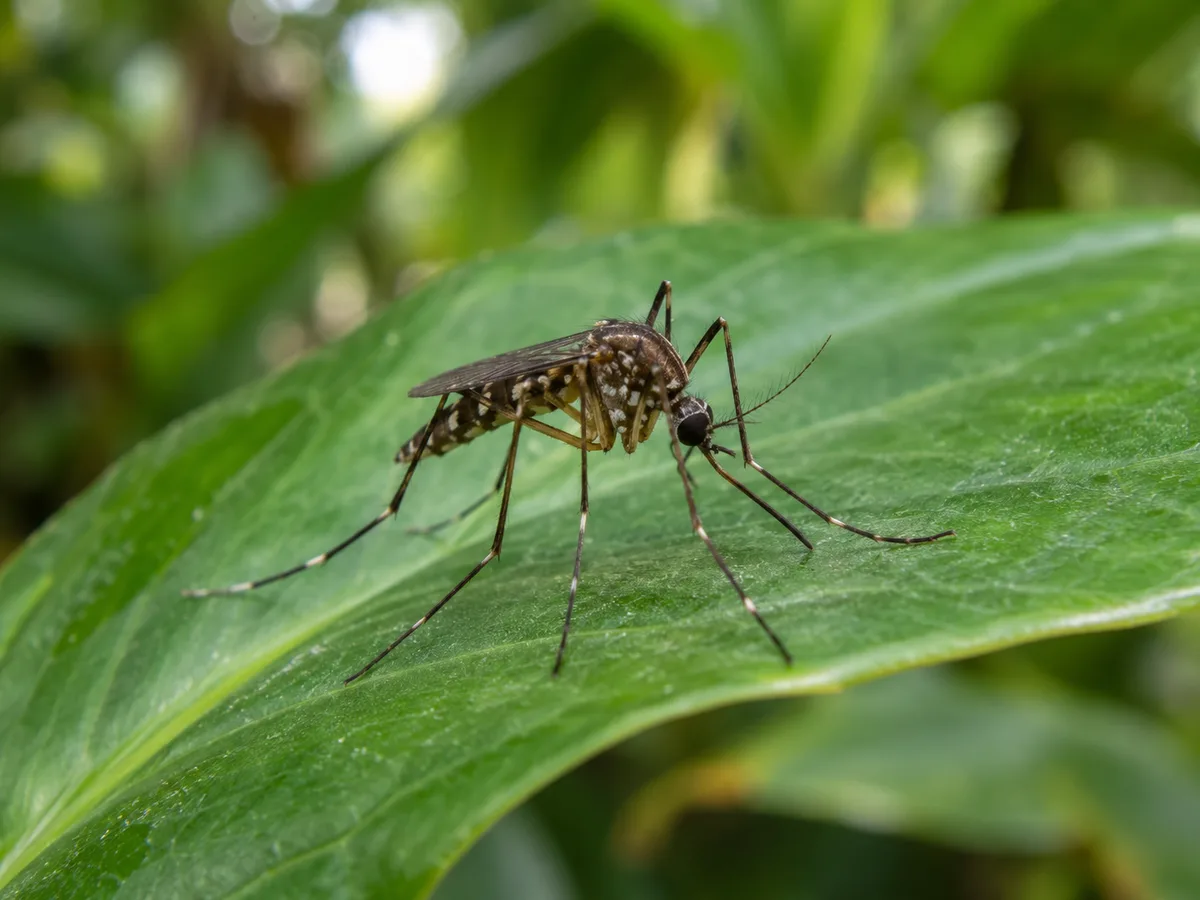
Dengue is a viral infection spread by the Aedes aegypti mosquito - a small black mosquito with white stripes on its legs. You’ll hear it called “breakbone fever” because of the joint and muscle pain. There’s no cure. You ride it out with rest, fluids, and paracetamol.
Four different dengue serotypes circulate in Thailand. Getting one doesn’t protect you from the others. Worse, a second infection carries a higher risk of the severe hemorrhagic form. Travelers who’ve had dengue once need to be more careful the second time around, not less.
Children aged 5-14 have the highest infection rates, but adults get it too.
When and where the risk is highest
Peak dengue season runs June through October, lining up with the rainy season. Standing water is where Aedes mosquitoes breed, and rainy season means standing water is everywhere - flower pots, old tires, air-con drip trays, half-finished construction sites.
Dengue isn’t seasonal in the way you might think. Cases happen every single month of the year. Bangkok often peaks later, around October to November. Even December through February (the cool dry season that most tourists visit during) still sees transmission. There’s no zero-risk month.
Southern Thailand - Phuket, Krabi, Suratthani - tends to have the highest rates. Bangkok is high year-round because it’s dense and urban. Chiang Mai and the north are moderate. Islands aren’t safer - they’re often worse.
Anywhere with standing water has Aedes mosquitoes. Basically everywhere.
The mosquito you actually need to worry about
There are two types of disease-carrying mosquitoes in Thailand, and they behave differently.
Aedes aegypti (dengue mosquito) - bites during the day. Peak feeding times are dawn (5:30-7:00am) and dusk (5:00-6:30pm). Carries dengue, Zika, and chikungunya. Lives in urban areas. Loves your ankles and feet. This is the one that matters for 99% of visitors.
Anopheles (malaria mosquito) - bites at night. Mostly found in rural jungle areas near borders. Carries malaria. Not relevant in any normal tourist area.
Your bed net protects you from the malaria mosquito you’re unlikely to encounter. It does nothing against the dengue mosquito that bites you while you’re eating lunch.
How to not get bitten
You don’t need to bring repellent from home. Any 7-Eleven in Thailand (there’s one within 200 meters of wherever you’re standing right now) will have everything you need.
Body repellents
Soffell - 45-89 baht (~$1.30-2.50 USD) - 12% DEET, available in spray and lotion, comes in different scents. Non-sticky, smells decent, sold in every 7-Eleven, Family Mart, Watsons, and Boots in the country. We use this one daily. Buy it when you land.
Sketolene Shield - 55-120 baht (~$1.60-3.40 USD) - heavy-duty option. The Shield version (yellow packaging) has around 25% DEET and is marketed for jungle trekking and outdoor activities. If you’re heading into national parks or spending time in rural areas, step up to this.
OFF! Deep Woods - 100-180 baht (~$2.90-5.10 USD) - 25-30% DEET. The international brand you probably recognize from home. Works well, just costs more than the Thai brands for the same ingredient.
Johnson’s Baby Anti-Mosquito - 65-90 baht (~$1.90-2.50 USD) - low DEET or DEET-free (citronella-based). Less effective and shorter lasting, but an option if you’re applying to small children.
What you need to know about DEET
20-30% DEET is the sweet spot for adults. Anything above 30% doesn’t make the protection stronger - it just means you can go longer between reapplications. For kids over two months old, 10-20% DEET is fine.
If you wear sunscreen, apply it first, wait 20-30 minutes, then put repellent on top. Thailand’s humidity means you sweat repellent off faster than at home. Reapply every four to six hours.
Picaridin (20%) is an equally effective DEET alternative that doesn’t damage plastics or feel as greasy. It’s harder to find in Thailand but available at Boots and Watsons.
Room protection
Mosquito coils - 22-45 baht (~$0.60-1.30 USD) per box of 10 - the green spiral coils you’ve seen in every Thai guesthouse. Brands like Chang and Fumakilla are everywhere. Each coil burns for 8-10 hours.
They work well for balconies and outdoor dining. Don’t use them in small enclosed rooms - the smoke isn’t great for your lungs.
Electric plug-in vaporizers - 60-120 baht (~$1.70-3.40 USD) for a starter kit - brands like Chaindrite and ARS. Plug into a wall socket, they release insecticide vapor overnight. Good for hotel rooms that don’t have screens on the windows. One liquid refill lasts about 30 nights. Thailand uses 220V and the devices come with Thai plugs.
Room spray (Shieldtox, Chaindrite) - 75-150 baht (~$2.10-4.30 USD) - spray the room 30 minutes before sleeping with the windows open, then close everything up. Effective but you need to be out of the room while it settles.
Other practical tips
Aedes mosquitoes love ankles and feet. Wearing socks and closed shoes (instead of flip-flops) during dawn and dusk hours reduces bites. Long pants help too, but we know nobody wants to hear that in 35-degree heat.
Light-colored clothing attracts fewer mosquitoes than dark clothing. If your hotel room has air conditioning, keep it running - mosquitoes are less active in cold air and the closed windows keep them out.
What dengue feels like
Symptoms show up 4-10 days after you get bitten (usually 5-7 days). So if you got bitten in Chiang Mai and you’re now in Bangkok feeling awful, it could be from Chiang Mai.
It starts fast. Sudden high fever, 39-40°C (102-104°F). Pounding headache, especially behind the eyes. Muscle and joint pain. Nausea, vomiting, zero appetite. A flat red rash usually appears around day 3-5.
Most cases resolve in 5-7 days. A lot of people get what we’d call “dengue lite” - bad enough to knock you out for a few days, but manageable with rest and fluids in your hotel room.
The danger window
When your fever breaks around day 3-7, you’ll feel like you’re getting better. Most people do get better at this point. But this is when dengue hemorrhagic fever can develop. The danger isn’t the fever itself. It’s what happens when the fever drops.
Warning: If your fever breaks but you feel WORSE - severe abdominal pain, persistent vomiting, rapid breathing, bleeding gums, nosebleeds, blood in vomit or stool, tiny red/purple dots on your skin, cold clammy hands - get to a hospital immediately. Don’t wait. This is when platelet counts crash and plasma leakage starts.
Platelet counts: the number that matters
Any hospital in Thailand can run a complete blood count (CBC) for 200-500 baht. If you suspect dengue, get tested on day 2-3. Here’s what the platelet numbers mean:
- Above 100,000 - close to normal (a typical adult range is 140,000-450,000). Stay hydrated, rest, take paracetamol for fever.
- 50,000-100,000 - needs monitoring. Your doctor will likely want daily blood tests.
- 20,000-50,000 - hospitalization territory. You need close observation.
- Below 20,000 - danger level. Risk of internal bleeding. You’re staying in the hospital.
A dengue NS1 antigen test (500-1,500 baht) can confirm dengue within the first five days. You can walk into any hospital in Thailand and request this without an appointment.
Paracetamol only - not optional
Critical: If you think you have dengue, take PARACETAMOL (Tylenol) only. Do NOT take ibuprofen (Advil, Nurofen), aspirin, or naproxen. These thin your blood and increase the risk of hemorrhaging - the exact thing that makes dengue dangerous. This isn’t a preference. It’s a medical rule.
Paracetamol is sold at every 7-Eleven and pharmacy in Thailand under the brand names Tylenol and Sara. If you’re unsure which painkiller you’ve got, check the active ingredient on the box. If it says “paracetamol” or “acetaminophen,” you’re fine.
Travel insurance
If you find yourself needing medical attention, you’ll want to have travel insurance to cover your expenses. A dengue hospitalization at a Bangkok private hospital can easily clear 100,000 baht. We use SafetyWing - it covers dengue, it’s affordable, and you can buy it after you’ve already left home. If you’re staying longer term, check our guide to health insurance for long-term stays.
One thing to watch: some travel insurance policies exclude “endemic diseases” or have trip-length limits. If you’ve been in Thailand for four months on a tourist visa and your policy covers trips up to 90 days, your claim gets denied. It is easy to assume your policy covers everything until you’re lying in a hospital bed finding out it doesn’t. Read your policy before you need it (run it through AI with your trip details).
Do you need malaria pills?
Probably not. If your itinerary is Bangkok, Chiang Mai city, Phuket, the islands, Krabi, Pattaya, Koh Samui, Koh Phangan - you don’t need malaria prophylaxis. Full stop. We’re not doctors, but we suggest you research more thoroughly before following advice to take malaria pills for a Thailand holiday.
Malaria risk in Thailand is mostly limited to rural forested areas along the Myanmar border (Tak, Mae Hong Son, western Kanchanaburi), the Cambodia border (Trat, Sa Kaeo), and the far southern provinces near Malaysia. The CDC only recommends antimalarials for travelers heading specifically to these border provinces.
Bangkok is effectively malaria-free. So is Chiang Mai city, and so is almost every island and beach destination tourists visit. Thailand has been working toward full malaria elimination and cases have dropped over the past decade.
The side effects of antimalarials - vivid nightmares with mefloquine, sun sensitivity with doxycycline, nausea - are more likely to affect your trip than malaria itself.
Dengue is your real mosquito risk. Put your energy into daytime repellent, not malaria pills.
The dengue vaccine (Qdenga)
Qdenga (made by Takeda) has been available in Thailand since 2023. It works regardless of whether you’ve had dengue before (unlike the older Dengvaxia vaccine, which should only be given to people with a confirmed prior infection - important distinction).
The details:
- 2 doses, 3 months apart
- About 2,500 baht (~$71 USD) per dose, so 5,000 baht total
- Available at Bangkok Hospital, Bumrungrad, WellMed, and most private hospitals
- Ages 4-60
- Around 80% protection in the first year of the trial (in kids aged 4-16)
- Up to 90% reduction in dengue hospitalization
- Protection lasts up to 7 years
The 3-month gap between doses is the catch. If you’re visiting for two weeks, you’d get dose one here and need dose two back home - check whether your country stocks Qdenga before planning this. The vaccine makes the most sense for expats, long-term residents, or people who visit Thailand regularly.
Even vaccinated, you should still use repellent. The vaccine reduces your risk. It doesn’t eliminate it.
If you’re already planning to get vaccinations before your trip, ask your travel clinic about Qdenga.
Japanese Encephalitis and Zika
Two other mosquito-borne diseases to be aware of. We’ll keep these brief.
Japanese Encephalitis (JE)
Spread by Culex mosquitoes that bite at night and breed in rice paddies and around pig farms. Risk is very low for typical tourists. If you’re spending your trip in cities, resorts, and standard tourist areas, it’s not something you need to worry about.
The IMOJEV vaccine (single dose for adults, protection for at least five years) costs 1,500-2,500 baht at travel clinics in Bangkok. The CDC recommends a JE vaccine for travelers staying one month or longer, or those with significant rural and outdoor exposure. Doing a two-week beach holiday? Skip it. Volunteering on farms in northern Thailand during rainy season? Talk to a travel doctor.
Zika
Active low-level transmission throughout Thailand. The Korat health region alone reported seven cases in the first half of 2025. For most travelers, Zika is a non-issue clinically - symptoms are mild (low fever, rash, joint pain) and most infections are asymptomatic.
The exception is pregnant women or women planning to become pregnant. Zika causes serious birth defects. The CDC recommends pregnant women avoid travel to areas with active Zika transmission. There’s no Zika vaccine.
The prevention is the same as for dengue - same mosquito, same repellent. If you’re protecting yourself against dengue, you’re protecting yourself against Zika too.