Wat Chalermprakiat - mountaintop pagodas in Lampang Province
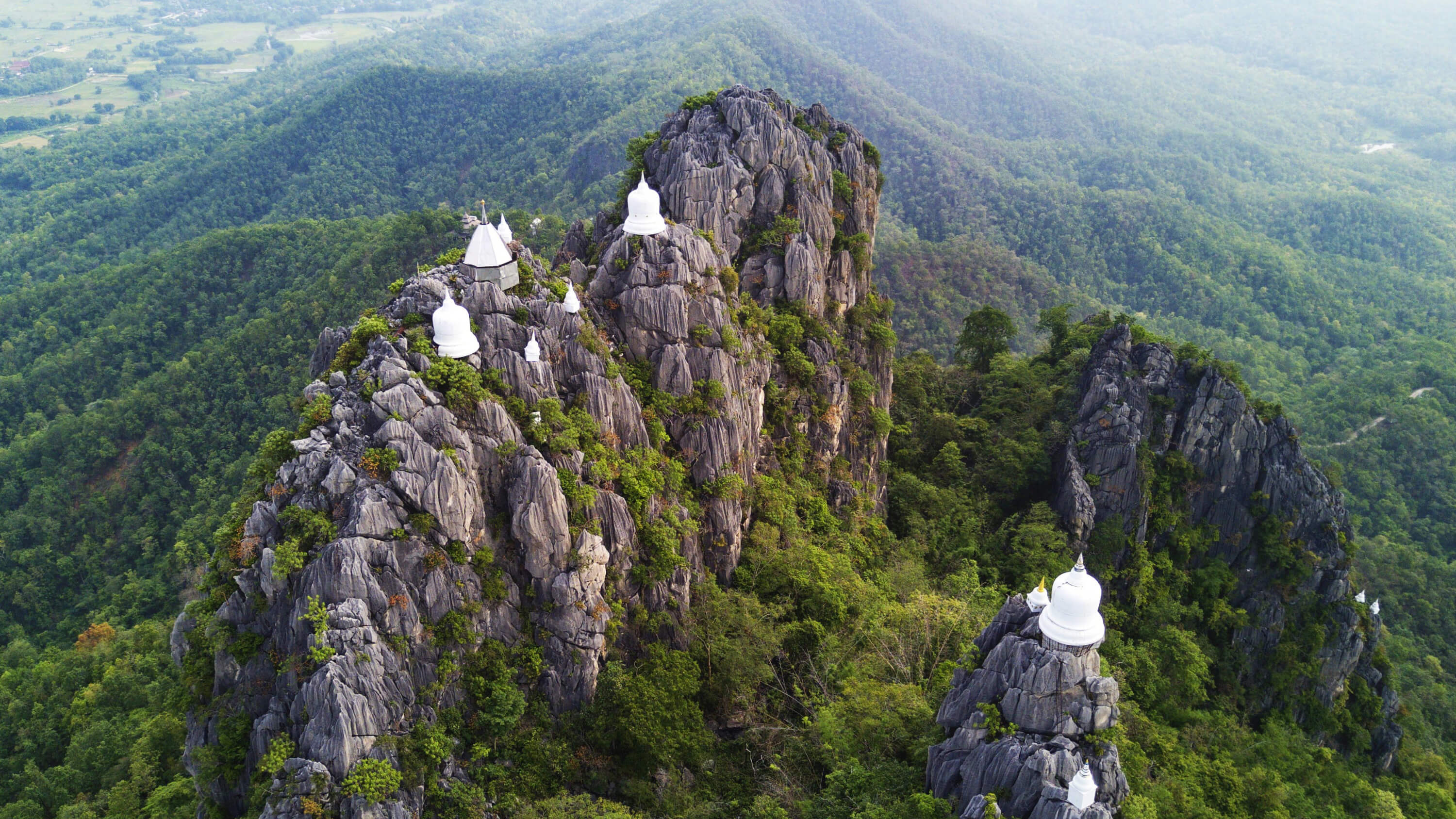
Temples for people who don’t normally like visiting temples.
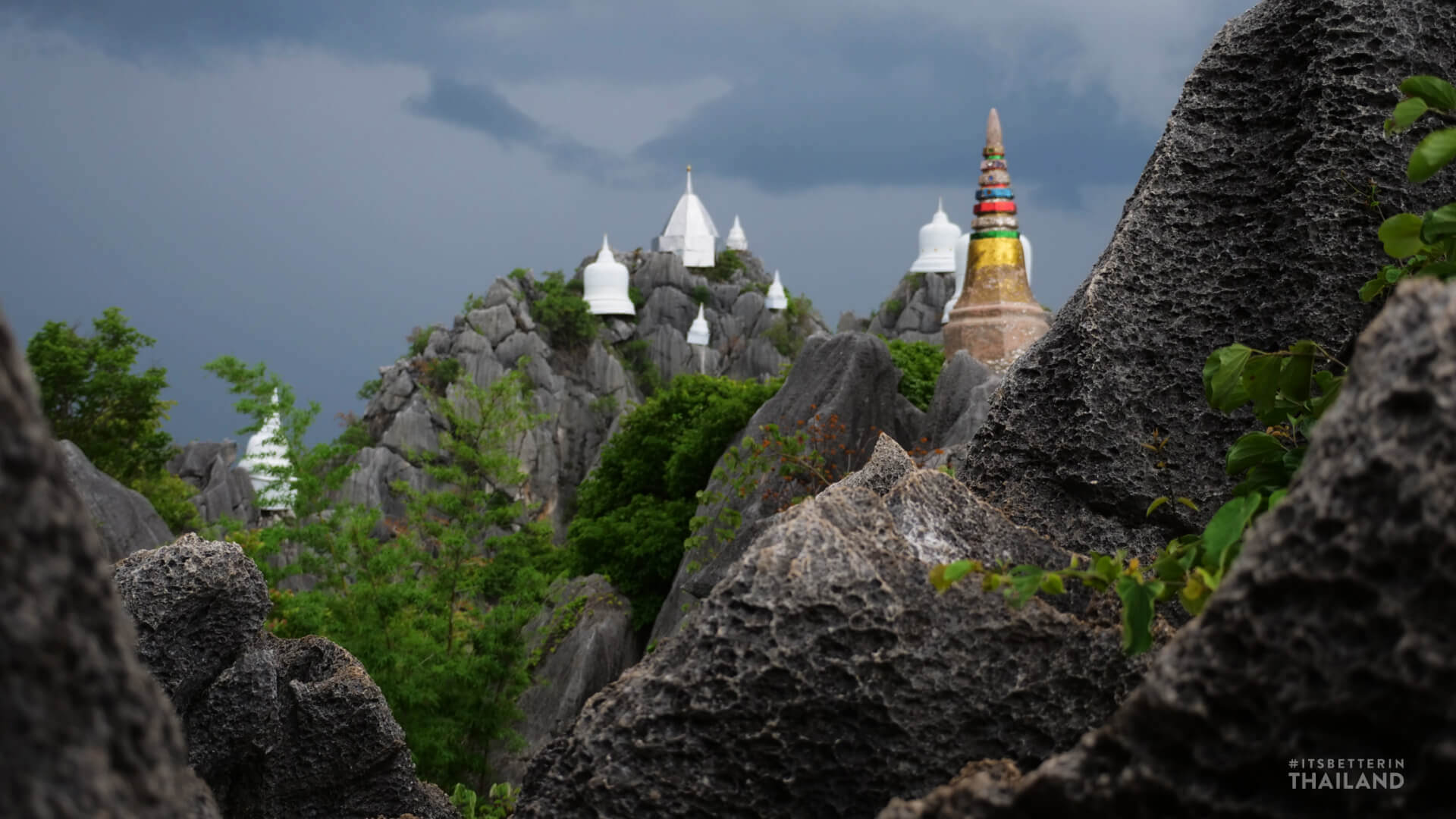
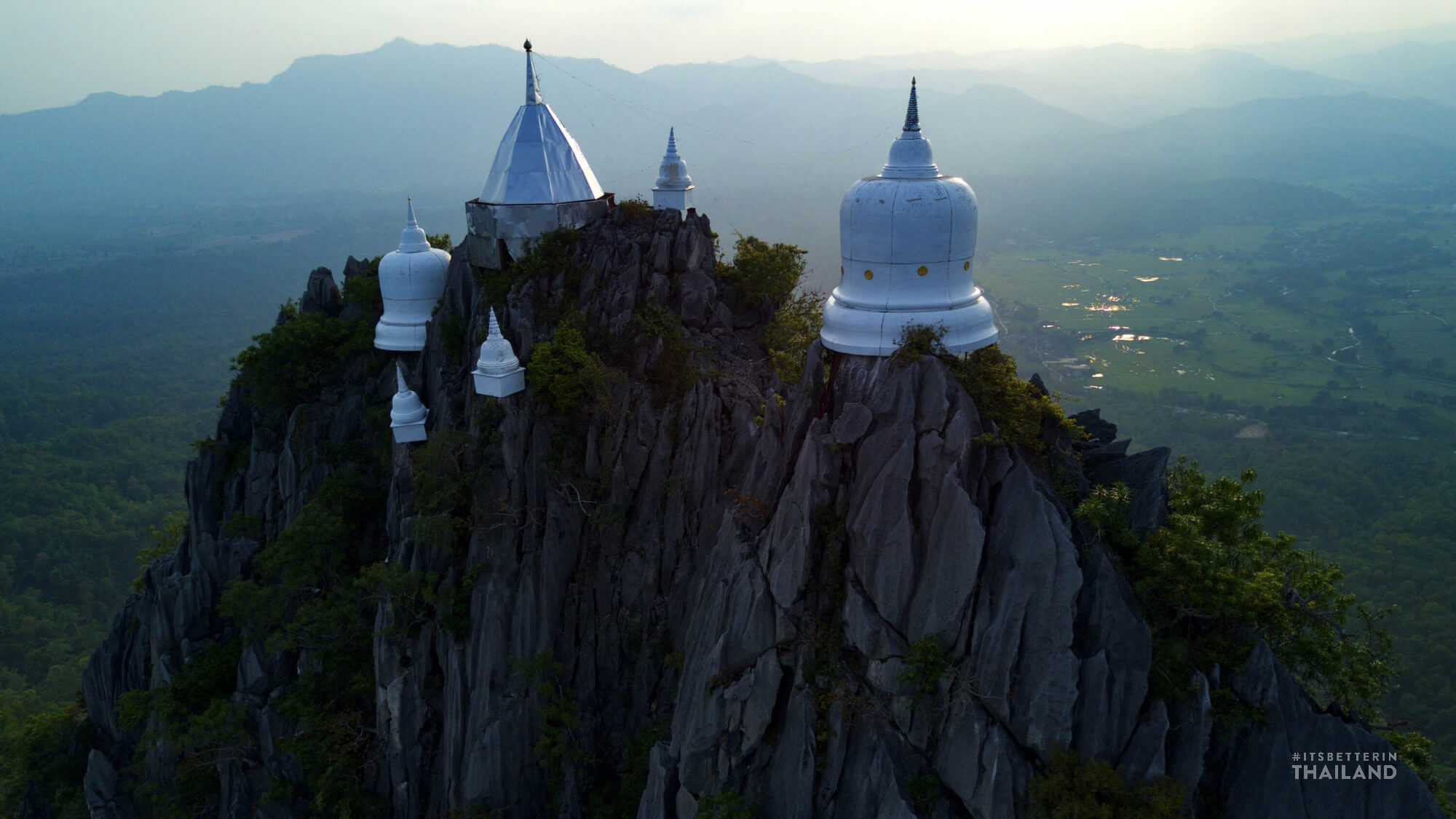
There’s a temple in Northern Thailand with pagodas perched atop the jagged peaks of a limestone mountain, rising up from a lush green forest. Clouds of mist roll in enveloping the place in a dreamlike state, then are swept away to reveal stunning views of the plains below.
The temple is Wat Chalermprakiat (วัดเฉลิมพระเกียรติฯ) in Lampang Province, and it is one of the most unique temples in Thailand. The stairways and trails snaking their way up through the forest give this place a magical feel, like something out of a movie.
Watch our short video below to get a sense of the place, then read on for the history of Wat Chalermprakiat, how to get there, the best time to go, and everything else you need to plan a visit to this very cool temple in the sky.
History
Wat Chalermprakiat may look like some ancient temple, but it was actually planned in 2004 to commemorate 200 years since the birth of King Rama IV of Thailand. You can think of the temple as being divided into three distinct areas: At the top is Jedee Loy Fah (เจดีย์ลอยฟ้า) which translates to pagodas floating in the sky. This is obviously the top of the mountain and this area has a number of small temple complexes and statues of the Buddha. Below this is the temple complex where the road ends and you have to walk to the top from. The third temple complex is at the bottom where you have to park your car to catch the shuttle up the steep and winding road.
Getting there
Update: There have been reports recently of unannounced closures for road repairs here. If you’re traveling independently, we recommend having a Thai friend or someone from your hotel call to confirm their current hours 0819496286
Wat Chalermprakiat is in Chae Hom District (แจ้ห่ม), Lampang Province. Unfortunately, there’s no good public transportation option to take you there. You will need to get there with your own transportation, either a car or motorbike from Chiang Mai, or by hiring a private car and driver. You can also book a tour either online or in Chiang Mai (see our tour section below). The temple is a two-and-a-half-hour drive from Chiang Mai, and one hour from Lampang City.
Once you arrive, you park at the temple at the bottom (this location) and pay the entrance fee and for your shuttle ticket. The road up is steep and narrow, and they sensibly only allow their drivers to use it. The shuttle is really just the common songthaew pickup truck with two rows of benches in the back. After a slightly nerve-wracking ride, you will be dropped off at another temple most of the way up the mountain.
From this point, you still have a 20-40 minute walk up to the pagodas at the top. It’s almost entirely uphill so it’s fairly strenuous, but there are lots of places to sit and rest on the way up. There is also some rain cover along the path. The path is well-maintained, and anywhere it gets steep there are steel stairways with handrailings. You could do this in flip-flops if you were used to it, but you would be better off in decent shoes.
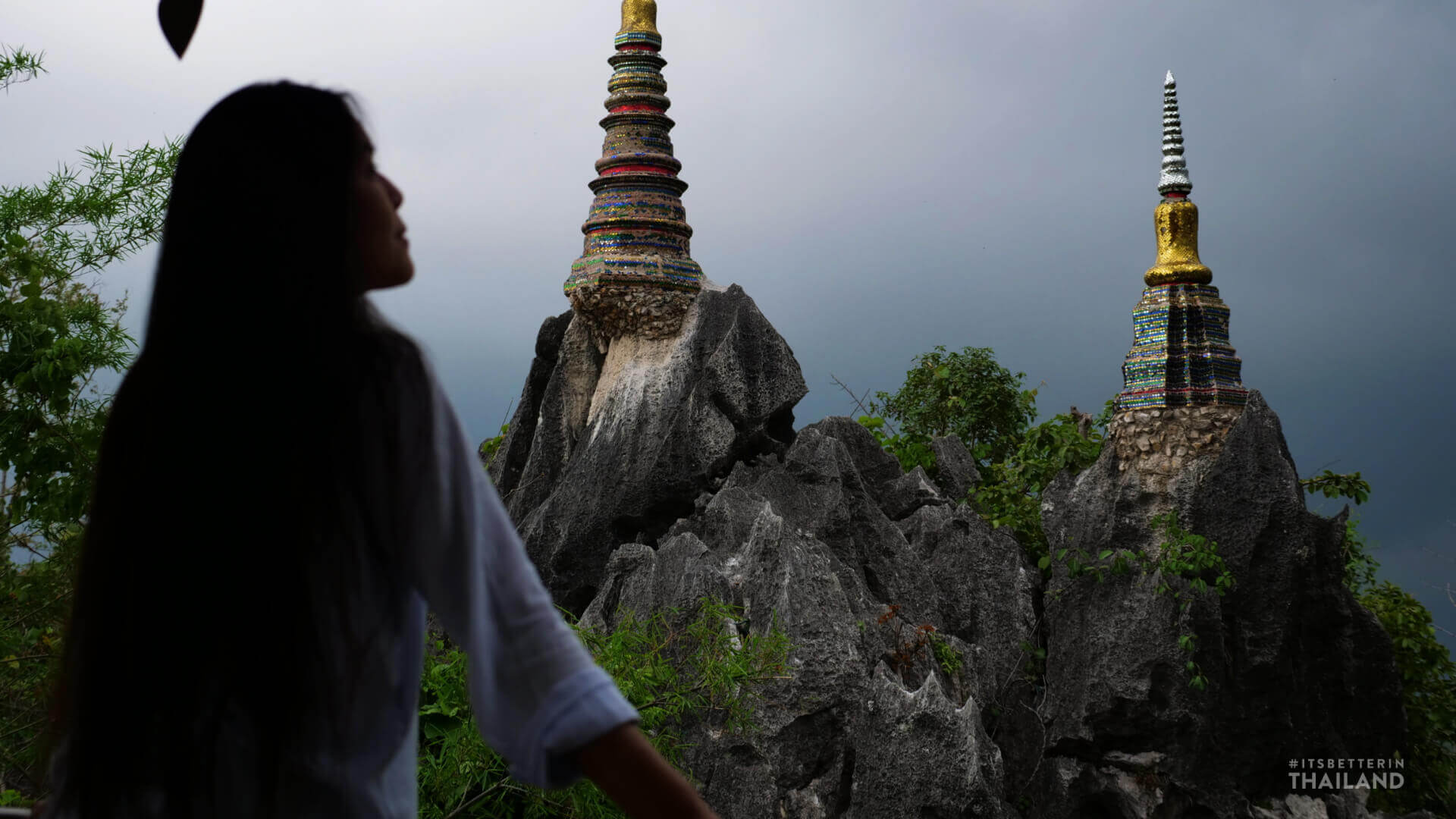
Once you’re at the top, just look around and enjoy. There are plenty of places to explore and different views and vantage points you can get. Take your time and move through slowly as there are lots of small but beautiful details. Remember that many of the people visiting are there for religious reasons and to honor a revered former King of Thailand, so be respectful.
Wat Chalermprakiat tour
If you aren’t comfortable driving yourself in Thailand, or you just prefer to book something ahead and have a knowledgeable guide along the way, there are a couple of options that can be booked online.
This tour from the local company Take Me Tour leaves from your hotel in Chiang Mai and visits the temple, plus a hot spring and a waterfall, and a stop for a local lunch. We’ve done this one and really enjoyed it.
Another tour from Viator also includes a stop in the market in Lampang City. While we haven’t been on this, it’s very well-reviewed.
If you want to book a cheaper tour, you may be able to do so once you are in Chiang Mai. Your hotel might be able to help you arrange it, but they may end up trying to charge you just as much or more. You could also try shopping around the tour agents. The nice thing about the tours mentioned above is that the tour guide is accountable to the company and also reliant on maintaining a great review score.
Entrance fee
| ENTRANCE FEES [Updated February 2026] | Fee to pass through Doi Phrabat Non-Hunting Area | Shuttle fee | Temple entrance fee | Total fee |
| Child | 100 Baht | 60 | 20 | 180 |
| Adult | 200 | 60 | 30 | 290 |
| Thai child | 20 | 30 | 20 | 70 |
| Thai adult | 30 | 60 | 30 | 120 |
| Thai senior | Free | 60 | 30 | 90 |
The entrance fee here is on a dual pricing system and is broken down into three separate charges; access through Doi Phrabat Non-Hunting Area, the fee for the shuttle up and down (mandatory, you can’t walk), and the actual temple entrance. You pay for all of it at once at a single kiosk, and they only accept cash.
A few years ago in a moment of short-sighted greed, prices for foreigners were pushed up to nearly 500 Baht. They’ve thankfully brought that down to something more reasonable, though obviously still more than double the price for Thais.
Best time to visit
The temple is open every day from 7:30 AM to 4:30 PM (7 AM on weekends and public holidays), but they stop selling tickets at 4 PM. Outside of cold season, a morning visit is ideal to avoid the heat of the day.
We recommend the rainy season from mid-May to mid-October as the best time to go. For one thing, the rains mean even fewer people than usual. The water also makes the forests that grow out of the jagged limestone really lush and beautiful. The clouds floating by and occasionally enveloping the pagodas in fog create an incredible atmosphere. Of course you’ll want a day which isn’t too rainy, which can be hard to predict.
Tip: Since Wat Chalermprakiat is popular with Thais, you should not visit during weekends and public holidays if you want to avoid crowds.
Besides rainy season, the cold season from November through January is also a great time to visit. The mountain may still have some nice clouds, and should still be pretty green. You’ll want to bring a warm jacket as it will be cold.
During the hot and dry season from February to April, the North of Thailand has its notorious burning season. The trees will be brown and dry, and the views probably won’t be very good due to the haze. At certain times the air even gets to unhealthy levels for breathing. The exact start and end dates of the burning season vary year to year depending on the rains. If you are already in the North of Thailand at this time, it’s worth a visit, but you’re much better off going at a different time of year if you can help it.
Where to stay
If you want to stay nearby, you should check out Tiny House Homestay for very cute and comfortable rooms set in beautiful rice fields for a very affordable price.
You can also stay in Lampang City which is located about an hour’s drive south of Wat Chalermprakiat. Lampang probably won’t blow you away, but it’s a nice town and a great example of Lanna culture without the crowds of Chiang Mai. You can see Lampang Hotels here on Agoda.
What to bring
As this is a temple it’s important to dress modestly. Men and women should have their legs covered at least to their knees. Tank tops/vests/singlets aren’t appropriate, and women cannot show any cleavage. There is nowhere to rent sarongs or coverings at the temple so you should go prepared.
You should also bring sun cream, a jacket during the cold season, and rain protection during monsoon season. If you’ll be up there early morning or late in the afternoon, taking some mosquito spray can’t hurt. And of course, you should take your camera.
A note about drones
You probably noticed from our photos and videos that we were flying a drone there. The first time we visited was many years before Thailand passed its strict law on drone registration. At that time drones were very uncommon and when you asked people for permission to fly, they almost always said yes and usually stuck around to watch out of curiosity. When we visited here a monk told us it was fine to fly, but unfortunately, it is forbidden now.
Note: Wat Chalermprakiat is sometimes spelled as Wat Chaloem Phra Kiat, and is also sometimes called Wat Phrabat Suthavas (วัดพระพุทธบาทสุทธาวาส), and Wat Phrabat Pu Pha Daeng (วัดพระบาทปู่ผาแดง)