No, street food hasn’t been banned in Bangkok. It’s still EVERYWHERE
This article covers Bangkok’s 2017 street-food debate and was published in 2019. It is not a current guide to vending rules.
Back in 2017, the Bangkok street food scene was sitting pretty. The city had recently become the most visited in the world, and the local food scene was a big part of that draw. CNN then crowned Bangkok as “the world’s street food capital”, and while locals sure didn’t need CNN to tell them that, the affirmation made world headlines. Those stories were still being re-spun by other publications when just days later the shocking news came: Bangkok City Hall was banning street food and all the vendors and their carts would soon be swept off the pavement.
Bangkokians and foodies did not take the news well. There was an immediate backlash and even more headlines were made than by the earlier news, this time with a distinctly negative point of view. The Tourism Authority of Thailand clarified on 20 April 2017 that there was no outright ban, while the Bangkok Metropolitan Administration (BMA) was enforcing hygiene and pavement-access rules and requiring some vendors to relocate. The debate continued into 2018: Matt Gross’s New York Times feature, republished by SBS that April, explored street food amid the uncertainty. In August 2018, a visitor quoted by The Guardian called Khaosan Road’s daytime restrictions “a shocking idea”. The actual truth is complicated: Street food vendors in Bangkok are genuinely concerned about the future. The BMA does have some legitimate gripes with the largely self-regulating industry. And certain small areas of Bangkok really have seen street food pushed out. But those restrictions did not mean the end of street food in Bangkok.
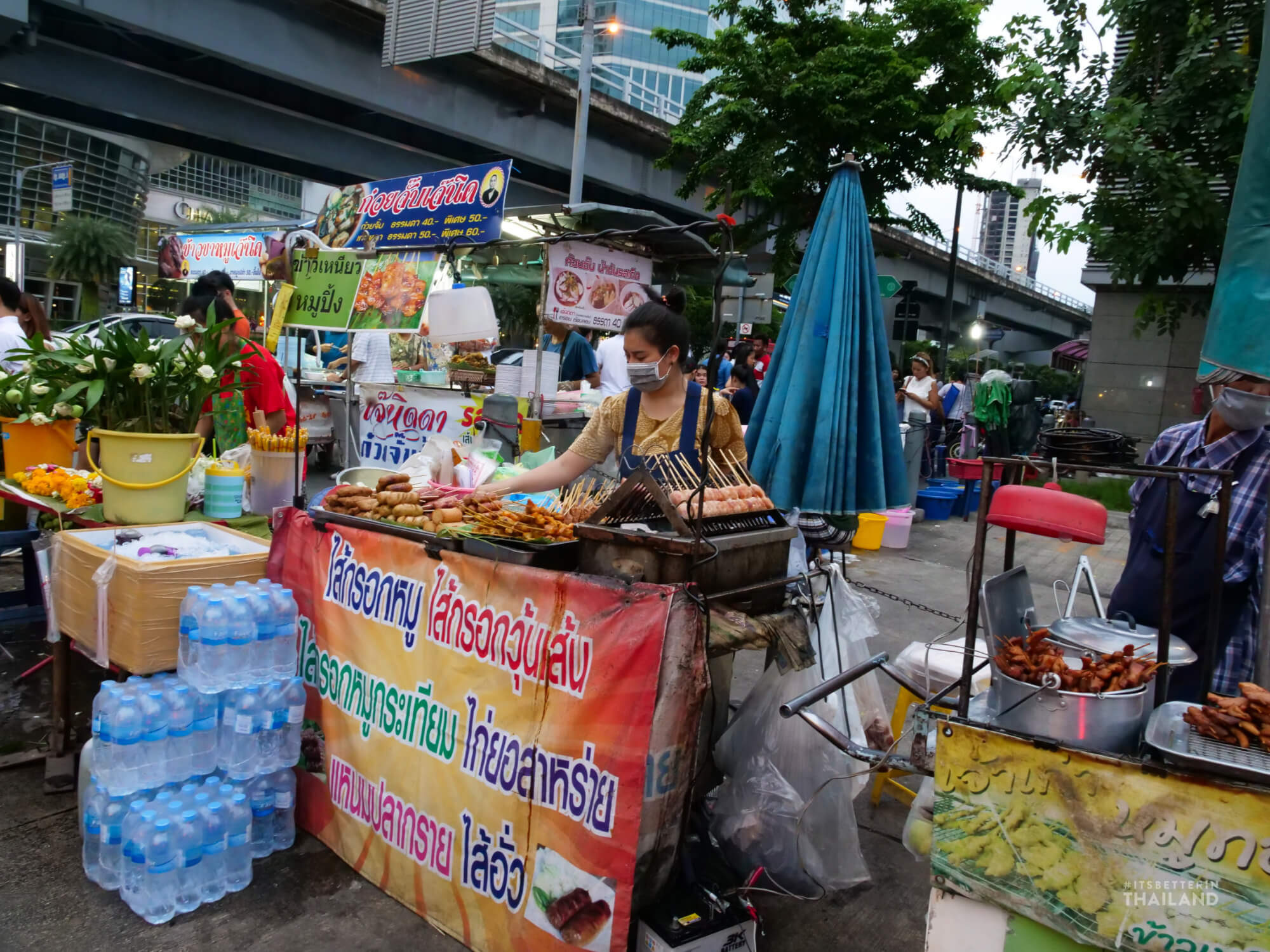
Street meat 4 life
An assault on the senses
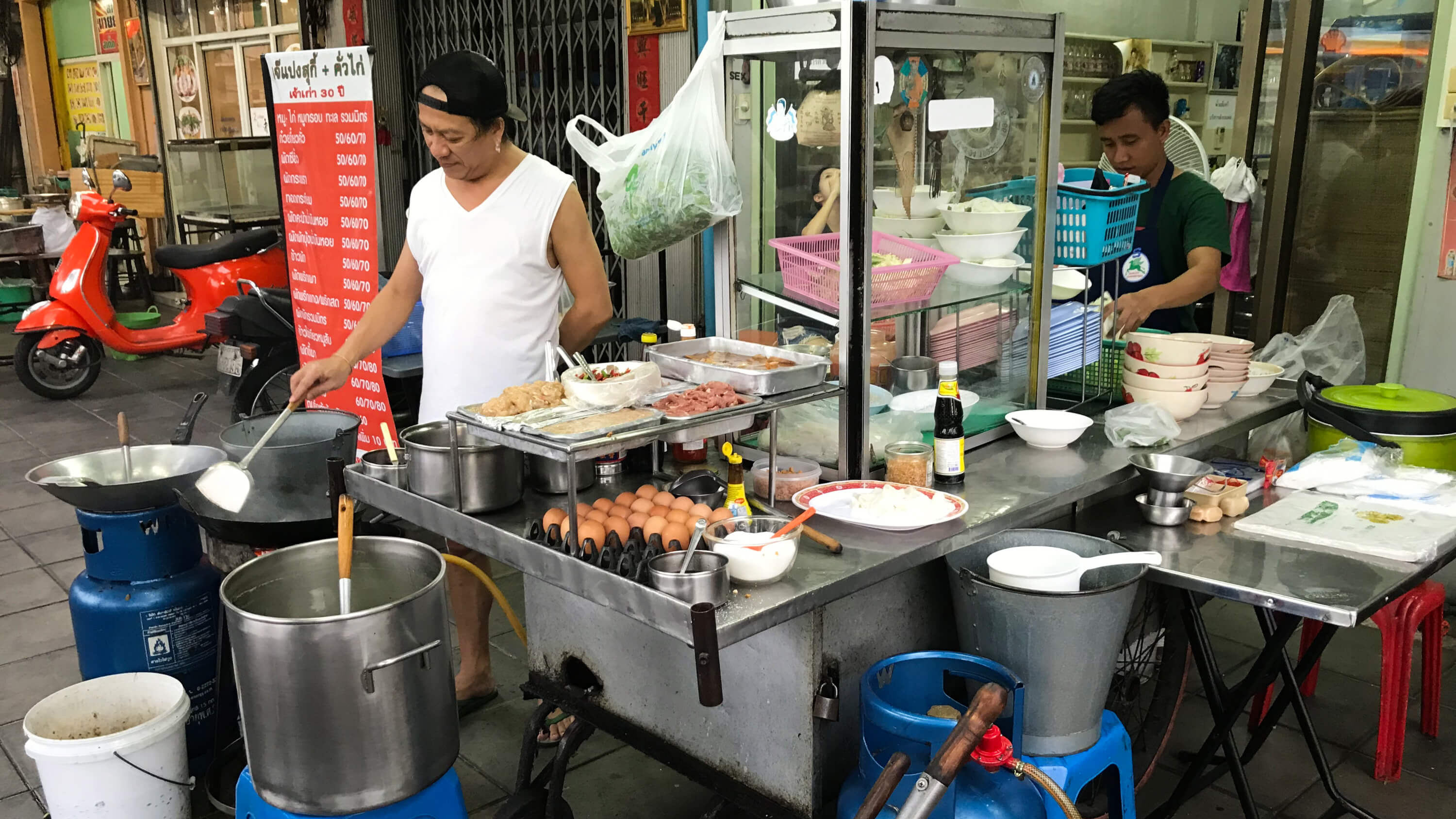
Bangkok really does have an extraordinarily delicious food scene. It’s hard to put into words the all-out barrage on the senses that Thai street food creates. Before you even get to taste it, you’ve already experienced it with your other four senses. The smells hit you first, and they can be as inviting as the smoke from caramelized, grilled pork skewers, or as awful as pla ra fermented fish paste. Getting closer you can hear the sizzle as shockingly fresh ingredients hit hot oil, and metal spatulas scrape across woks. Closer still, the heat wave from a flaming pan hits you like a wave, and frying chilis burn your eyes and cause fits of sneezing all around you. It’s intense, and it’s not for everyone, but for people who truly love to eat well, it’s something they can’t live without.
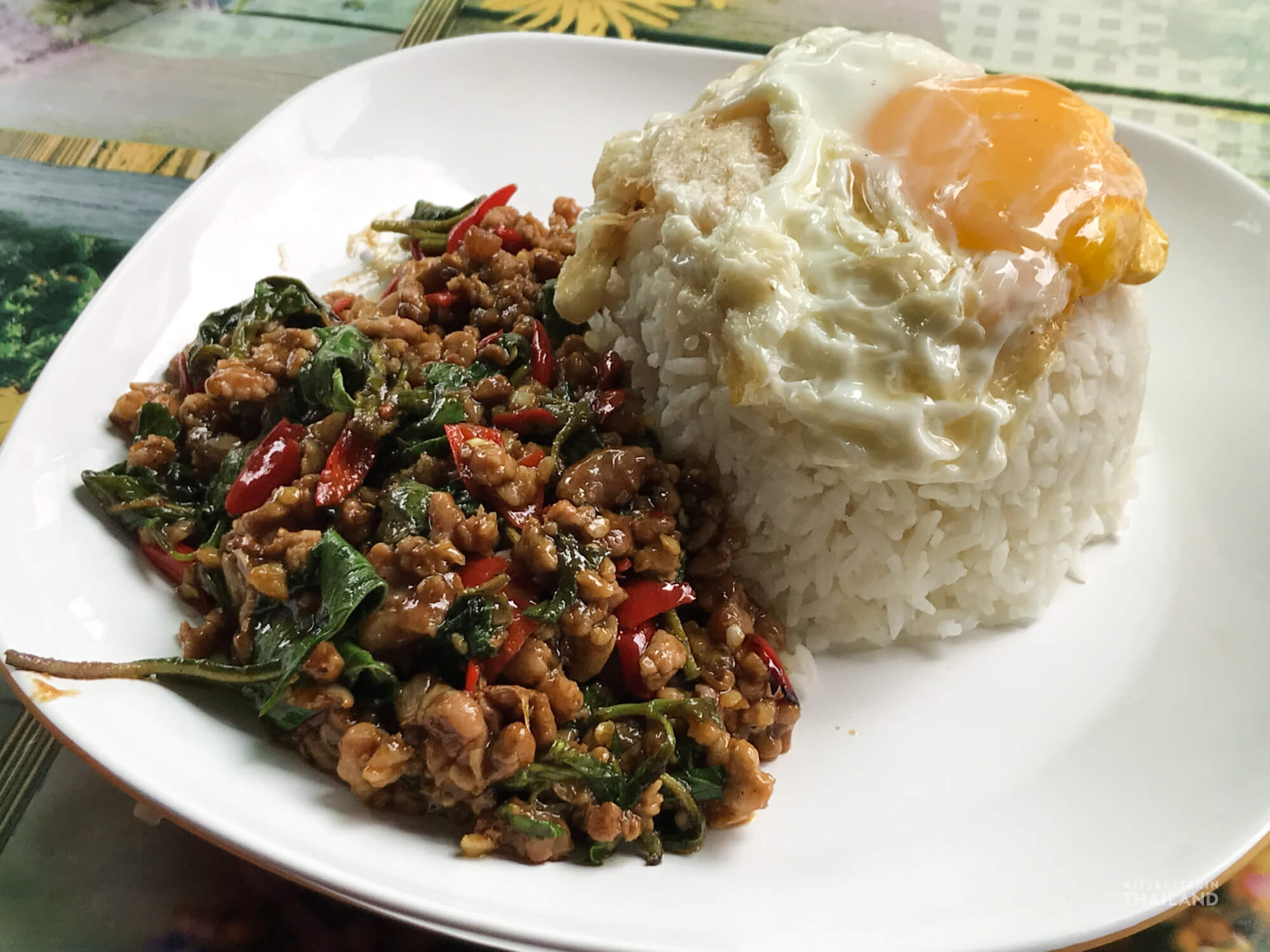
Quite possibly the world’s perfect dish
Has Bangkok street food really been banned?
For people who don’t live in Thailand and just see an occasional headline, it would be pretty easy to think that street food really has been banned. It’s a question that gets asked pretty commonly. For the 2017 announcement, the answer was no outright ban, as TAT clarified above. That did not mean every vendor could keep their pitch.
Tip: Street food can be intimidating when you’re new to Thailand and can’t even figure out what type of food a vendor is serving. Check out our guide to Thai food and identifying Thai restaurant types just by looking at them, and you’ll be well on your way to being a street food pro.
Why is street food so important in Thailand, and why would anyone want to ban it?
Like most debates in Thailand, the street food issue is a bit complicated. Street food is a pretty integral part of Thailand and in a lot of ways it’s what fuels the country and its economy. Being able to get a convenient, filling, and delicious meal at a cheap price is a big part of the appeal.
It’s also an industry that provides jobs and income for a lot of Thais. The low startup costs make it fairly accessible to almost anyone, and that is also part of the reason that so much of it is so good. Plenty of talented cooks in a lot of countries simply can’t afford to start their own restaurant. That’s not really a problem in Thailand, and it makes for an excellent and vibrant food scene.
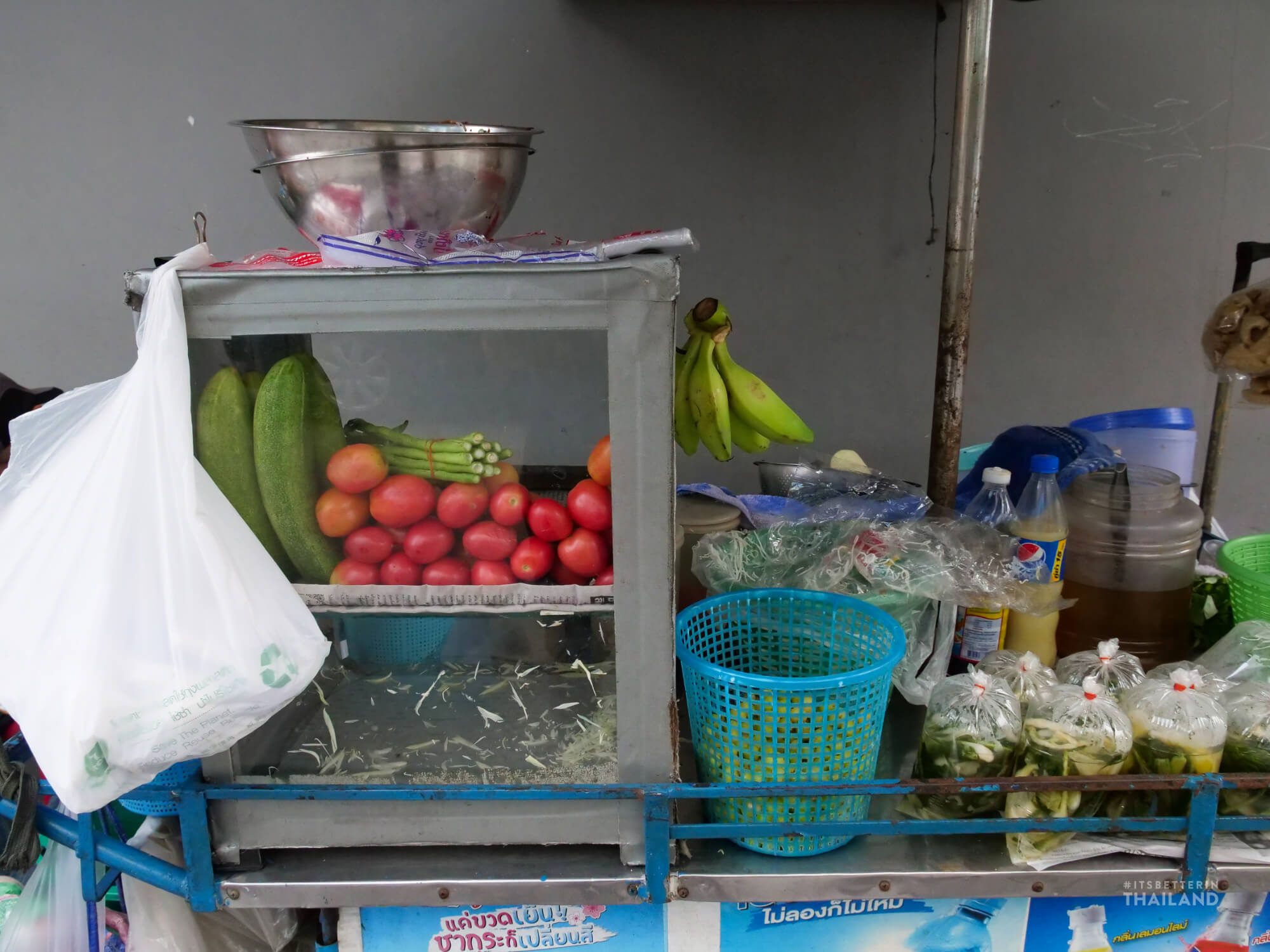
It might not look like much, but a som tum (papaya salad) cart is the most exciting thing to see for a hungry Thai person
Street food does create some problems, and it’s not hard to understand the BMA position, at least to an extent. In some areas, sidewalks become nearly impassible due to all the vendor’s carts. Sometimes they also block access to the businesses behind them, and they can create unfair competition to brick and mortar restaurants that have to worry about paying rent. Many vendors don’t have easy access to soap and running water as well, which is really something you’d like the person preparing your food to have. And a lot of vendors improperly dispose of food waste, often throwing food scraps into street gutters, and pouring used cooking oil directly into storm drains.
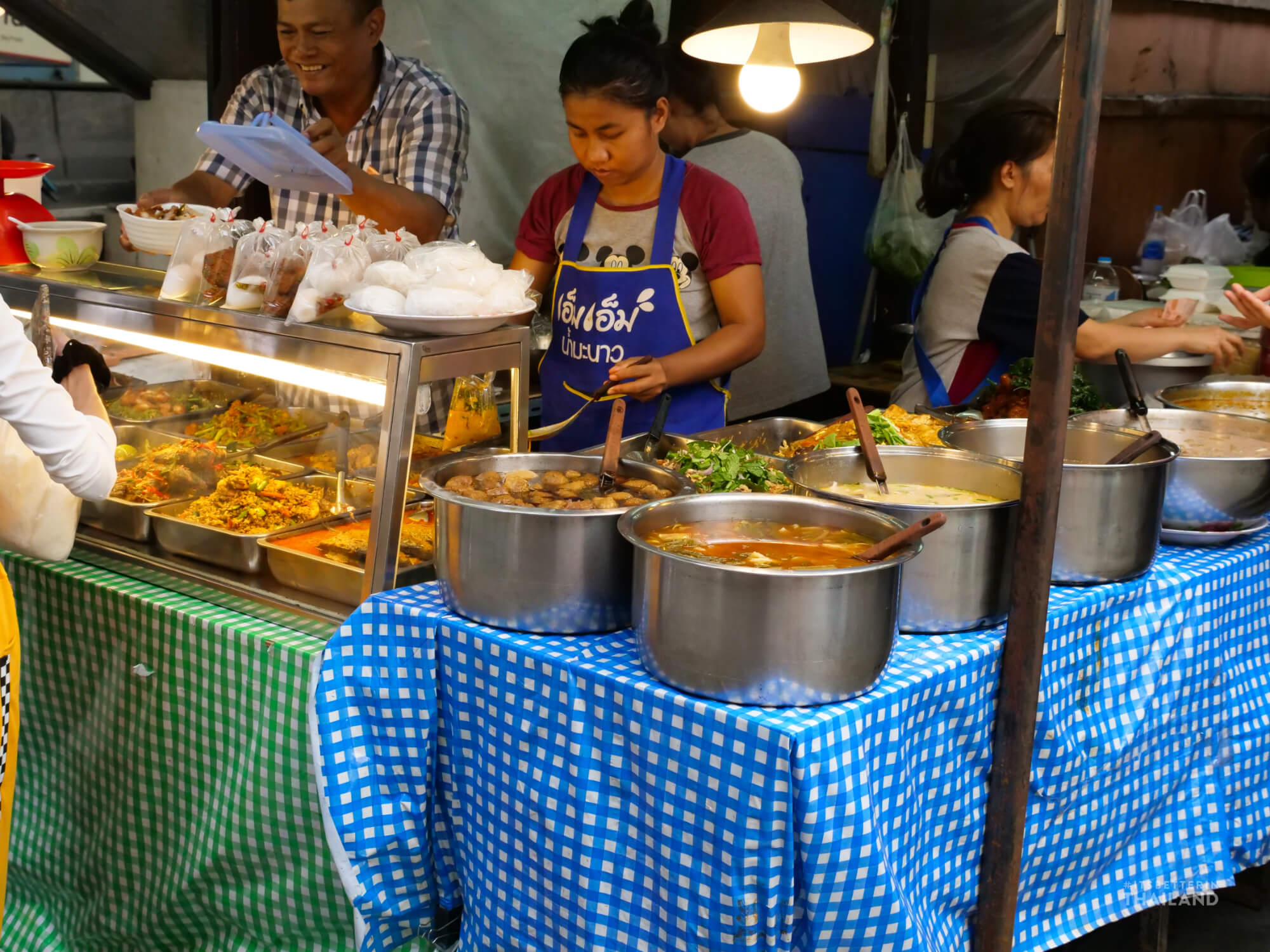
So. Much. Good. Food…
The future of street food in Bangkok
It seems pretty clear that the BMA is hoping to create something similar to the hawker centres in Singapore, which swept away its own street food vendors in the days before social media and foodie culture could create pushback. To some, this is the ideal solution, to others, it would create an overly sanitized version of Bangkok. As the middle class grows, more and more people will want a change like this. Some vendors would probably welcome the change as well, if fixed but low rent costs could replace the unpredictability of impending bans and monthly bribes to police.
Here’s to hoping they find a compromise that lets Bangkok stay vibrant and exciting, while also preserving people’s livelihoods, and access to inexpensive and delicious food. In typical Thai fashion, they’ll probably find their way there eventually, but with plenty of “bans”, walkbacks, social media outrages, and compromises along the way.