Loy Krathong in Thailand (ลอยกระทง)
The next upcoming date is Tuesday, 24th November, 2026.
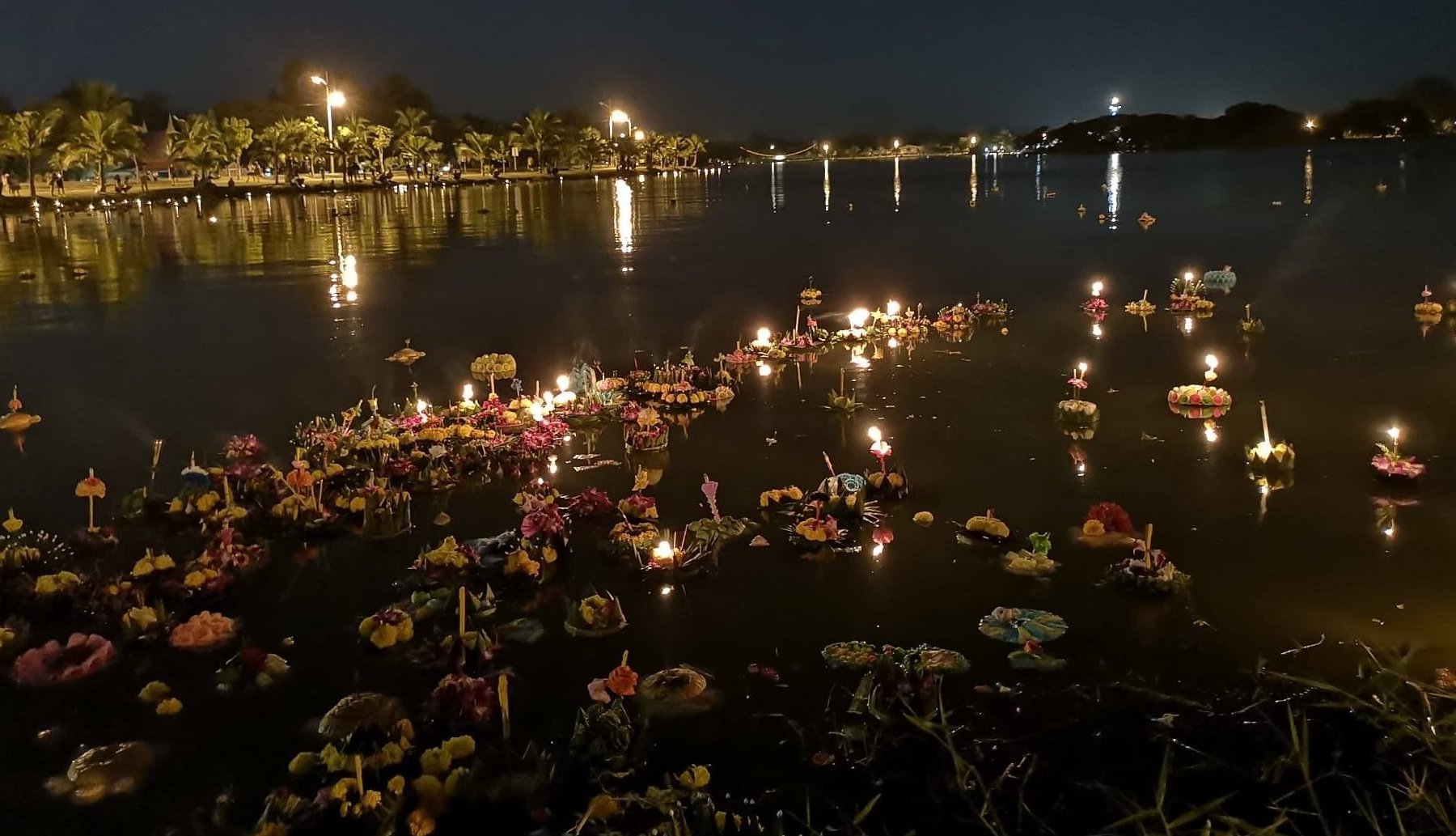
Note: In 2026, Loy Krathong is on Tuesday 24 November. The festival falls on a slightly different date every year based on the lunar calendar.
Loy Krathong is a festival that happens in the twelfth month of the Buddhist lunar calendar when the full moon appears (typically in November). People from all around the country head to lakes and rivers to place colorful baskets into the water and watch them float away, along with any negative thoughts and feelings.
What does Loy Krathong mean?
- The word ‘Loy (ลอย)’ means to float.
- Krathong (กระทง) is the name of the basket that is placed into the water.
- This term could essentially be translated as ‘to float a basket’.
What happens at the festival?
Some people will make their own krathongs, but most people will buy a pre-made one from a street vendor. Go anywhere there is water on the evening of the full moon in the 12th lunar month, and you will see many of them being sold, along with desserts and other offerings.
This is the process that is involved in the Loi Krathong tradition:
- Make or buy a krathong.
- Add anything else you want to offer (see below).
- Make a wish.
- Light the candle and the three incense sticks.
- Head down to the water.
- Say a prayer.
- Place the krathong into the water.
- Watch it float away
There may also be other shows and performances happening. There will often be a beauty pageant, where women will dress up in traditional Thai clothing.
It used to be traditional to light a sky lantern and let it fly off into the night’s sky. It can still happen but it is very much frowned upon now, and in Chiang Mai they’re banned anywhere in the city. They can cause house fires and they also create litter. You may still see some fireworks being let off though.
Where to celebrate Loy Krathong
Honestly, anywhere with water. Every town has its own celebration, and if you’re near a lake, a river or even a park pond on the night of the full moon, you’ll find people floating krathongs. A few places go all out, though:
- Sukhothai - This is where the legend says it all began, so it’s no surprise that the Historical Park puts on the biggest traditional celebration in the country. It runs for around ten days around the full moon (15-24 November in 2026), with candles lit among the ruins, fireworks and a light and sound show (you’ll need a ticket for that one, 500-1,200 baht). More in our Sukhothai guide.
- Chiang Mai - Loy Krathong lands at the same time as Yi Peng, the northern festival of lights, so Chiang Mai gets both: lanterns hung up all over town and krathongs floating down the Ping River. In 2026 the city’s festival runs 23-25 November, with the big krathong parade on the 25th. You can’t release sky lanterns anywhere in the city because it sits under the airport’s flight path, so the famous photos of thousands of lanterns going up at once come from ticketed events outside town. Those cost upwards of 4,000 baht and sell out early. More in our Chiang Mai guide.
- Tak - Tak does its own version, Loy Krathong Sai. Instead of everyone floating their own, villages compete to float hundreds of little coconut-shell krathongs in one long, glowing line down the Ping River. More in our Tak guide.
- Bangkok - The city opens dozens of its public parks for the night (33 of them in 2025), including Lumpini and Benjakitti. Sky lanterns and fireworks aren’t allowed in the parks. Or head to the Chao Phraya, where the riverside hotels and dinner cruises make a big night of it.
What is a Krathong made out of?
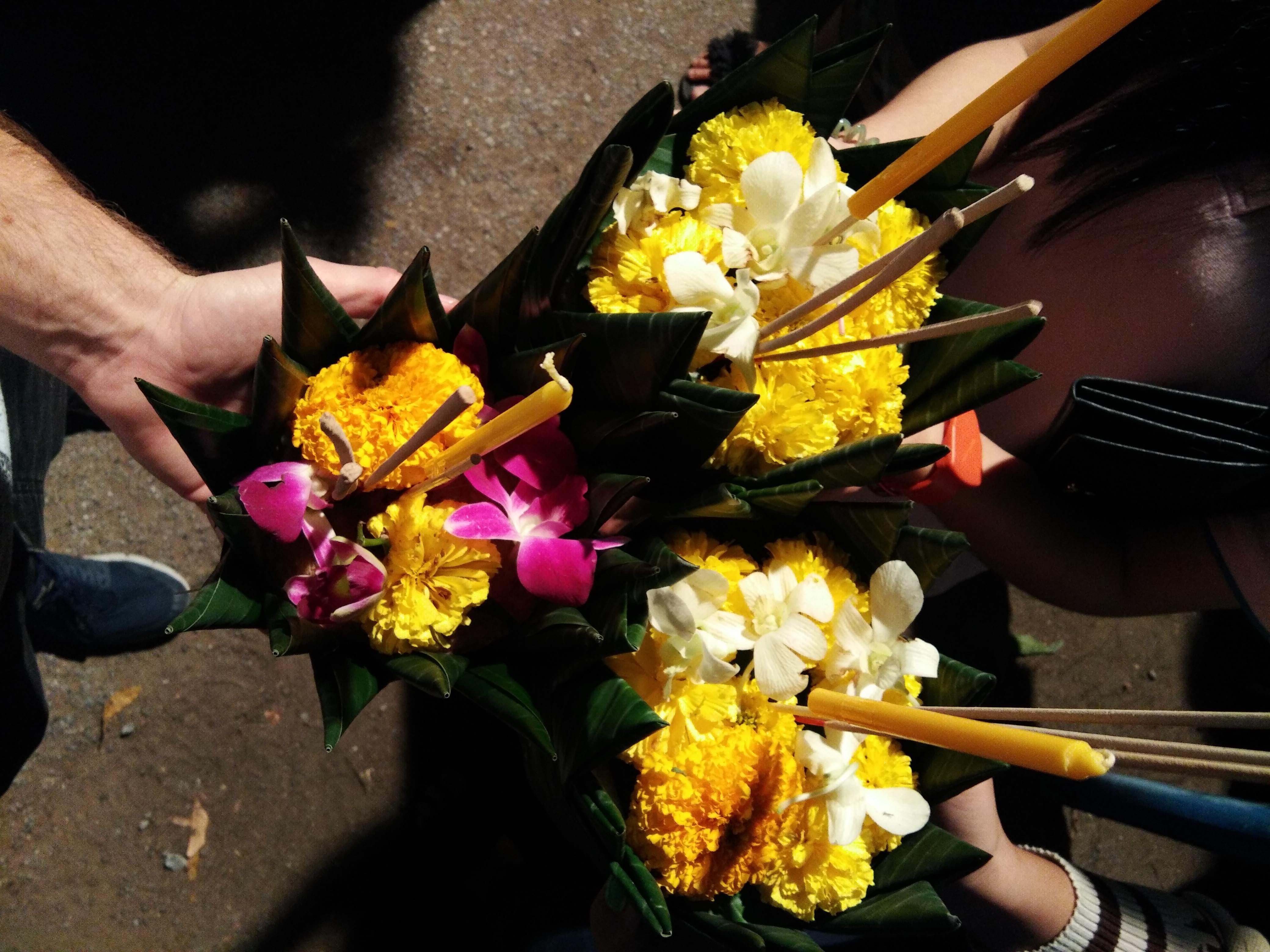 A krathong basket is traditionally made from a slice of banana tree trunk and banana leaves. Flowers will then be placed inside the basket, along with a candle, three incense sticks (joss sticks) and sometimes another type of offering. This may be a strand of hair, nail clippings or a coin.
In a more modern world, people had started to use foam or polystyrene baskets but this is generally considered unethical because of the litter pollution it causes.
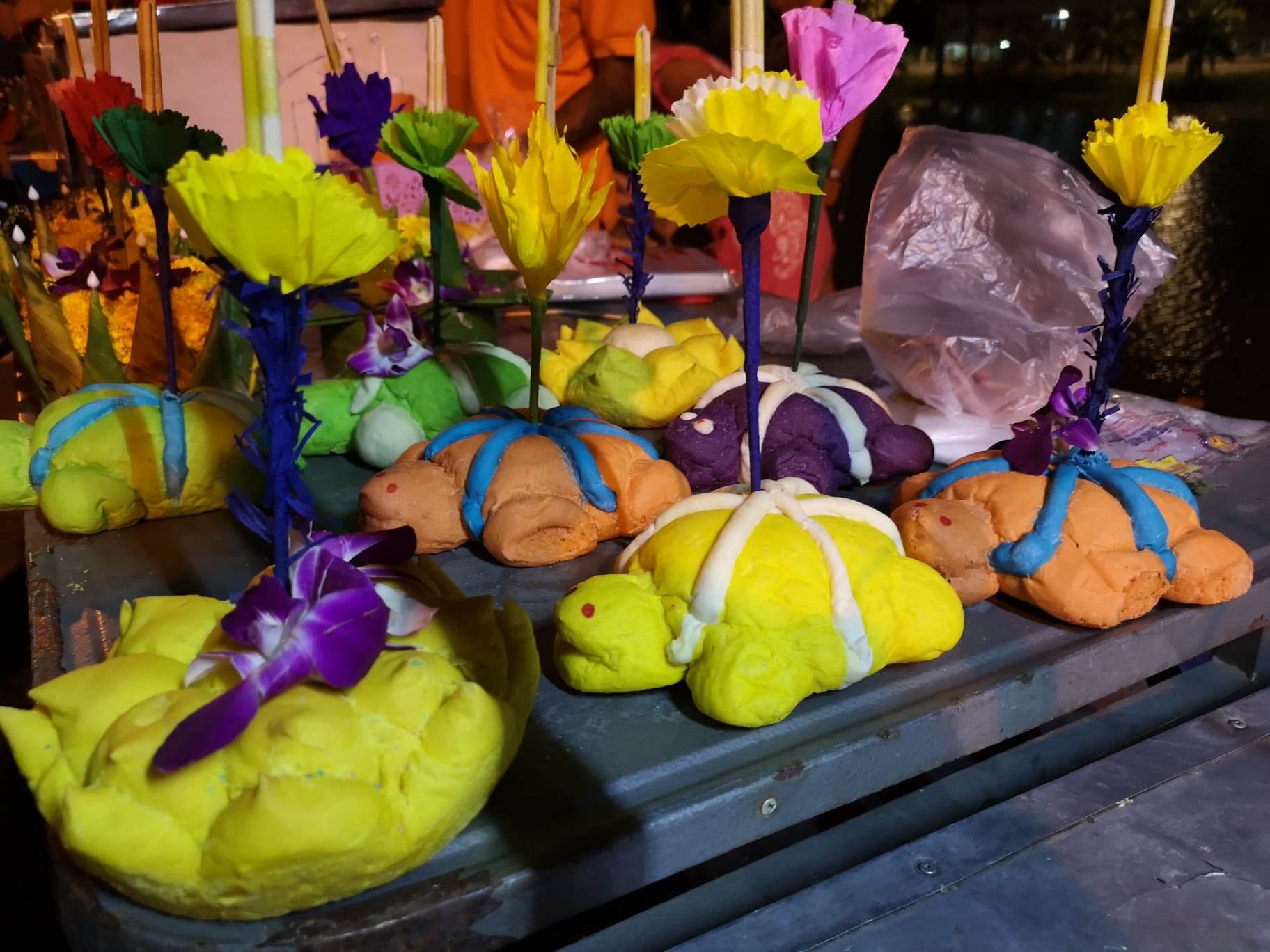
Bread used to be sold as the ethical alternative, the idea being that it dissolves and gets eaten by the fish. You can even find street vendors selling bread in the shape of a turtle! It turns out it isn’t as eco-friendly as it sounds, and Bangkok asked people to skip bread krathongs in 2025. Stick with banana leaf.
The history of the Loi Krathong festival
The true origin of Loi Krathong is a little bit of a mystery. One case states that it was traditionally a way of paying respect to Buddha. Buddhists would release all their negative feelings and emotions through the Krathong as it drifted away down the river. Other sources claim that it previously originated in India.
To some Thais, it is believed that it dates back to the 13th century and originated in the city of Sukhothai. A romantic story tells of a consort named Nang Noppamas who created this beautiful offering for King Ramkhamhaeng, which she floated down the river with a candle to gain his attention.
This festival will often be used for people in relationships to show their love for one another. Couples will sometimes use a bigger krathong and release it together.
Other locals use this festival as a way of paying respect to the Goddess of Water (Me Khongkha). They say a prayer and show their gratitude before releasing their offering into the water.
Whatever the reason a Thai has for taking part in this festival, it is a magical way for everybody to come together and show forgiveness, gratitude, and peacefulness.