Best way to send money to Thailand (and the cheapest)
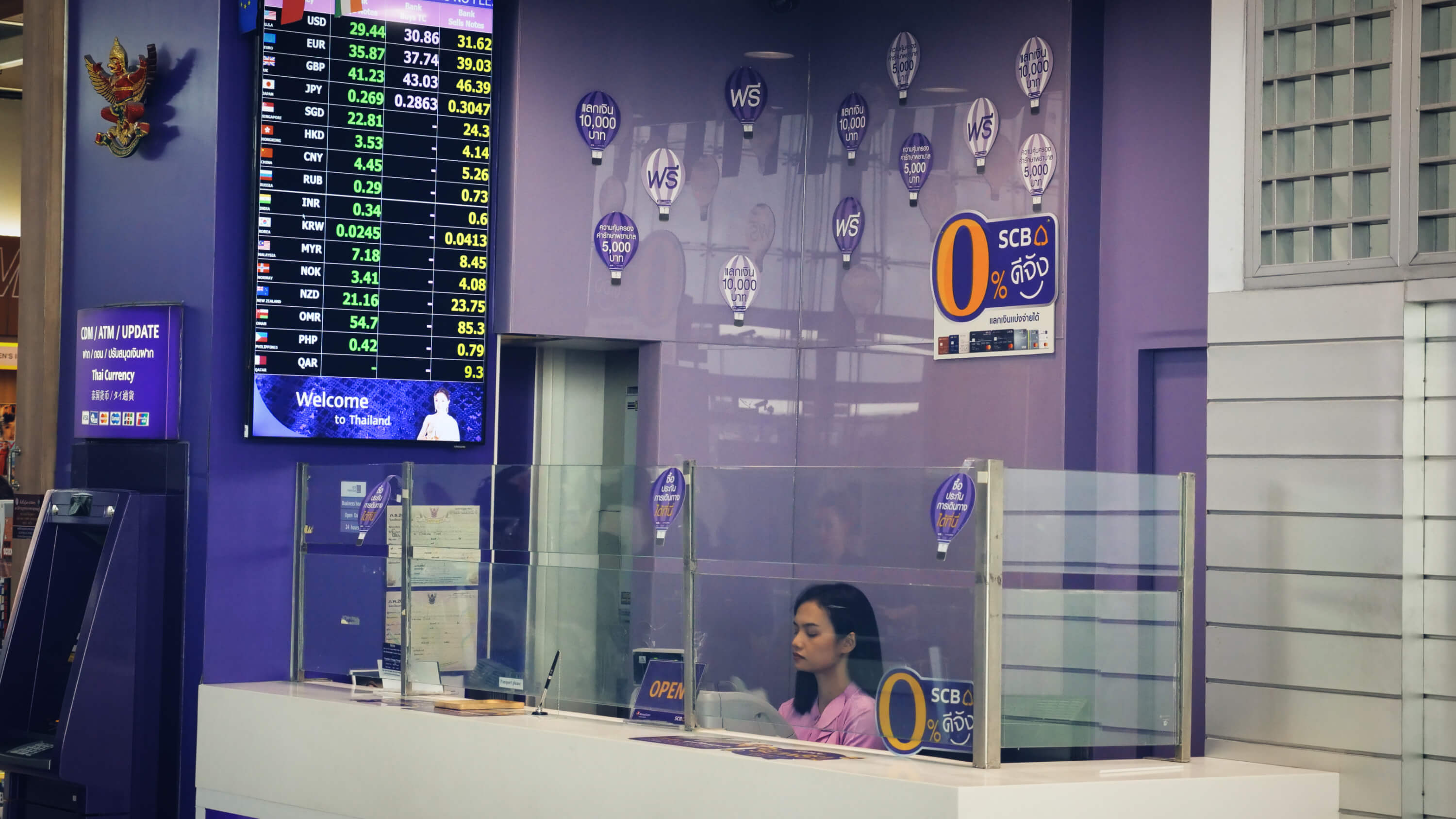
Wise (formerly TransferWise) has finally provided a convenient and inexpensive way to move money into Thailand. Here’s how it works and everything you need to know to start
ATM fee calculator
What will your next ATM withdrawal cost?
Put in the Thai ATM fee and your bank's charges and see the real cost, plus how much you save by taking more out at once.
Whether you’re funding your own Thai bank account, sending money to family, or paying rent from abroad, you need a service that won’t eat your transfer with hidden fees. We’ve been using Wise for years and still recommend it as the best option for most people - but a lot has changed since we first wrote this guide. Here’s the full picture as of 2026.
Use Wise’s calculator to see exactly what you’ll receive in baht. The amount shown is final - no hidden fees get added later.

Why we recommend Wise
Banks and wire transfer companies have been overcharging for international transfers for decades. They quote a small “fee” upfront, then take another cut by giving you a terrible exchange rate. By the time your money arrives, you’ve lost 3-5% and have no idea where it all went (spoiler: the bank does).
Wise gives you the real mid-market exchange rate - the same one you see on Google or XE. They charge a single transparent fee, and that’s it. A typical $1,000 transfer from the US to a Thai bank account costs around $8-12 depending on how you pay, where a bank would charge $40+ once you factor in the rate markup.
The other thing that’s changed recently: 74% of Wise transfers to Thailand now arrive instantly. Under 20 seconds. That used to take 1-2 business days.

How much does Wise actually cost?
This is the part most people don’t realize - your fee depends heavily on how you pay. Here’s what a $350 transfer to Thailand costs with Wise (as of March 2026):
- Wise balance: $3.96
- Direct debit (ACH): $4.77
- Bank transfer: $10.25
- Debit card: $16.52
- Credit card: $22.43
That’s a massive difference. The same transfer costs $3.96 or $22.43 depending on payment method. Always use your Wise balance or direct debit if you can. Credit card is the worst option.
For a larger $5,000 transfer, the total fee drops to about $31 - under 1%. That’s the kind of rate banks would never give you.
Big news: Wise is now licensed in Thailand
In March 2026, Wise became the first non-bank to receive five regulatory licences from the Bank of Thailand and Ministry of Commerce. By the end of December 2026, Wise will operate as a local Thai entity with some new features that matter if you live here or send money regularly:
- PromptPay integration - send money to any Thai PromptPay ID (mobile number or citizen ID). No bank account details needed.
- Send baht abroad - Thai residents can send baht overseas directly from a Thai bank account or Wise balance.
- Multi-currency account - hold, convert, and spend in 40+ currencies from within Thailand. Thailand’s first fully digital foreign currency wallet.
One catch if your Wise account is registered to a Thai address: your current card gets cancelled by January 2027 (Wise sends a free replacement), and after that you can’t use it to take cash out of Thai ATMs. It still works at ATMs abroad.
This matters especially if you’re an expat. Before, Wise was mainly useful for getting money into Thailand. Now it becomes a proper financial tool for managing money while you’re here. We’ll update this article once the PromptPay features go live, which should be by December.
Pro tip: New to Wise? Your first transfer up to 20,000 baht is fee-free. Worth using on your first transfer to test the waters.
How Wise compares to other services
Wise isn’t always the absolute cheapest. For large transfers, CurrencyFair actually beats it. But Wise wins on speed and ease of use, which is why we still recommend it as the best all-around option. Here’s how they compare for a $5,000 transfer to Thailand (as of March 2026):
| Service | Total cost | Speed | Best for |
|---|---|---|---|
| CurrencyFair | $25.68 | 1-3 days | Large transfers where speed doesn’t matter |
| XE | $30.18 | 2-3 days | Simple one-off transfers |
| Wise | $31.26 | Instant to 2 days | Best all-around (speed + cost + features) |
| Remitly | $37.57 | 0-2 days | Small regular transfers ($0 fee advertised) |
| Western Union | Most expensive | Minutes to days | Cash pickup in remote areas |
Remitly advertises $0 transfer fees, but they make their money by giving you a slightly worse exchange rate. It works out fine for smaller amounts. For anything over $1,000, Wise is usually cheaper.
Western Union is still the most expensive option, but it lets the recipient pick up cash at thousands of locations across Thailand (Remitly offers cash pickup too). If your recipient doesn’t have a bank account, cash pickup might be the only choice.
What you need to get started
Setting up with Wise takes about 10 minutes. Before you start, make sure you have:
- Your passport or driver’s license (for identity verification - usually approved within an hour)
- The recipient’s full name (must match their Thai bank account exactly)
- Their Thai bank account number and bank name
- Their email address and home address
- For US bank transfers: your online banking login credentials
No routing numbers or SWIFT codes needed for transfers to Thai bank accounts through Wise - just the account number and bank name. That alone makes it simpler than a traditional wire transfer.
The registration process is straightforward: sign up, verify your ID, add your bank details, add a recipient, and send. Wise walks you through it. If you run into issues with US bank login verification (some smaller banks have compatibility problems), switch to a debit card payment. It costs slightly more but works reliably.
Thai bank accounts are harder to get now
This is important context for anyone planning to fund their own Thai account. Since 2025, Thai banks have cracked down hard on account opening for foreigners. If you’re on a tourist visa, a visa exemption, or even a DTV (Destination Thailand Visa), most banks will refuse you.
Banks now require a long-term visa (Non-B, Non-O, retirement visa, or Elite Visa), proof of Thai residence, and sometimes a work permit. They scan your passport chip in person and run annual checks on existing accounts. This isn’t a minor policy change - it’s a full crackdown driven by the government going after money mule accounts used in online fraud. If you’re American, our financial resources guide covers the banking side in more detail.
The collateral damage has been real. Thousands of legitimate accounts belonging to foreigners on short-term visas were frozen in 2025 (with no warning), and some DTV holders lost access to their accounts entirely. If you already have a Thai bank account, make sure your visa and contact details are up to date with the bank.
If you don’t have a Thai bank account and can’t get one, this is where Wise really earns its keep. With the PromptPay integration (rolling out through December 2026), you’ll be able to send money to someone’s phone number directly - no bank account details needed. For anyone managing finances in Thailand without a local account, a Wise account picks up most of the slack.
Avoiding ATM fees
Thai ATMs charge foreign cards a flat fee per withdrawal (Krungsri charges 250 baht for Visa and 350 baht for Mastercard) on top of whatever your home bank charges (yes, a fee on top of a fee). The fee went up in 2026, and it adds up fast if you’re pulling out cash every few days.
A few tips to minimize ATM costs:
- Withdraw the maximum - Krungsri ATMs let you pull 30,000 baht per transaction. Since the 250 baht Visa fee is flat, withdrawing 30,000 baht costs 0.83% versus 2.5% for withdrawing 10,000.
- Use AEON ATMs - they only charge 150 baht instead of 250-350. You’ll find them in most malls.
- Always decline the ATM’s “conversion” offer - when the screen asks if you want to be charged in your home currency, always say no. Choose Thai baht. The conversion markup is 3-5% and it’s a complete rip-off.
- Fund a Thai bank account instead - if you have a Thai bank account, use Wise to transfer money into it and skip ATMs entirely. One Wise transfer is far cheaper than multiple ATM withdrawals.
- Use a no-fee travel card - check out our guide to the best credit and debit cards for traveling abroad for cards that refund ATM fees.
Common problems (and how to avoid them)
Transfer delays from new AML checks. Since mid-2025, some transfers that used to arrive in minutes are taking 1-2 days. This is due to upgraded anti-money laundering systems at Thai banks. Not much you can do about it except plan ahead - don’t send money on a Friday expecting it Saturday.
Recipient’s name doesn’t match. Thai bank accounts often have names transliterated from Thai script, and the English spelling can vary. “Somchai” might be registered as “Somchai” or “Som Chai.” If Wise rejects your transfer, double-check the exact name on the recipient’s bank account or passbook.
Large transfers triggering documentation requests. For transfers of $200,000 or more, Thai banks require proof of where the money came from. Even smaller amounts can get flagged if they seem unusual for the account. Keep records of why you’re transferring.
Paying by credit card. We said it above but we’ll say it again - paying by credit card can cost 5-6 times more than paying from your Wise balance. Always check the fee breakdown before confirming.
How long transfers take
With Wise, 74% of transfers to Thailand arrive instantly (as of late 2025). The rest usually land within 24 hours. Paying by direct debit or from your Wise balance is fastest. Bank transfers and card payments can take a bit longer.
For the fastest transfer: fund your Wise account in advance, then send from your Wise balance. This almost always arrives in seconds.
Best days to send are Tuesday through Thursday. Transfers sent on weekends or Thai public holidays can sit in a queue. Thai banks and your home country’s banks follow different holiday schedules, so a normal Wednesday in the US might be a holiday in Thailand.
Frequently asked questions
What’s the cheapest way to send money to Thailand?
For most transfers, Wise is cheapest when funded from a Wise balance or bank debit (under 1% for transfers over $1,000). CurrencyFair is slightly cheaper for large transfers ($5,000+) but slower. Remitly advertises $0 fees but takes a cut on the exchange rate.
Can I send money to Thailand without a Thai bank account?
Yes. Wise transfers directly to Thai bank accounts, and by December 2026, you’ll be able to send to PromptPay IDs (phone numbers) too. Western Union and Remitly allow cash pickup if the recipient has no bank account at all.
How long does a Wise transfer to Thailand take?
74% of transfers arrive instantly (under 20 seconds). Most of the rest arrive within 24 hours. Paying from your Wise balance is fastest. Avoid sending on weekends or Thai public holidays.
Can I still open a Thai bank account as a foreigner?
It’s much harder since 2025. Most banks require a long-term visa (Non-B, Non-O, retirement, or Elite), proof of Thai residence, and sometimes a work permit. Tourist visa holders and DTV holders are generally refused. If you already have an account, keep your visa and documents current to avoid freezes.
Should I use my credit card or a transfer service in Thailand?
For day-to-day spending, a no-fee travel credit card is actually the most convenient option. For funding a Thai bank account, paying rent, or sending money to someone, Wise is cheaper than any card. Avoid using a regular credit card to fund Wise transfers though - the fees are high.
If you found this guide helpful and decide to try Wise, using any of the links on this page helps us out with a small commission. Costs you nothing extra and it keeps us writing these guides instead of working real jobs.
For more on managing money in Thailand, check out our cost of living guide, our advice on travel insurance, and the beginner tips we wish we’d known.