Hiking the Monk’s Trail, Chiang Mai – Wat Pha Lat & Doi Suthep
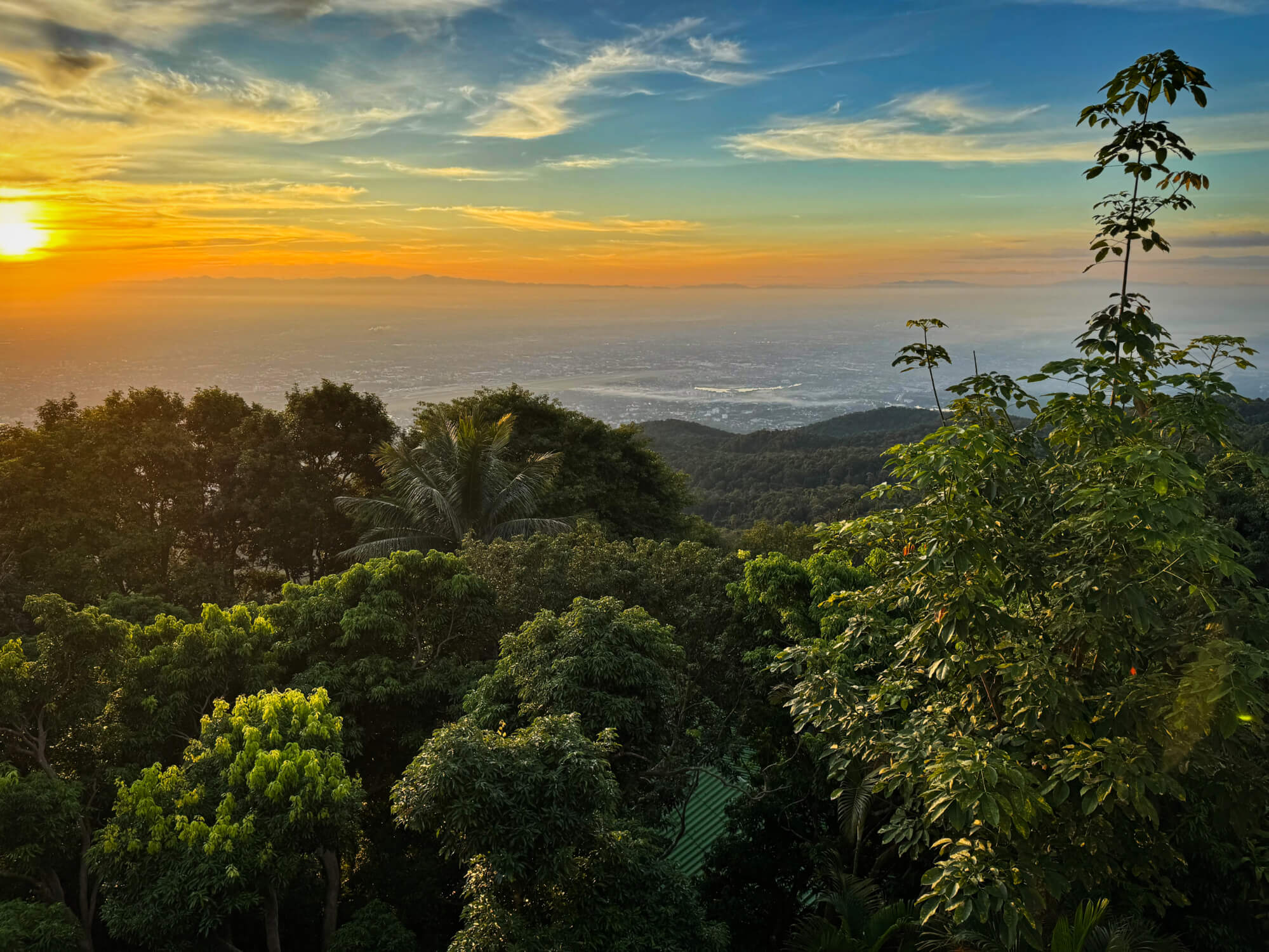
The Monk’s Trail is a very accessible hike in Chiang Mai. The starting point is easy to get to, just outside of the city and there are two distinct parts of the hike. The first is up to Wat Pha Lat (วัดผาลาด), and after passing through Wat Pha Lat you can continue to the top of Wat Phra That Doi Suthep (วัดพระธาตุดอยสุเทพ).
Total elevation: ~620 meters
Total distance: ~7.5km
Average time: ~3.5 hours
The easiest part is the first ~40 minutes of the hike to Wat Pha Lat. It’s not very steep, and it makes a nice shorter trip if you’re less physically able or short on time. Wat Pha Lat is beautiful, so this is a great trip even if you don’t do the full hike.
Set aside 4-6 hours to walk to both Wat Pha Lat, Wat Phra That Doi Suthep, enjoy the temple, coffee, take some photos and walk back down (optionally take a Red Songtaew/taxi back to the city from the top). If you’re doing this for fitness and you’re not stopping, you can walk to the top and back in 2 hours.
History of the Monk’s Trail
I once joined a temple tour which included both of the temples on this trail, and if I remember correctly, for hundreds of years(!), monks and pilgrims would walk this trail to reach the summit at Wat Phra That Doi Suthep – the trail was used daily to descend back in to Chiang Mai to collect alms every morning.
The trail is popular activity amongst locals and tourists now, and almost none of them will encounter monks around the trail but when I go between 5-6am, you will still see this traditional way of life.
The trail’s is tied to one of Chiang Mai’s legends. In the 14th century, during the reign of King Kuena, a monk named Sumanathera brought a sacred relic, believed to be a piece of Buddha’s shoulder bone from Sukhothai to the Lanna Kingdom. The king placed the relic on the back of a white elephant and set it loose on the mountain. The elephant paused to rest at a waterfall partway up (one of the most iconic spots on the trail) the spot where Wat Pha La, meaning “Monastery at the Sloping Rock”, was built. It then continued climbing to the summit, where it trumpeted three times and died. The king took this as a sign and ordered Wat Phra That Doi Suthep built at that spot in 1383.
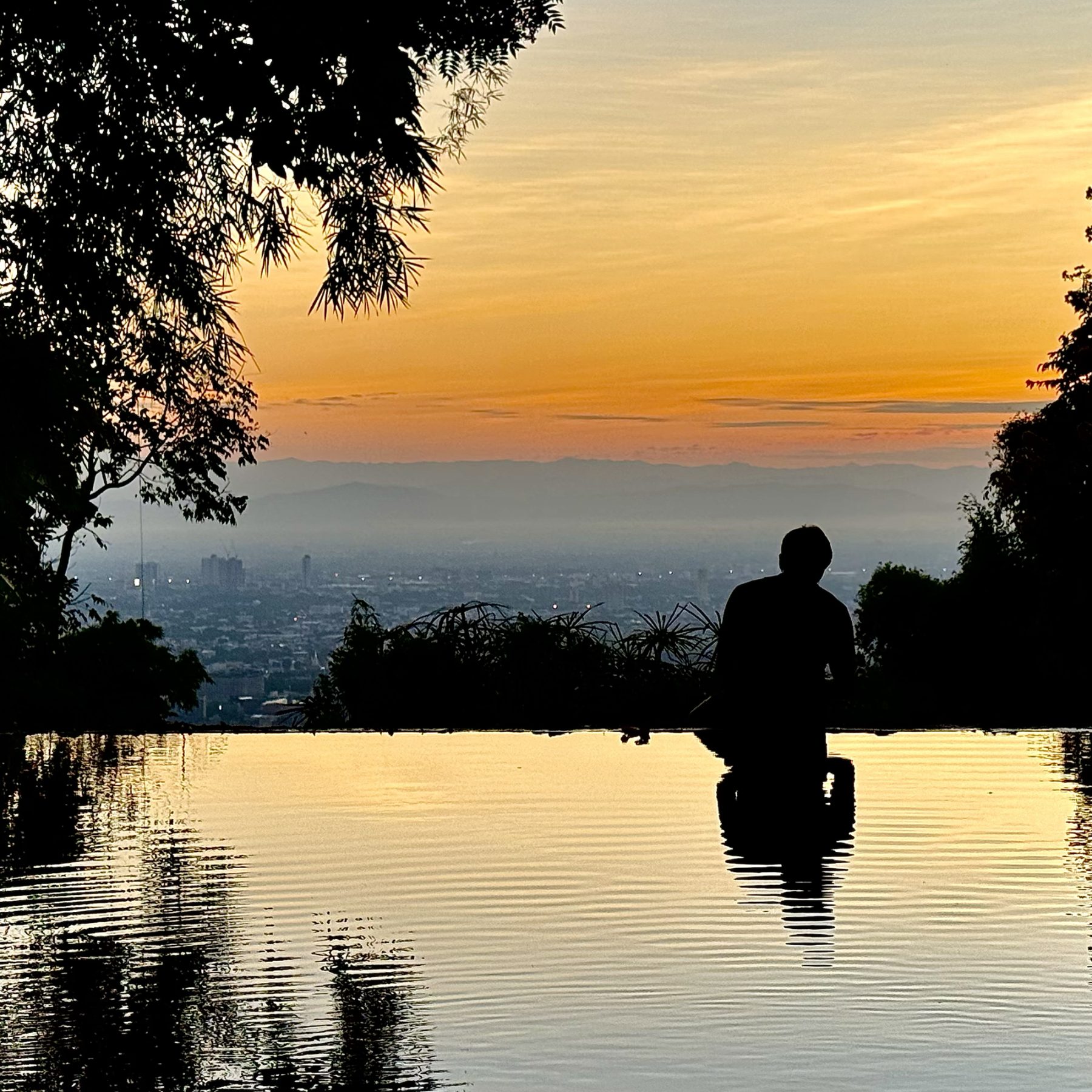
The Monk’s Trail was the primary route up the mountain until 1935, when an engineer-monk Kruba Srivichai started construction of the famous road to Doi Suthep. After the road opened, the trail fell out of regular use, and Wat Pha Lat transitioned from a busy rest stop into a quiet monastic retreat and meditation center, which is largely what it remains today (and why you should be as quiet and respectful as possible as you pass through).
When to go
November to February are the best months due to lower temperatures, less rain, and still being outside of the usual “smokey season”. March/April can be unpleasant due to the haze and smoke that surrounds mostly Northern Thailand each year, also making the iconic viewpoints at the top useless.
The rainy season (June to October) makes the trail muddy and slippery, not impossible but I wouldn’t personally do it again 😅
The best time is early in the morning. If you’re up for the challenge, take a light and start the hike between 5:30am and 6:00am. Later in the morning does get busier, but not unbearable..
At 5:30am I only usually see one or two people the whole way to the top and then pass a few people on the way down. Most of the trail is covered with forest though so even during the day it’s quite comfortable.
As noted below, there’s now an additional benefit to going early – skipping the need to pay entrance fees.
Starting point & entrance fees
Entrance fee update: As of December 2025, there’s now an entrance and parking fee if you are starting the trail from the beginning (Google Map link). Every time we have been, it seems that before 8am there is nobody there to collect entrance fees. We always recommend going before 7am to beat the crowds, so that works out perfectly. You do not have to pay to leave the area when you come back down.
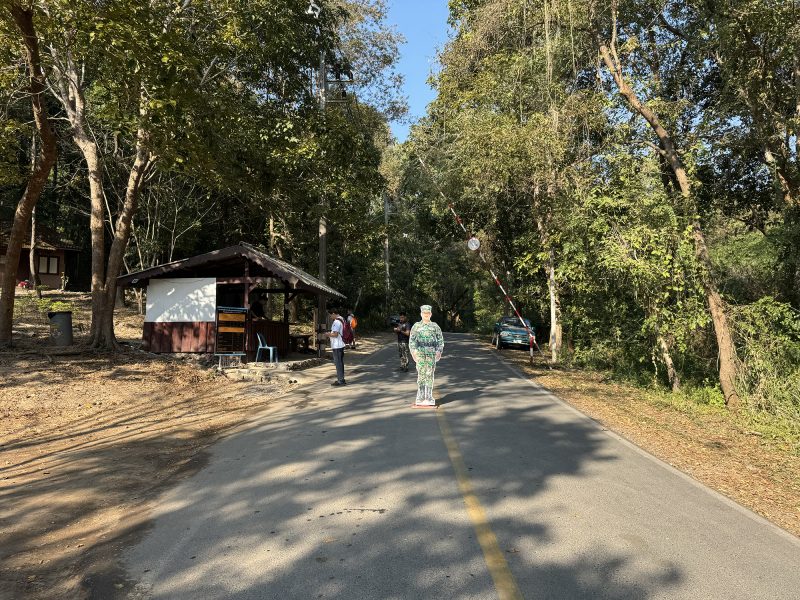
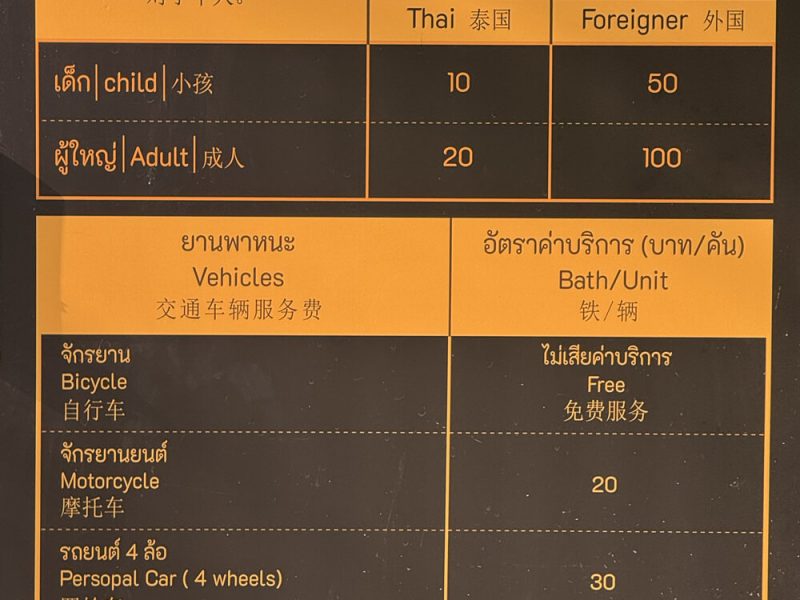
The starting point is easy to find. Just go to this Google Map location and the starting point is on the right-hand side of the sign.
There is plenty of parking for motorbikes and cars can fit on the side of the road.
Many people walk to the starting point from the Basecamp coffee shop or that rough area after breakfast and a coffee. If you’re leaving early, it won’t be open but you could go there on the way back to freshen up (bring extra clothes) and have a coffee.
A Grab or Bolt is also super convenient to get to the start – 100-150 baht from the Old City. Bolt is usually cheaper.
What to take
Water/electrolytes – it’s hot and humid, and you will sweat a lot. There are plenty of shops at Wat Phra Thai Doi Suthep if you’re going to the top. You can find more food and water up there.
Extra clothes – if you don’t want to go back to your hotel immediately, you might want a change of clothes.
Good shoes – the trail gets a little rocky, muddy and slippery.
Suitable clothing for temples – especially for women, something to cover the shoulders and legs. Men may still be asked to cover up their legs if wearing shorts in the main Wat Phra That Doi Suthep. Sarongs are available for hire.
Light source – If you’re doing a late afternoon or very early morning trip, bring a head torch or at least a phone light.
Wat Doi Suthep and Wat Pha Lat tours
We almost always travel independently in Thailand and try to help other people do the same. At the same time, we understand there are some circumstances when it just makes sense to book a tour. Plus, the best tours get to places you almost definitely would have missed had you been on your own.
We recommend the company TakeMeTour which operates similar to Airbnb Experiences; a local guide creates and runs the tours, and the company handles booking and payment. The company protects you from any scams, and the guides rely on maintaining a great rating so the tours almost always go above and beyond.
A pure hiking tour is no longer running, but if you’re looking to visit both temples by car:
Alms Offering & Temple Hopping in Chiang Mai – Very well rated tour. Worth it if you’d prefer the early 6am start to offer food to the monks. This tour visits 5-6 different popular temples in Chiang Mai and includes lunch. It would be our preferred option if we wanted to do a full morning of temples.
Temple hopping in Chiang Mai (Including Wat Doi Suthep, Wat Pha Lat, and others) – Not a hiking tour but if you want to conveniently visit the most popular temples in Chiang Mai, this is a great option.
Explore Wat Doi Suthep and Wat Pha Lat – Visit just Wat Doi Suthep and Wat Pha Lat. It’s a quicker morning tour as both of these temples are on the same mountain and road, easily accessible from the city.
Trail & difficulty
It’s a challenging but short hike. You will gain over 600 meters in elevation in approximately 1.5 hours. It will be very difficult to get lost if you follow the main path. You do not need a guide but if you’re concerned, simply use AllTrails or Strava and follow the trail on your phone.
Part 1: Trailhead to Wat Pha Lat
Distance: ~2 km
Time: 40-50 minutes
The first part of the trail is the easier half and works as a standalone hike if you’re short on time or fitness. The path winds through jungle along a small incline, rocky in places but easy to navigate. This part of the trail is mostly under tree canopy and shaded. It’s a really nice walk through the forest alongside steams and small waterfalls – a lot more scenic than the second half,
After around 30 minutes of steady walking, you will arrive Wat Pha Lat.
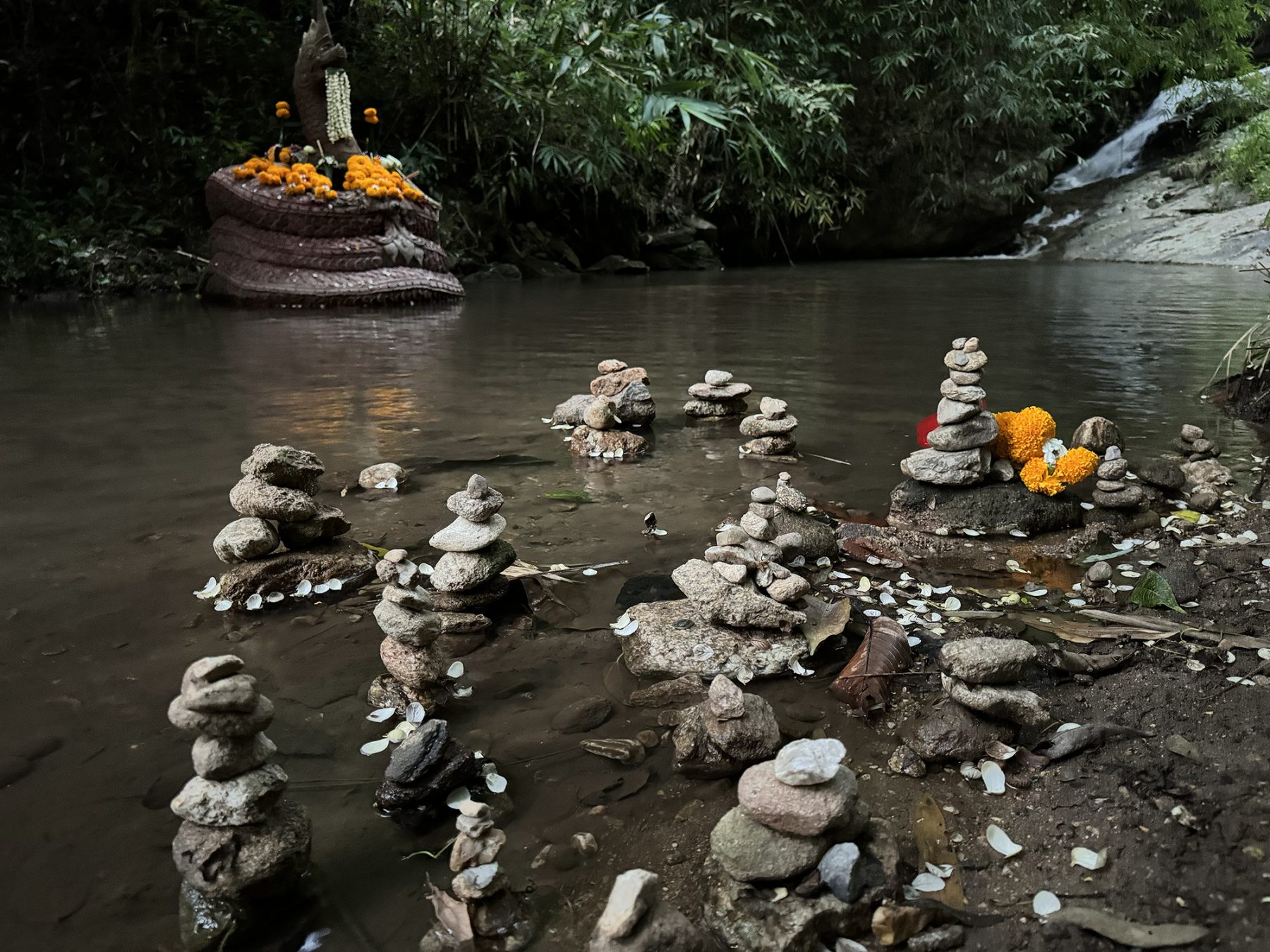
Wat Pha Lat is the highlight of this hike for most people. While Doi Suthep at the top gets all the traffic, Wat Pha Lat sits tucked away in the jungle with o shops, and no noise, just a large stream running directly through the whole complex.
The temple is spread across the hillside – it’s worth spending at least 30 minutes to look around. It’s an active monastery, so keep noise down and be respectful of the monks living there.
- The main temple and chedi: The restored temple building features a striking peacock motif reflecting Burmese heritage. Behind it stands a chedi (stupa) that traditionally houses Buddhist relics.
- The Naga staircase: Ornamental stairs flanked by white serpent statues in classic Thai Buddhist style, leading down toward the stream.
- The stream and waterfall: A small waterfall flows through the temple grounds, creating natural pools. Some visitors describe it as a “natural infinity pool”. Famous photo to take.
- The elephant carving: Partially hidden by jungle growth, there’s a carved elephant honoring King Kuena’s legendary white elephant that rested here. Worth seeking out.
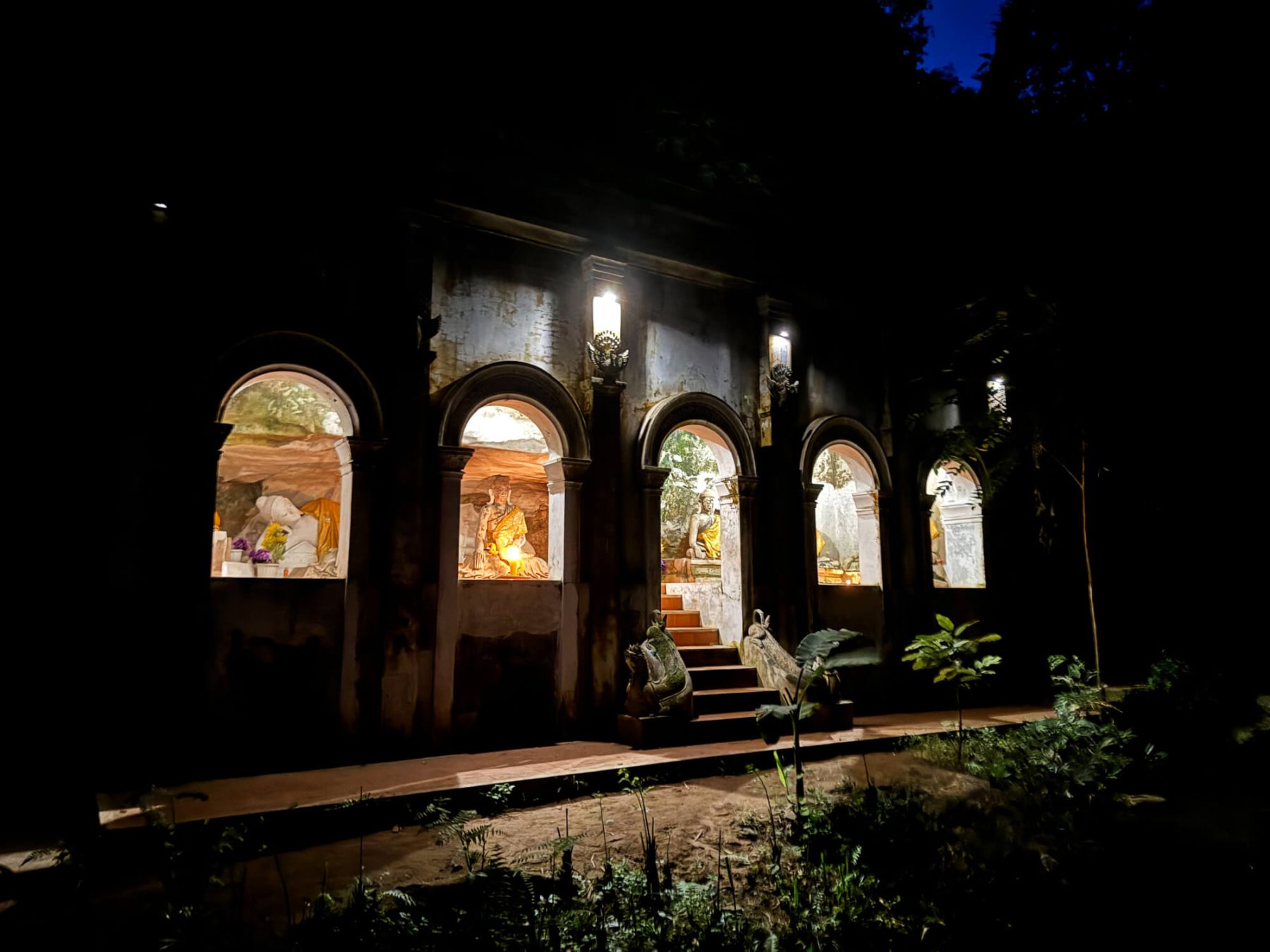
- Cave shrines: A cave-like structure built into the hillside houses Buddha statues that feel naturally integrated into the rock.
- The old bridge: An ancient stone bridge crosses the stream and offers views overlooking Chiang Mai on clear days.
From here continuing to the top of Doi Suthep and especially the top of Wat Phra That Doi Suthep requires some work. The trail is well trodden but it does get steep. If it’s wet or raining, it will be challenging.
Part 2: Wat Pha Lat to Doi Suthep
Distance: ~5 km
Time: 75-90 minutes
The direction to continue isn’t immediately obvious, but as you cross over the small stream, you’ll want to turn left and follow the stream up the hill. You’ll encounter some steps which will turn in to a steep dirt climb for 5-10 minutes up to the main Doi Suthep road. When you hit the road, turn left and walk up the road for just 100 meters or so. Just before the road bends to the left, you will cross to the right hand side, head in to the opening in the trees and keep walking up.
It’s a tougher walk from here for 45 minutes but you can’t get lost.
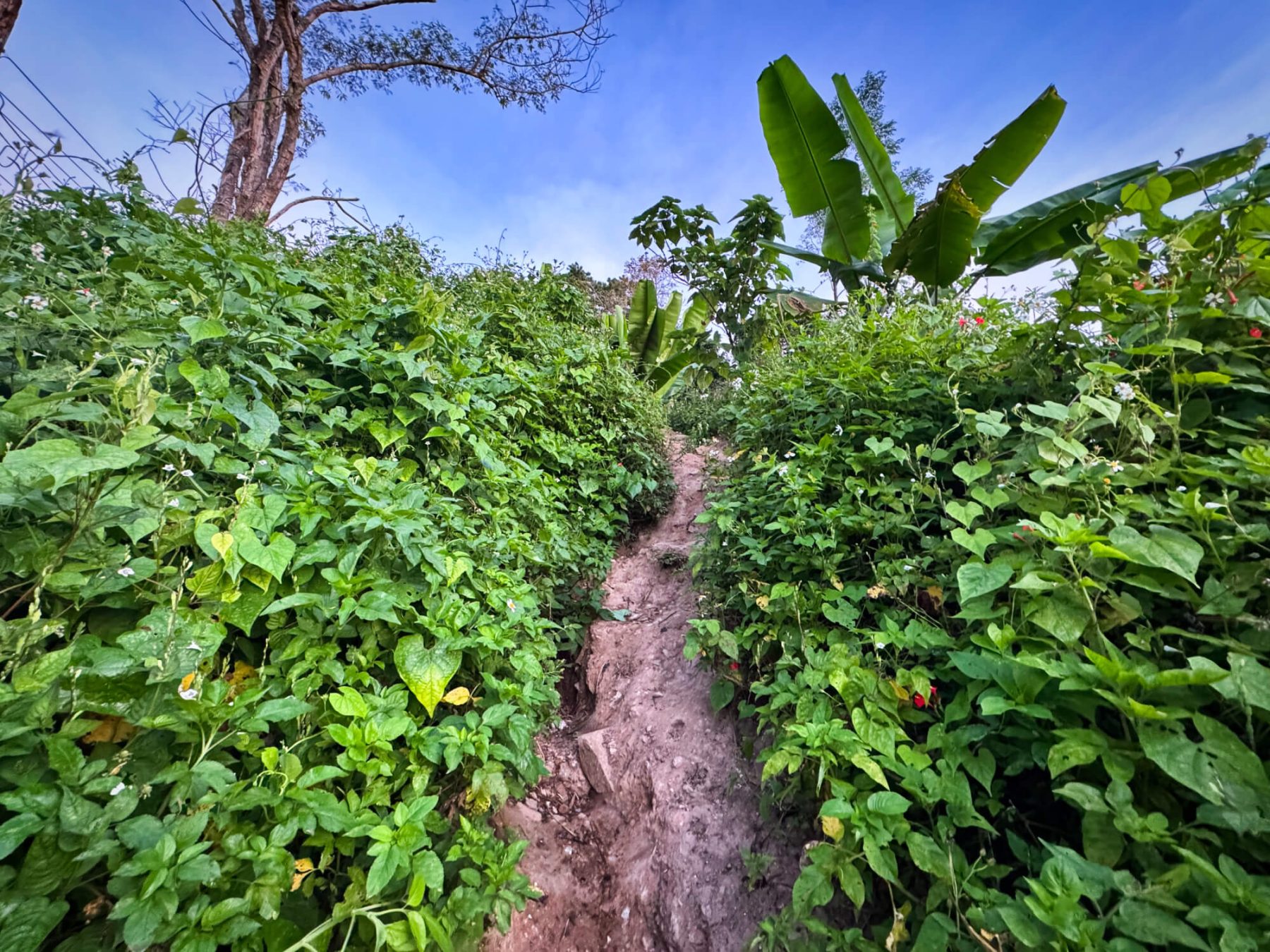
The photo above is close to to the top of the trail. At this point you join the road and walk the last 10 minutes to the entrance to Wat Phra That Doi Suthep.
And finallyyyy you’re greeted with your last challenge, 306 steps to the top of the temple.
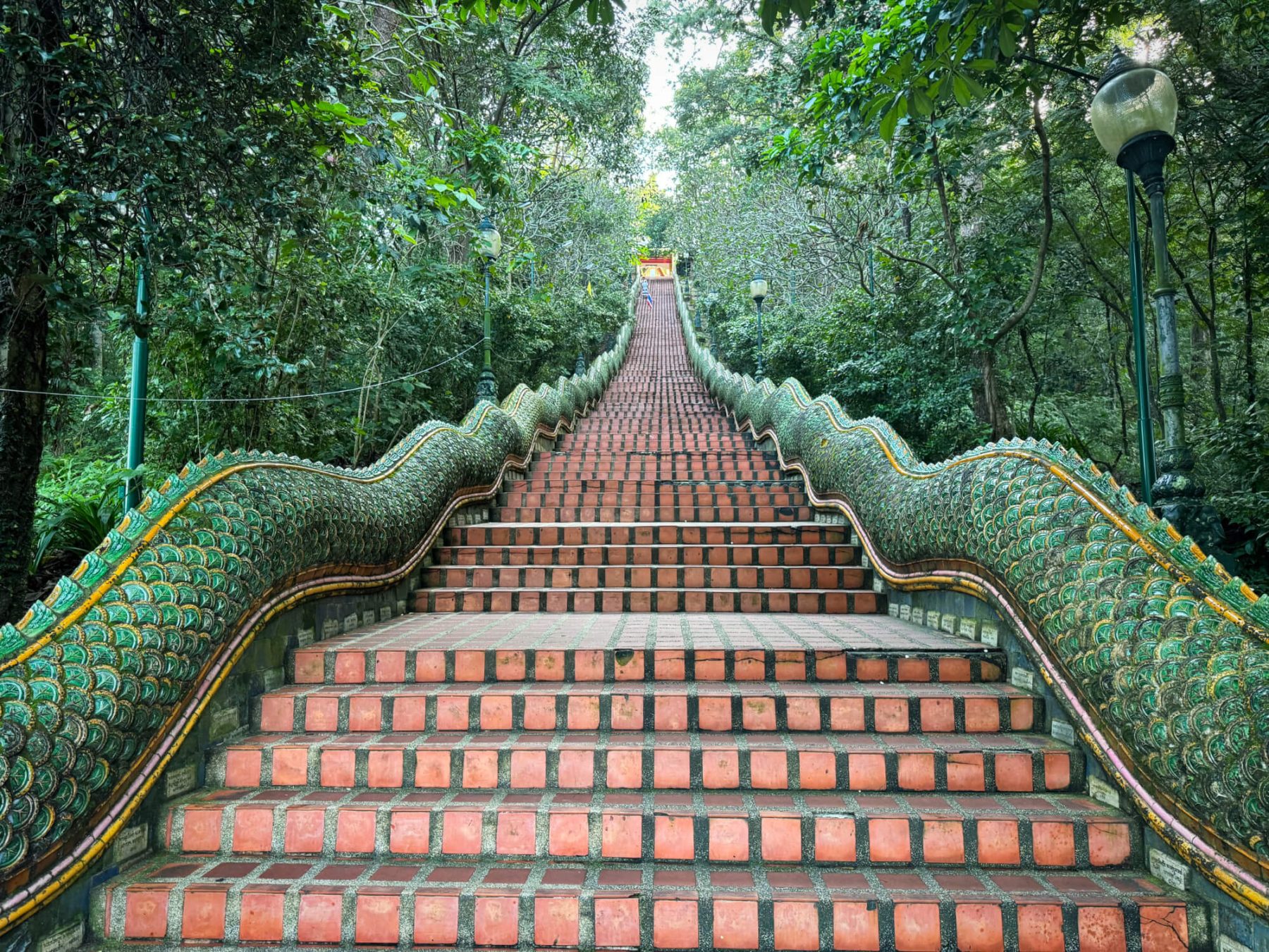
If you want to get this photo of the steps without anybody on them, you’ll either need to remove them with AI or start very early. I finally got this photo by starting at 5am and reaching the top at sunrise around 6am.
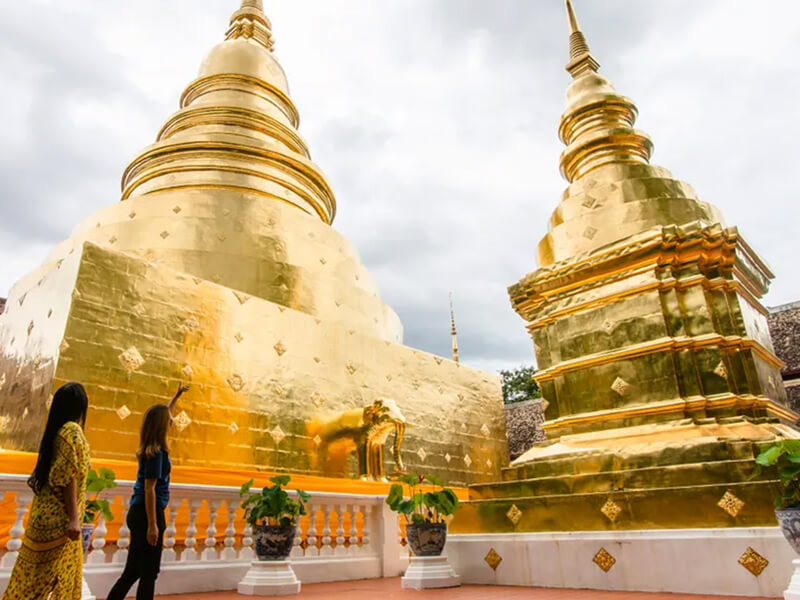
A little bit of info on Wat Phra That Doi Suthep: It was established in 1383 and contains a sacred relic of Buddha. The golden pagoda at its centre is visible from most of Chiang Mai city, and it’s the pagoda you see on literally every Chiang Mai postcard.
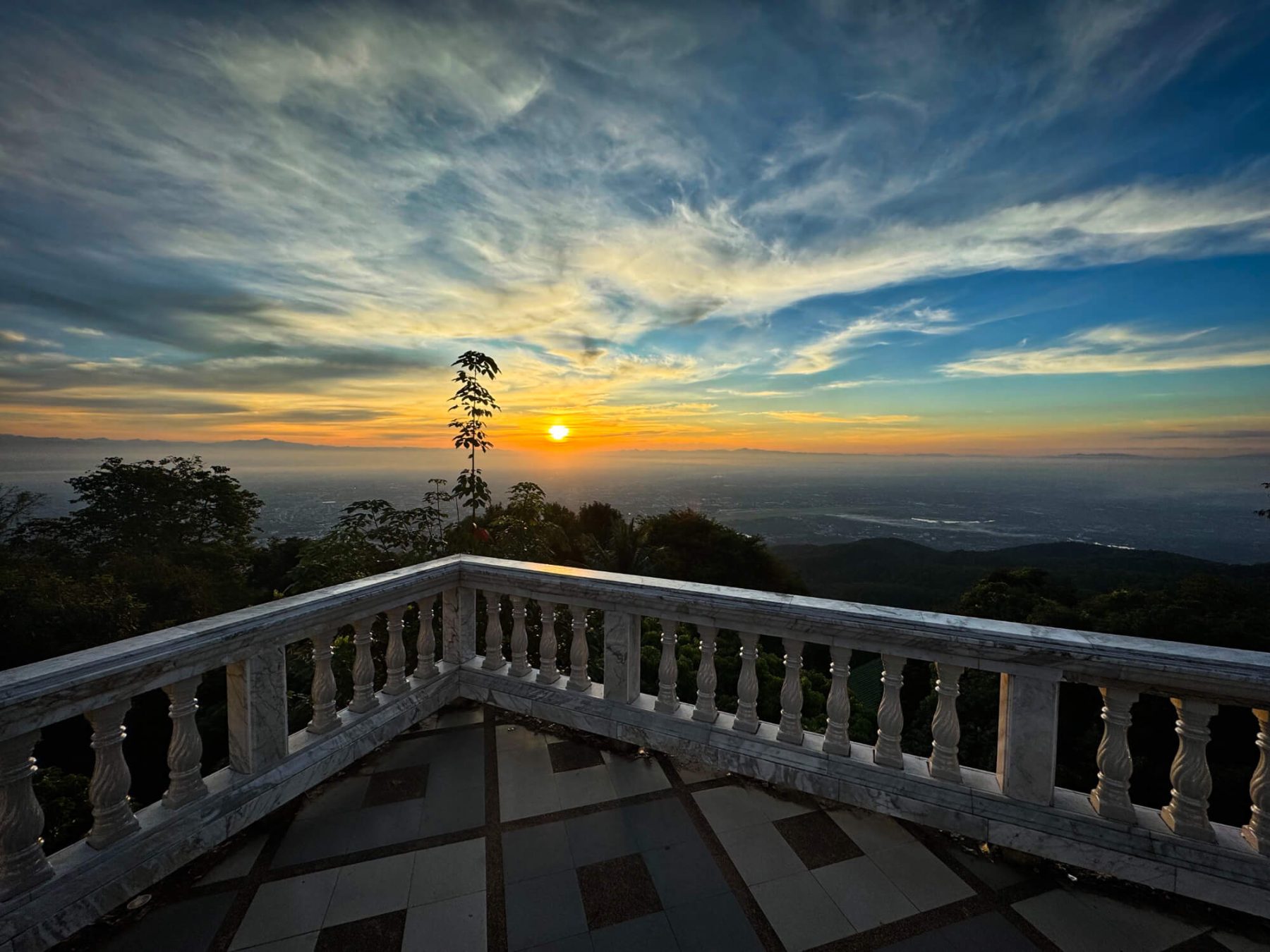
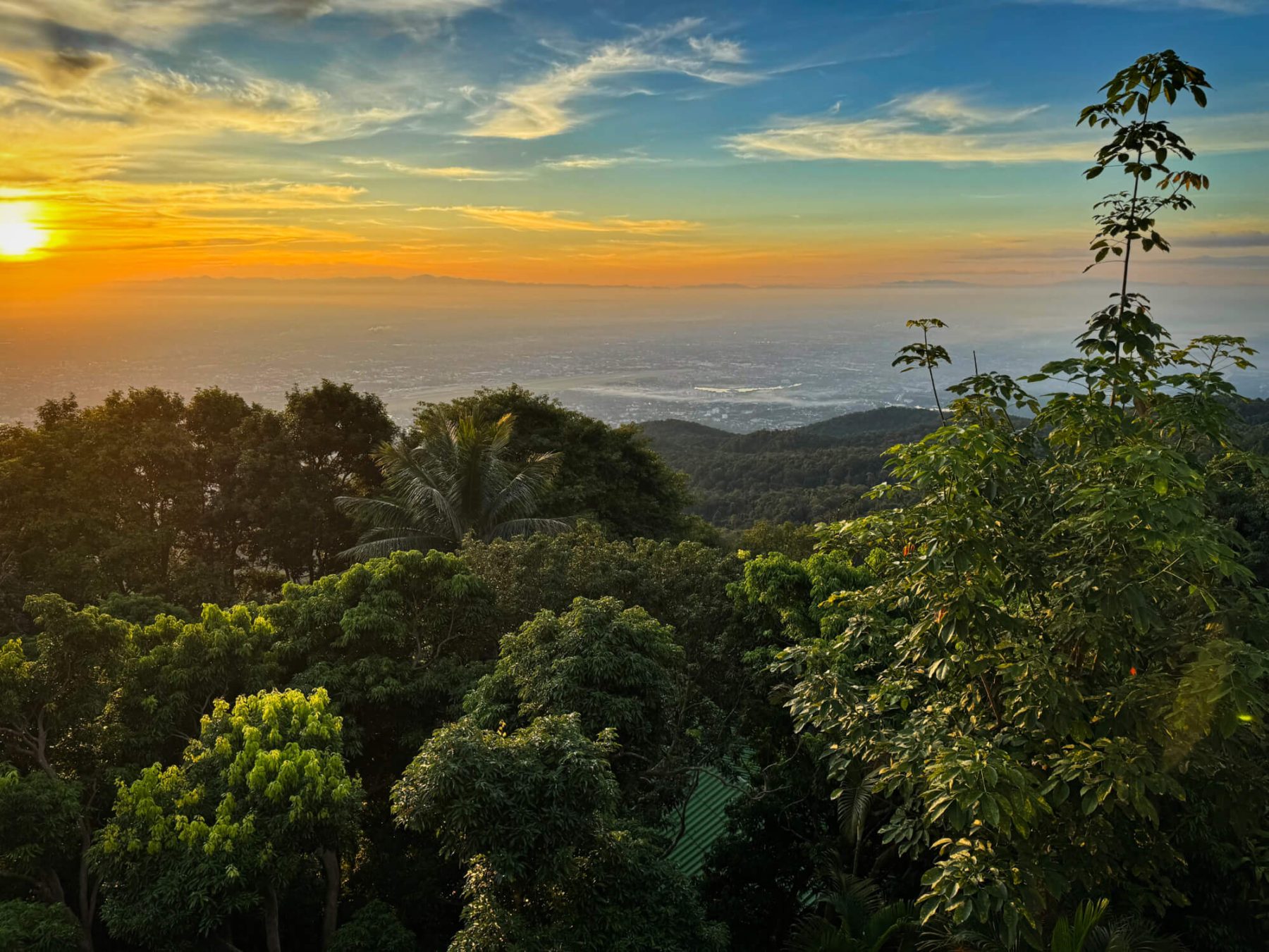
The temple sits at roughly 1,676 metres elevation, and on a clear day the views over the Chiang Mai valley from the balconies inside the temple complex make it worth the hike. At sunrise, you can hear the monks doing their morning chants.
Entrance fee: 30 baht for foreigners. Collected at the ticket office at the top of the staircase.
Dress code: Same as Wat Pha Lat — shoulders and knees covered, shoes removed in certain areas.
Food, coffee & things to do
There’s no food or coffee to buy during the hike – you only really need one small bottle of water. After you arrive at the final temple, Wat Phra That Doi Suthep, (the famous one at the top), there are lots of shops beginning to open between 6 and 7am.
There’s fruits, snacks, shakes, and a few coffee shops along the left hand side of the road as you approach the entrance steps BUT, if you’re there after 7:30-8am go straight up to the main temple and turn left, there’s a single coffee shop up with the temple with a great view. If that’s closed, check out the little shops for food and coffee at the bottom of the steps, here’s a Google Maps link.
Disclosure: This page has some affiliate links. If you click one of these links and make a purchase or booking, we will earn a small commission. This is 100% free for you and it helps us to continue creating great Thailand content that we can offer to you for free.